or Call +44 (0)7724 515 072
Words and Inscriptions For Gravestones
Choosing the words for a gravestone can feel like an enormous responsibility. An inscription needs to record the essential details while expressing something meaningful about the person, the life they lived and the relationships they leave behind.
Some families know immediately what they would like the memorial to say. Others find that even familiar words feel difficult to choose when the time comes. Both experiences are completely understandable.
A gravestone inscription does not need to tell someone’s whole life story. A name, a date and a few sincere words can create a lasting and deeply personal tribute. This guide offers examples and practical advice to help you find wording that feels appropriate.
What Is a Gravestone Inscription?
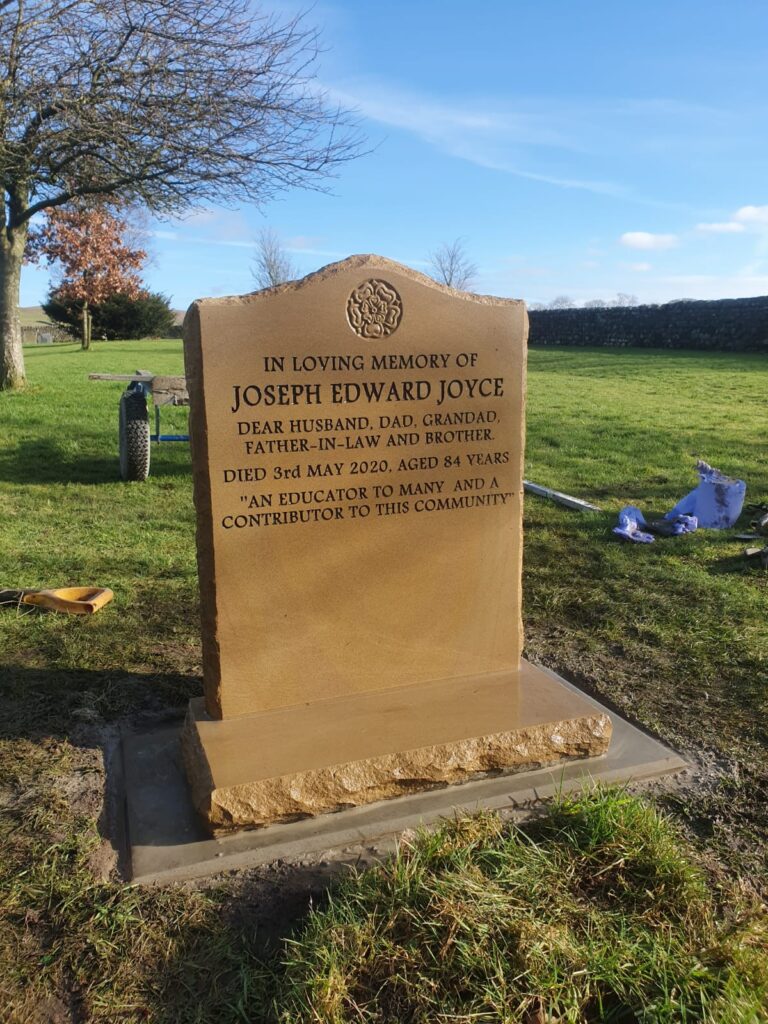
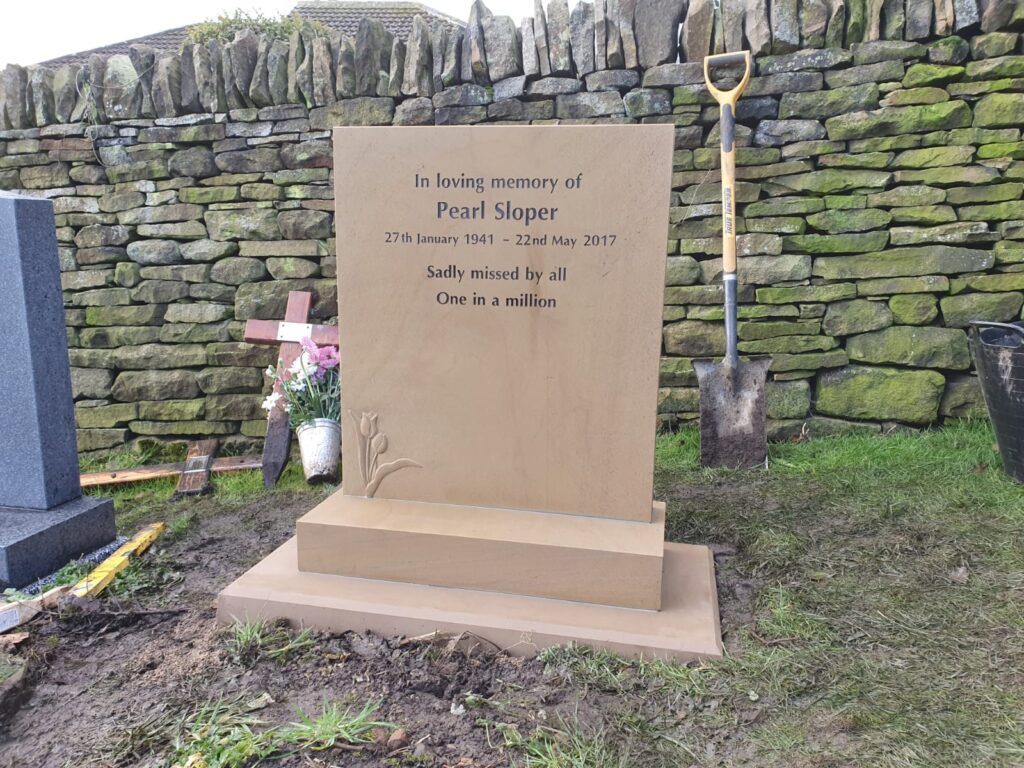
A gravestone inscription is the wording engraved, carved or otherwise added to a headstone or memorial. It commonly records the person’s name and dates, followed by a short phrase, verse or message.
The final wording may include:
- An opening phrase, such as “In loving memory of”
- The person’s full name or familiar name
- Their date of birth and date of death
- Their age, where preferred
- Their relationship to close family members
- A short epitaph, verse, quotation or prayer
- A personal message from those remembering them
Not every inscription needs all of these elements. The wording should suit the individual, the available space and the style of the chosen headstone or memorial.
What Makes a Good Gravestone Inscription?
The most meaningful inscriptions are usually sincere, clear and personal. They do not need complicated language or an elaborate quotation to make an impression.
A good inscription often reflects:
- How the person was known and loved
- Their role within the family
- A quality people particularly remember
- Their faith, values or outlook on life
- A phrase that feels natural to those closest to them
Try not to choose wording simply because it sounds formal or poetic. Read it aloud and ask whether it genuinely feels like the person you are commemorating.
Traditional Words for Gravestones
Traditional inscriptions remain popular because they are respectful, familiar and suitable for many different memorial styles.
Examples include:
- In loving memory of
- Rest in peace
- At rest
- Sadly missed
- Always remembered
- Forever in our hearts
- Gone but never forgotten
- Remembered with love
- Resting peacefully
- Until we meet again
- Deeply loved and greatly missed
- Treasured memories live on
A traditional phrase can stand alone or appear beneath the person’s name, dates and family relationships.
Short Gravestone Inscription Ideas
A short inscription can be particularly effective where the memorial is small or where the family wants the name and dates to remain the main focus.
- Forever loved
- Always with us
- Peacefully sleeping
- Love lives on
- Always in our thoughts
- Resting in peace
- Forever remembered
- Loved beyond words
- Missed every day
- A beautiful soul
- Never far away
- Safe and at peace
Simple wording can carry considerable meaning. There is no need to fill every available part of the stone.
Words for a Family Gravestone
Many inscriptions acknowledge the person’s place within their family. This can make the memorial feel immediately personal while helping future generations understand the relationship.
For a Mother
- A dearly loved mother and grandmother
- Her love was the heart of our family
- A wonderful mother, remembered every day
- Your kindness and guidance remain with us
- A mother’s love lives on forever
- Loved deeply and missed beyond words
For a Father
- A devoted father and grandfather
- Your strength and wisdom guide us still
- A wonderful dad, deeply loved
- A true gentleman, proudly remembered
- Your example will remain with us always
- Forever loved by all your family
For a Grandparent
- A treasured grandmother, lovingly remembered
- A much-loved grandfather and friend
- Your stories and laughter live on
- Loved by every generation of our family
- Precious memories remain with us
- Your warmth will never be forgotten
For a Son or Daughter
- Our beloved son, forever in our hearts
- Our precious daughter, loved beyond measure
- Your beautiful spirit remains with us
- Always our child, always our love
- You brought light and happiness into our lives
- Deeply loved and missed every day
For a Brother or Sister
- A dearly loved brother and loyal friend
- Our wonderful sister, always remembered
- Thank you for a lifetime of memories
- Your laughter remains with us
- A treasured sibling, missed every day
- Forever part of our family
Words for a Husband, Wife or Partner
Inscriptions for a husband, wife or partner often focus on companionship, devotion and the life shared together.
Ideas include:
- My beloved husband, forever in my heart
- My cherished wife, loved beyond words
- My partner, my best friend, my greatest love
- A lifetime of memories, a love without end
- Always beside me, always in my heart
- Thank you for the beautiful life we shared
- Until we are together again
- Our love story lives on
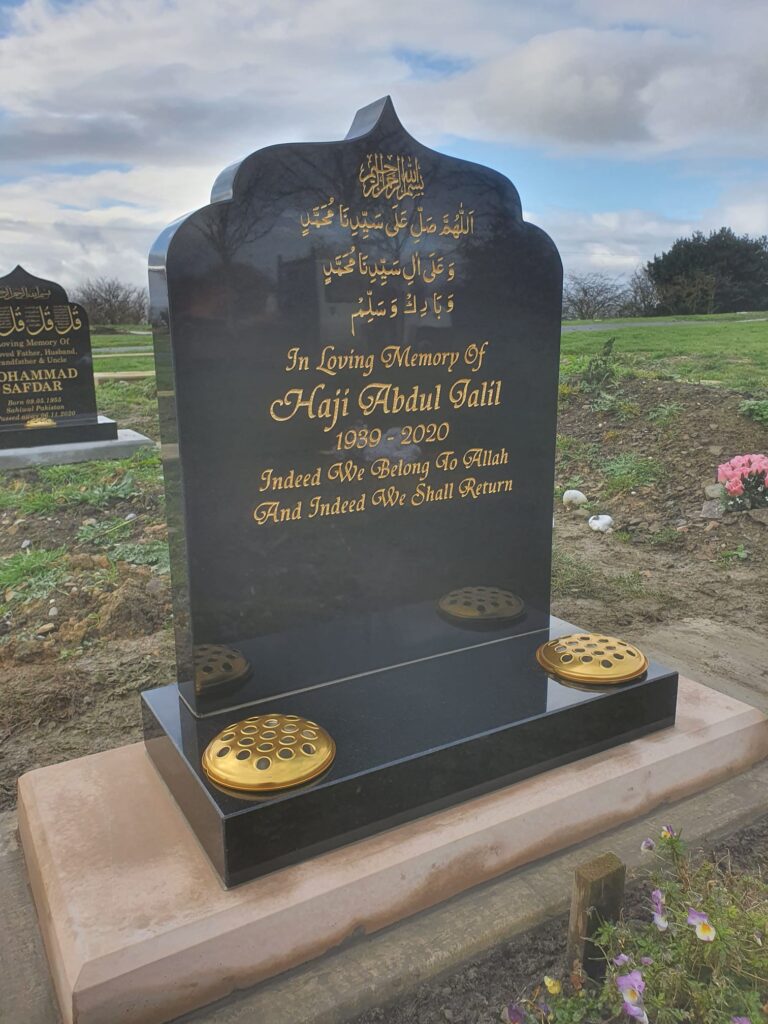
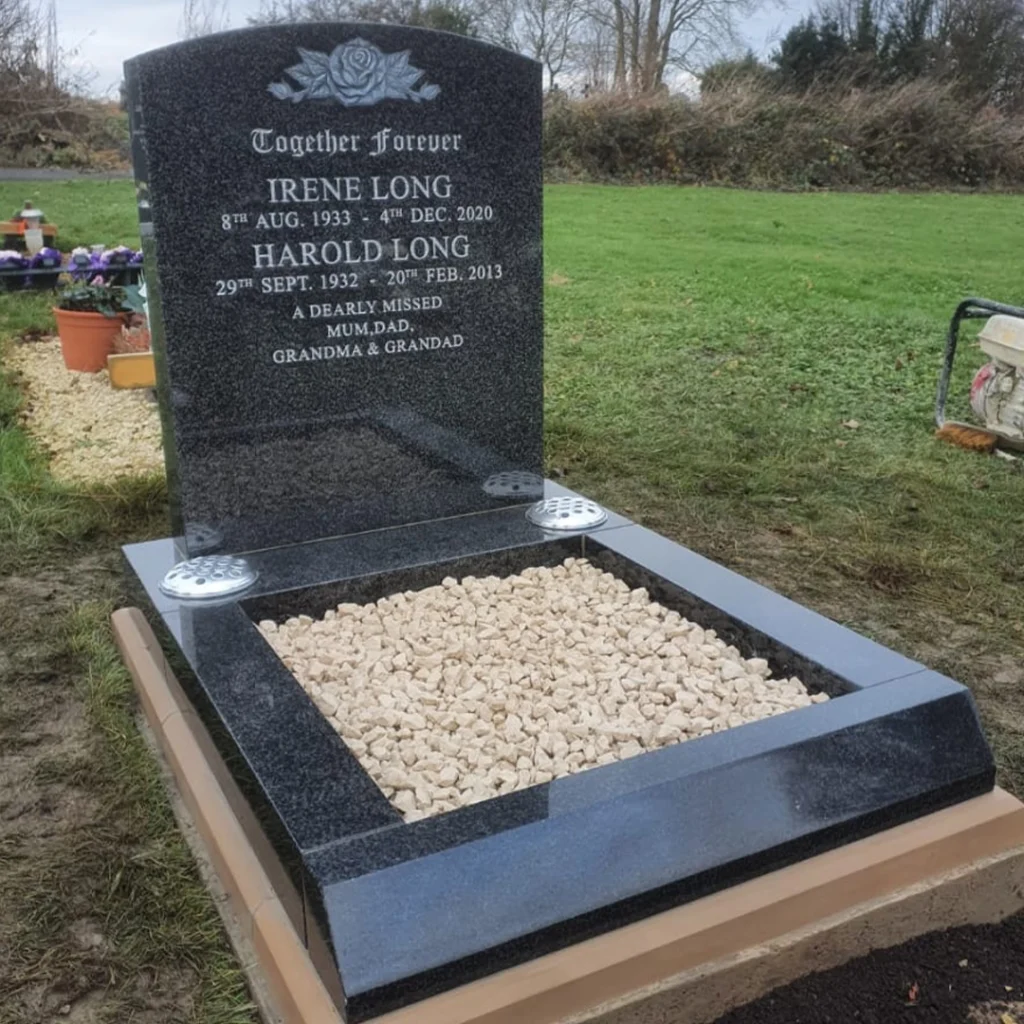
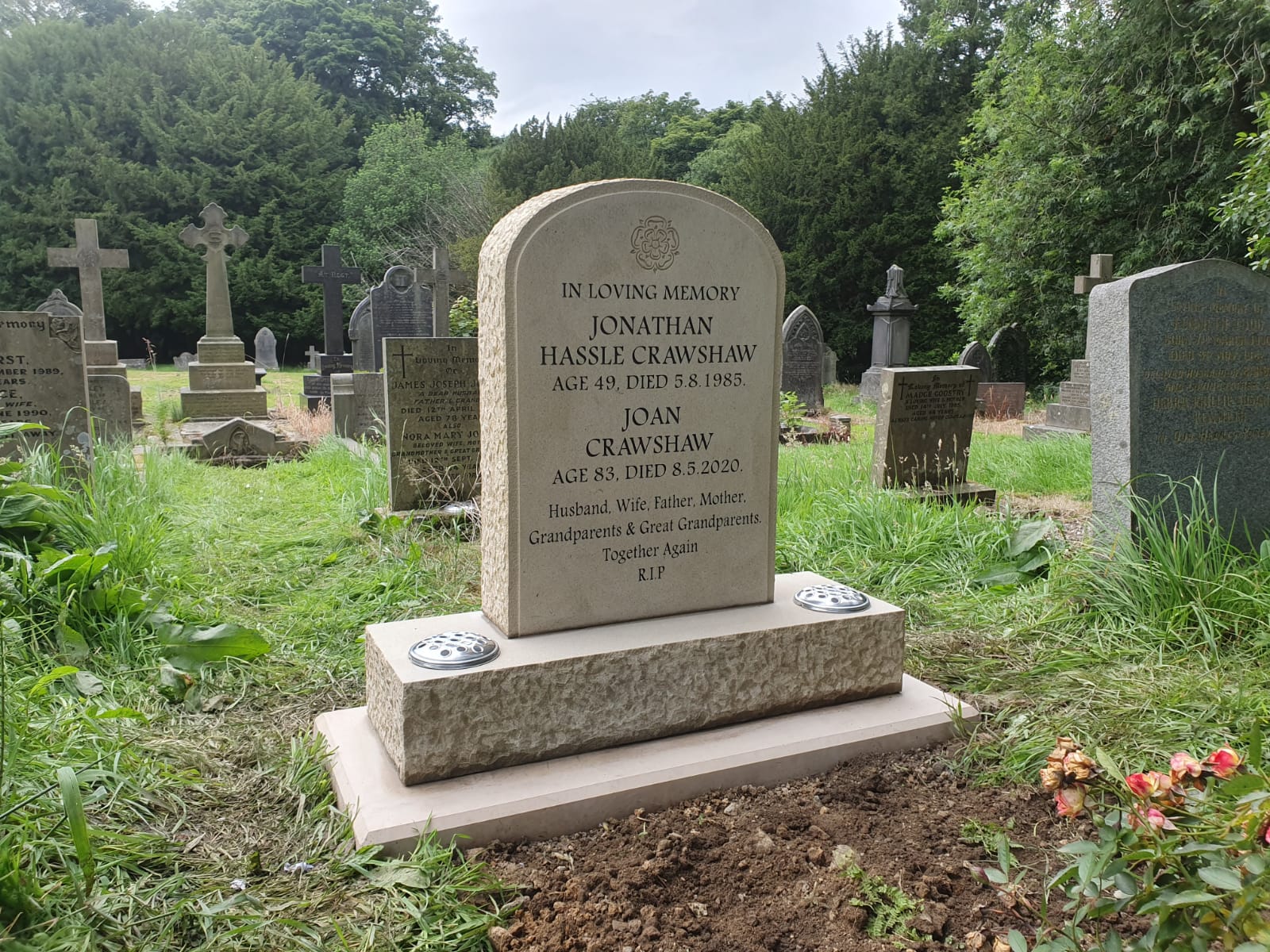
Where a memorial commemorates both partners, a shared phrase such as “Together again” or “Two lives, one love” can sit beneath both names. Our guide to husband and wife headstone inscriptions includes more examples and advice on planning a joint layout.
Religious Gravestone Inscriptions
For someone whose faith was an important part of their life, a religious inscription may provide comfort and express their beliefs.
Possible wording includes:
- Resting in God’s care
- Safe in the arms of Jesus
- At peace with the Lord
- Called home to be with God
- Faithful unto death
- Thy will be done
- Peacefully sleeping in God’s keeping
- The Lord is my shepherd
- Until we meet again in Heaven
- Forever held in God’s love
A line from scripture, a prayer or a favourite hymn can also be included. Always check the original source and preferred translation before approving the inscription.
Where the memorial will stand in a churchyard or faith-based burial ground, confirm whether any rules apply to the wording or religious imagery.
Non-Religious Gravestone Inscriptions
An inscription does not need to mention faith. Many families prefer wording centred on love, memory and the influence the person continues to have.
- A beautiful life, lovingly remembered
- Your memory remains with us always
- A life filled with kindness and love
- Forever remembered in the lives you touched
- Your presence is missed, but your love remains
- A life well lived and deeply cherished
- Those we love remain part of us
- Your warmth and laughter live on
- Memories keep you close
- Love leaves a lasting memory
These phrases can be adapted to reflect a specific personality or family relationship.
Poetic and Personal Inscription Ideas
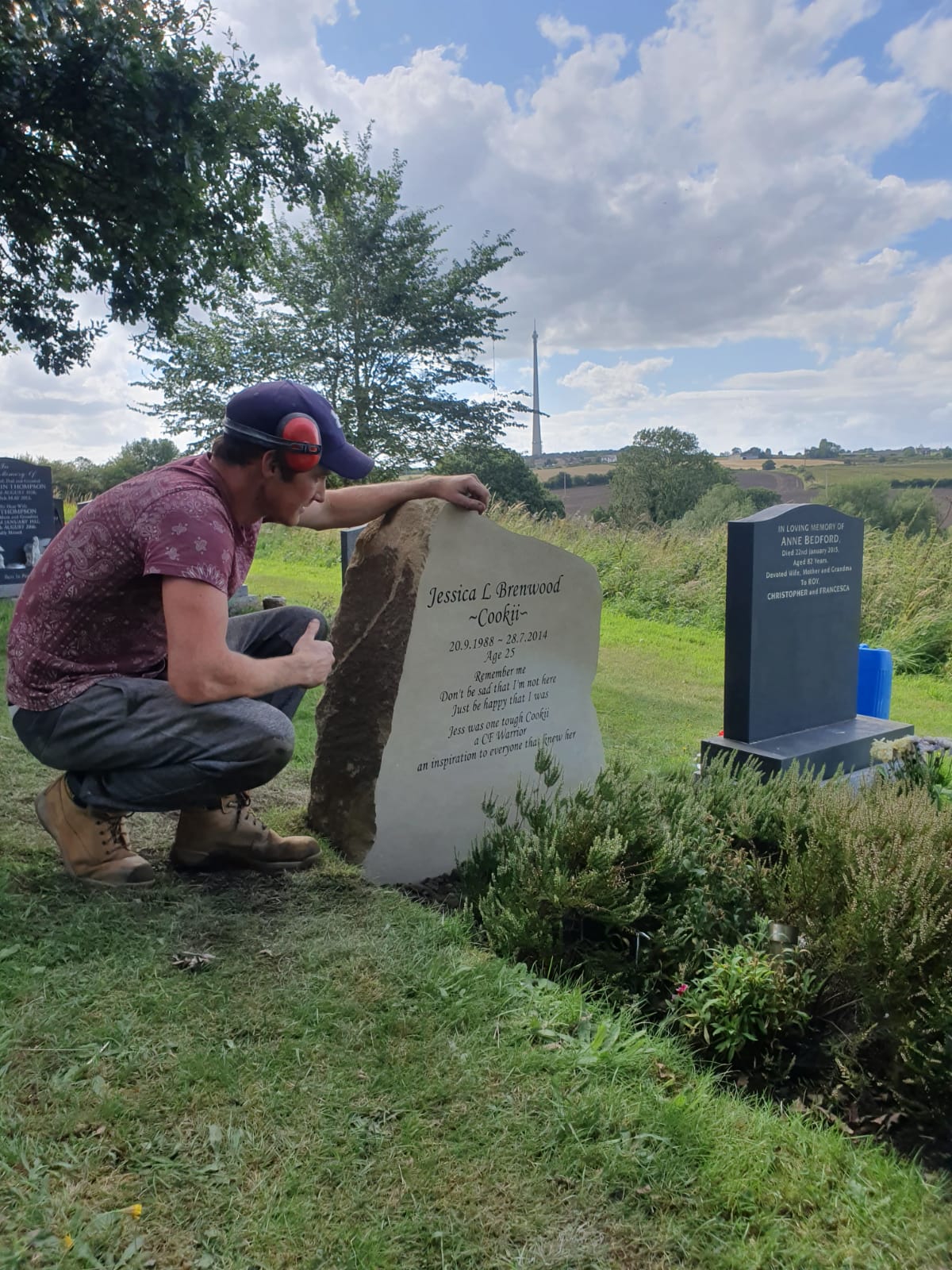
A personal inscription does not need to come from a published poem. A simple line written by the family may feel far more natural and distinctive.
You could draw inspiration from:
- A place the person loved
- A favourite flower or season
- Their work, hobby or lifelong interest
- A phrase they regularly used
- A family memory or familiar routine
- Their humour, kindness or outlook on life
Examples include:
- Forever walking beside the sea
- Your garden blooms, and we think of you
- Your music remains in every memory
- Still making us smile
- Home is where your memory lives
- Your love is woven through our lives
- Your stories will always be told
- Forever beneath the open sky
- A gentle heart and a generous spirit
- You made the ordinary days special
Gentle humour may also be appropriate when it truly reflects the person. Consider how the wording will feel to different relatives and future generations before making the final decision.
Can You Use a Quote, Poem or Song Lyric?
A favourite quotation can create a deeply personal inscription, but it should be checked carefully before being engraved.
Confirm:
- The exact wording
- The correct author or source
- Whether the wording fits the available space
- Whether it still feels appropriate when read without its wider context
- Whether permission may be needed to reproduce protected wording
Song lyrics and modern poems may be protected by copyright. A short, original family message can often express the same sentiment more personally while avoiding uncertainty over reproduction.
How Long Should a Gravestone Inscription Be?
There is no required length, but the wording must fit comfortably on the chosen memorial while remaining clear and easy to read.
A longer inscription may require:
- Smaller lettering
- More lines of text
- Less room for carvings or images
- Additional lettering charges
- A larger or wider memorial
Begin with everything you would like to say, then reduce it to the most meaningful details. Removing repeated ideas usually creates a stronger inscription.
Planning the Inscription Layout
The same words can look very different depending on how they are arranged on the stone.
The memorial mason will need to consider:
- The size and shape of the inscription area
- The number of names and dates
- The chosen font and letter height
- The position of carvings, photographs and symbols
- The spacing between individual lines
- Whether room is needed for a future inscription
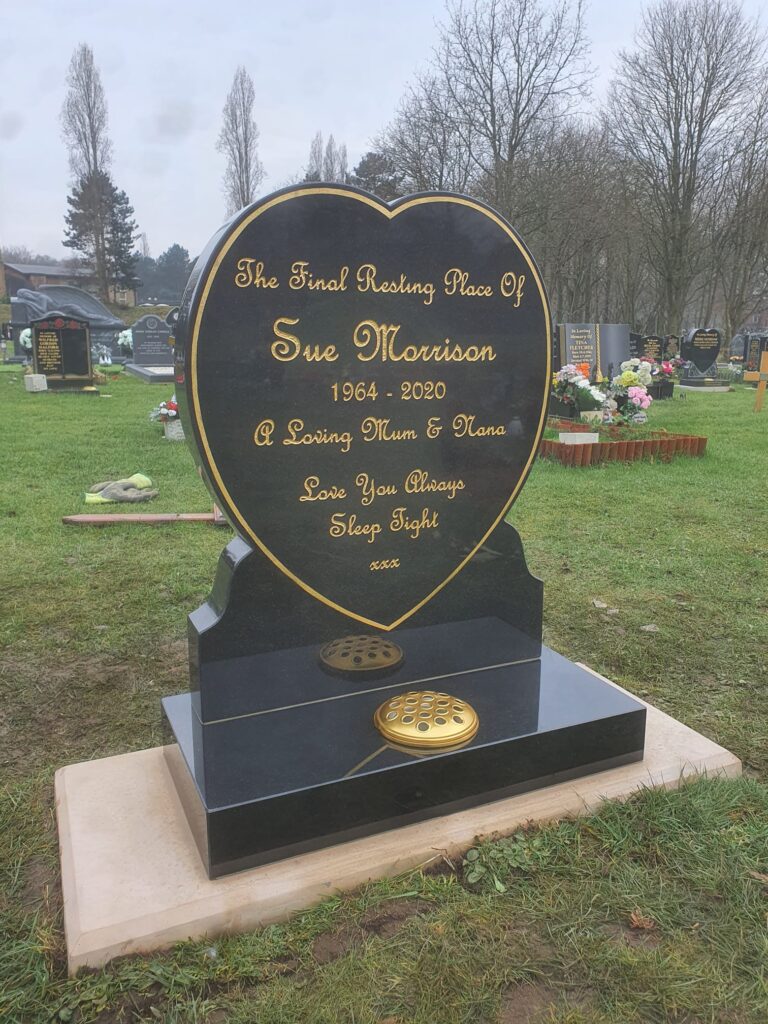
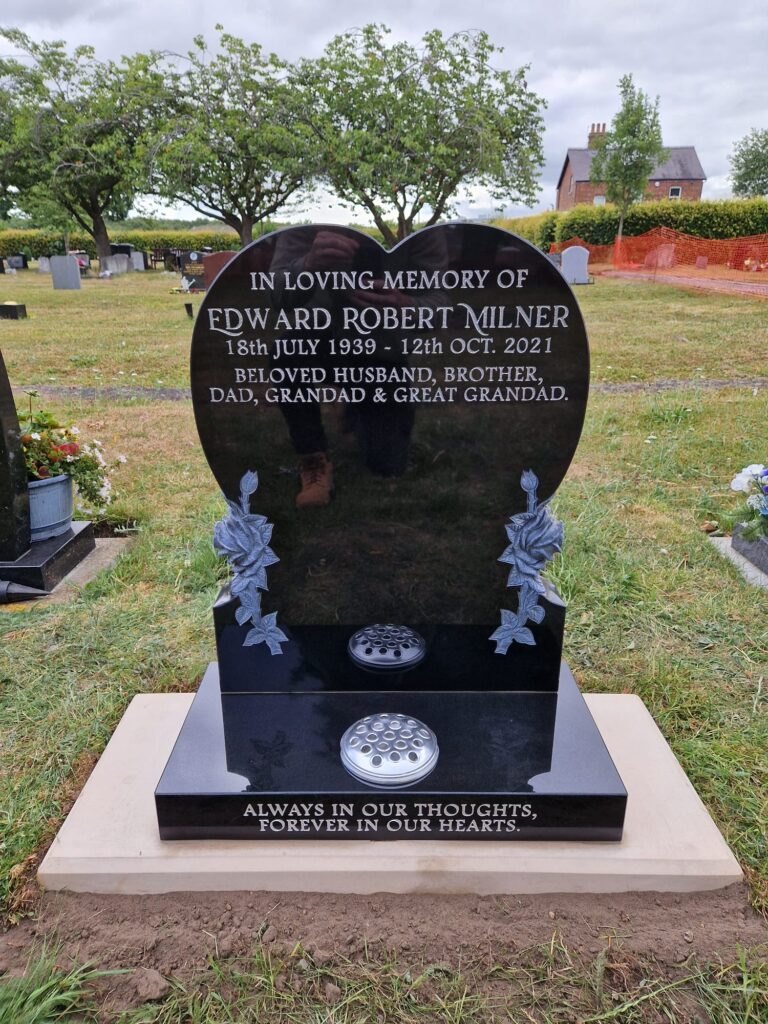
Book, heart and wider companion memorials provide different opportunities for arranging the wording. A bespoke memorial can also be designed around a particular inscription, image or layout where an existing shape does not provide enough flexibility.
What to Check Before Approving the Wording
Once words have been engraved into stone, correcting them can be difficult. Review the complete inscription carefully before giving final approval.
Check:
- Every name and familiar name
- Dates of birth and death
- Ages and family relationships
- Spelling, punctuation and capitalisation
- The exact wording of quotations and scripture
- The proposed line breaks
- The lettering style and finish
- The space reserved for future names
Ask another family member to check the proof as well. A fresh pair of eyes may notice a small mistake after you have read the wording several times.
It can also help to read the inscription aloud. This often reveals repeated words or phrasing that does not flow as naturally as expected.
Choosing Words That Feel Right
No gravestone inscription can fully describe a person or everything they meant to those who loved them. It does not need to.
The purpose of the wording is to preserve something honest and meaningful. A familiar phrase, a family relationship or a few carefully chosen words may say more than a lengthy tribute.
Northern Headstones can help you plan the wording, lettering and layout so that the inscription sits naturally within the chosen memorial. To discuss your ideas or ask for guidance, please contact Northern Headstones. The team will help you consider the available options with patience, sensitivity and care.
Written and Edited by Northern Headstones
Having established itself as one of the North’s of Englands most prestigious Headstone and Memorial Masons, Northern Headstones delivers bespoke memorials like no other.