or Call +44 (0)7724 515 072
Muslim and Islamic Headstones: Choosing a Respectful Memorial
Choosing a headstone for a Muslim loved one requires care, sensitivity and an understanding of both personal wishes and Islamic traditions. For many families, the memorial should be simple and dignified while providing a clear place to record the person’s name, dates and a carefully chosen inscription.
There is no single design that will suit every Muslim family. Religious interpretations, cultural traditions and personal preferences can all influence what feels appropriate. Cemetery regulations also vary, particularly within dedicated Muslim burial sections.
Before finalising a memorial, it is sensible to speak with the cemetery, your chosen memorial mason and, where needed, a trusted imam or religious adviser. This helps ensure that the design respects the family’s wishes while remaining suitable for the resting place.
What Is a Muslim Headstone?
A Muslim headstone is a grave marker created for someone of the Islamic faith. It commonly records the person’s name and dates, although it may also include Arabic calligraphy, a short religious phrase or wording selected by the family.
Some families prefer a very simple upright stone with limited decoration. Others choose a shaped memorial that reflects Islamic architecture or includes carefully selected imagery.
The terms “Muslim headstone” and “Islamic headstone” are often used interchangeably. In practice, both generally refer to a memorial intended to commemorate a Muslim person in a respectful way.
Simplicity in Islamic Memorial Design
Simplicity is important to many Muslim families when choosing a grave marker. A modest memorial can identify the resting place and preserve the person’s name without appearing unnecessarily elaborate.
However, approaches to grave markers and decoration differ between families, communities and schools of thought. Some may prefer only a small identification stone, while others are comfortable with a traditional upright headstone and personal inscription.
A simple memorial might include:
- The person’s full name
- Their date of birth and date of death
- A brief family relationship, such as beloved father or cherished mother
- A short religious phrase
- Clear lettering in English, Arabic or both
- A restrained carved or engraved detail
Simple does not mean impersonal. The proportion of the stone, its colour, the inscription and the arrangement of the lettering can all create a thoughtful and individual tribute.
Does a Muslim Headstone Need to Face Mecca?
It is important to distinguish between the orientation of the burial and the position of the memorial.
In Islamic burial practice, the deceased is generally placed on their right side facing the qibla, which is the direction of the Kaaba in Mecca. The cemetery or burial team is responsible for preparing and orienting the grave correctly.
This does not necessarily mean that the headstone itself must point or face towards Mecca. The memorial is normally installed at the head of the grave in the position permitted by the cemetery’s layout and regulations.
Families do not usually need to calculate the qibla direction when ordering the headstone. The cemetery, funeral director and burial team should already have dealt with the orientation of the plot.
Check the Cemetery Regulations First
Cemetery rules should be checked before choosing the size, shape or decoration of a Muslim headstone.
Some cemeteries have dedicated Muslim sections with their own requirements. These may differ from the regulations used in other parts of the same cemetery.
Rules may cover:
- The maximum height and width of the headstone
- The permitted materials and colours
- Whether polished granite is accepted
- The wording and language of inscriptions
- Whether photographs or decorative images are allowed
- Whether kerb surrounds and grave borders are permitted
- The position of flower containers
- The required foundation and fixing system
For example, some Muslim sections allow upright headstones but prohibit full kerb surrounds. Others allow mounded graves, limited borders or particular memorial dimensions.
Permission should therefore be confirmed for the individual cemetery rather than relying on the appearance of nearby graves.
Choosing a Muslim Headstone Design
The right design should reflect the person being remembered while remaining consistent with the family’s beliefs and the rules of the burial ground.
Simple Upright Headstones
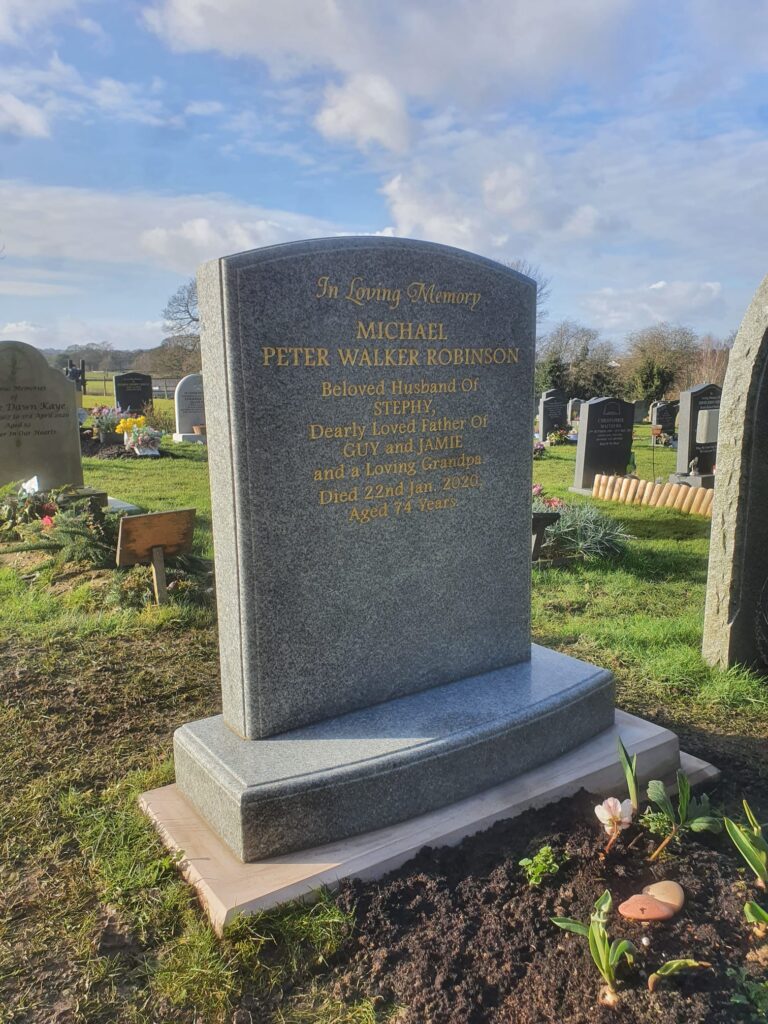
A traditional upright headstone provides a clear surface for names, dates and an inscription. Its straightforward appearance can suit families who would like a dignified memorial without extensive decoration.
The top may be rounded, pointed, arched or shaped more distinctively. A simple outline often leaves more room for clear Arabic and English lettering.
Islamic Architectural Shapes
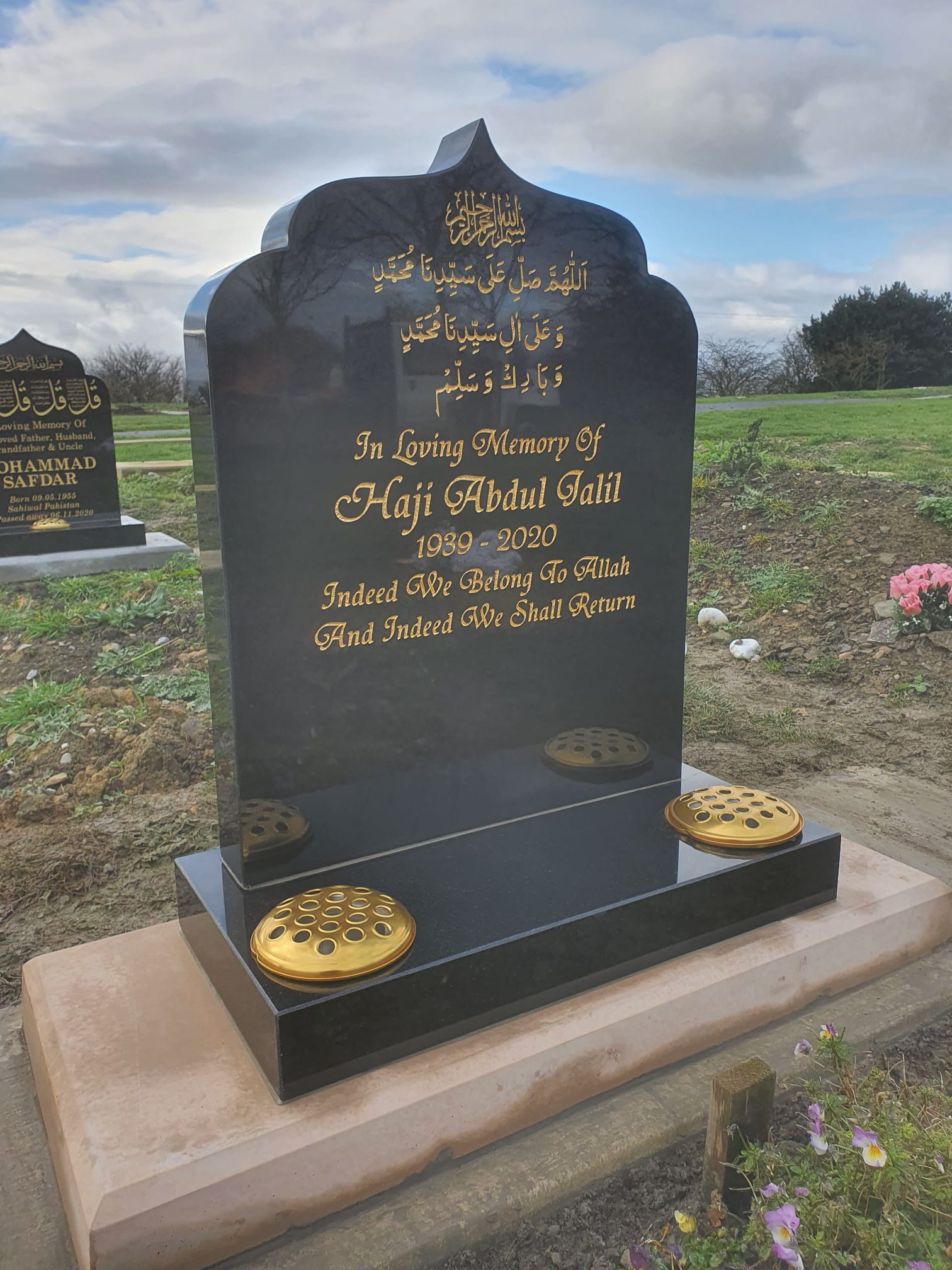
Some memorials take inspiration from arches and shapes associated with Islamic architecture. These can create a recognisable design while retaining a balanced and respectful appearance.
Northern Headstones offers The Mecca Islamic Headstone, which is available in different sizes and granite colours. Its inscription, lettering and selected design details can be adjusted to suit the family and cemetery requirements.
Lawn Memorials
Many Muslim burial areas operate as lawn cemeteries. These usually permit an upright headstone at the head of the grave while the remaining area is kept as grass, soil or a permitted mound.
A lawn memorial can provide enough room for a clear inscription without covering the complete grave.
Memorial Tablets and Smaller Markers
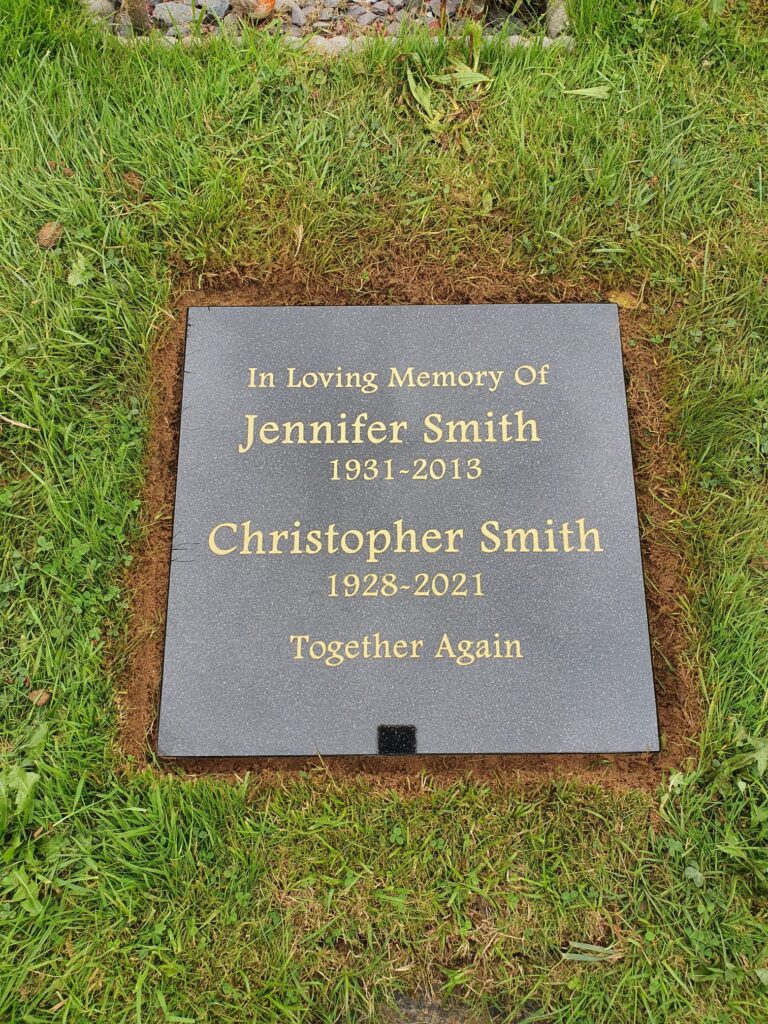
Some families prefer a smaller plaque or tablet rather than a full upright headstone. This may better reflect their interpretation of a modest grave marker or comply more easily with local regulations.
The available inscription space will be more limited, so the wording should be planned carefully.
Choosing the Stone
The chosen material affects the appearance, lettering options and long-term care of the memorial.
Granite
Granite is widely used for modern headstones because it is available in several colours and provides a clear surface for inscriptions.
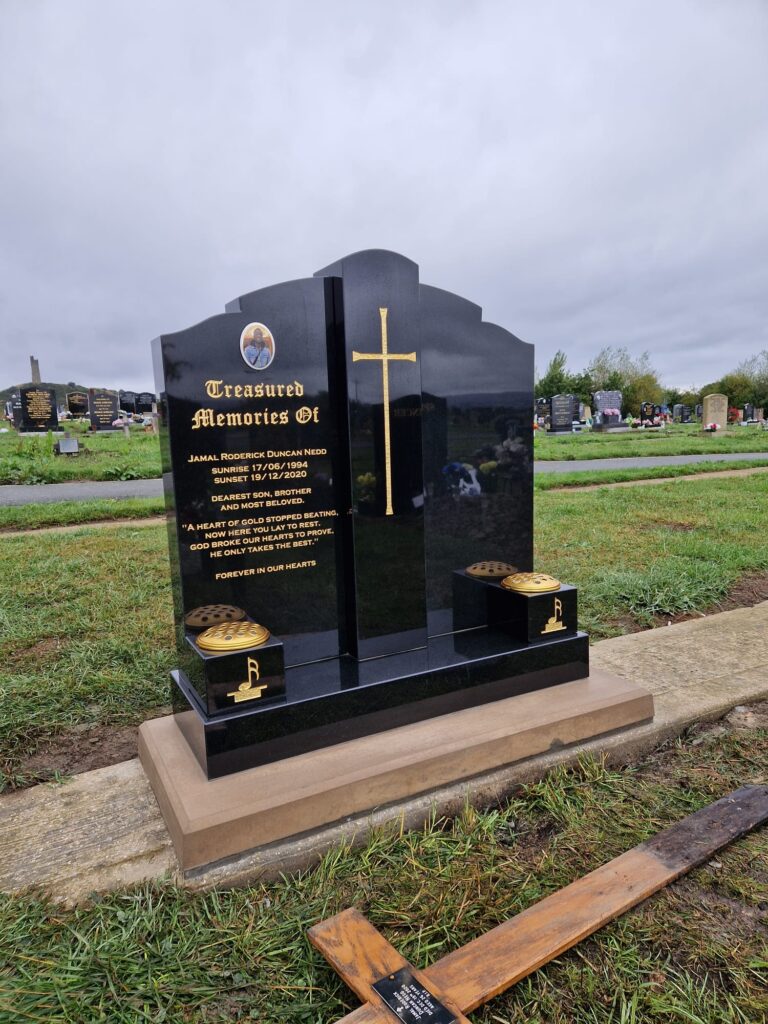
Polished black granite offers strong contrast with white, silver or gold lettering. Grey and lighter granite can create a softer appearance while still allowing names and dates to remain easy to read.
Sandstone
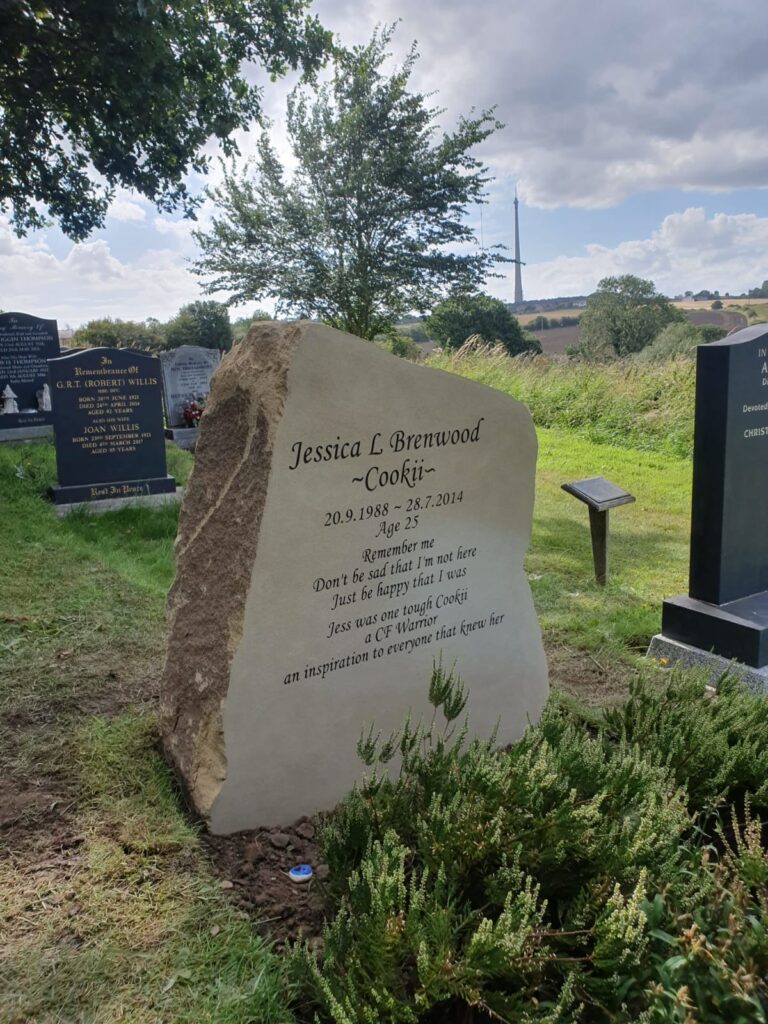
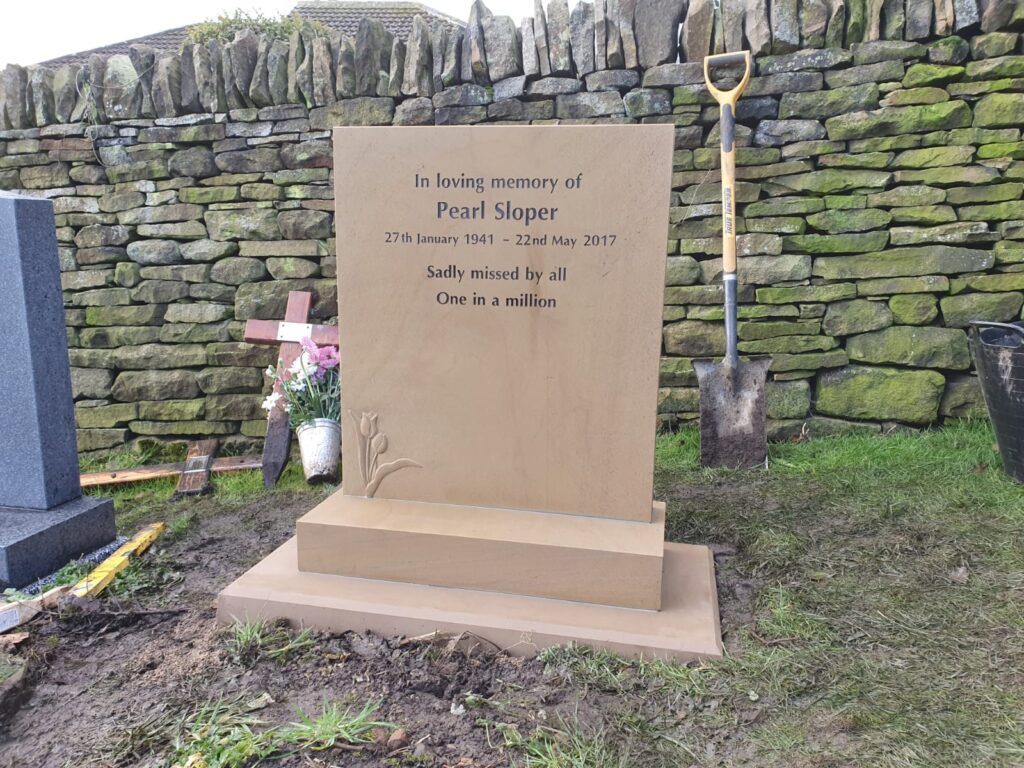
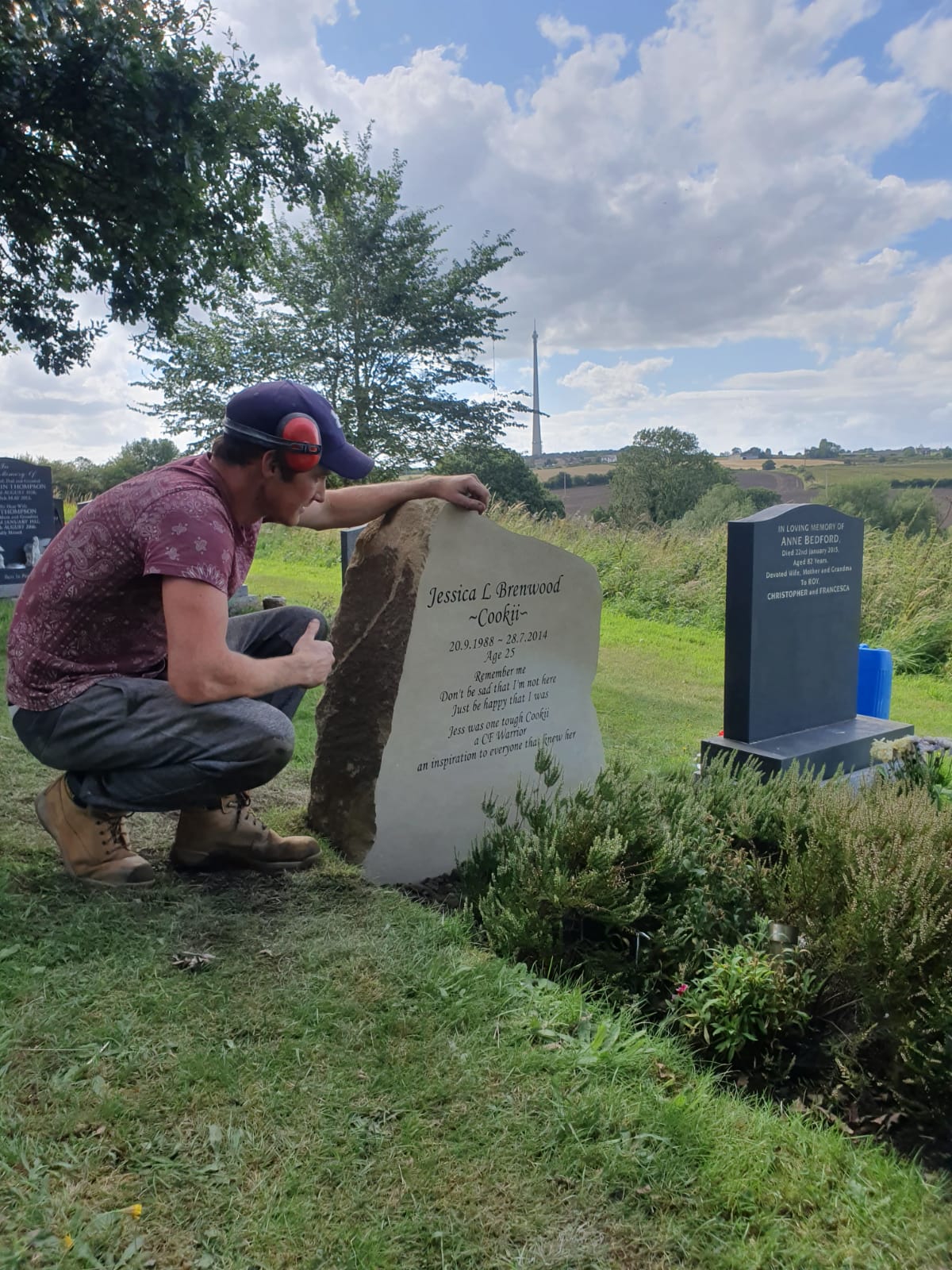
Sandstone has a warmer and more natural character. Its colour, texture and grain vary between individual pieces, giving the finished memorial a less uniform appearance.
It may suit traditional cemeteries or families who prefer a natural stone without a highly reflective finish.
Marble and Other Materials
Other stones may be available, but their suitability will depend on the design, local climate and cemetery regulations.
Before choosing a material, ask how it will weather, how the lettering will be created and what maintenance may be required in the future.
What Can Be Written on a Muslim Headstone?
A Muslim headstone commonly includes essential identification details, followed by a short and respectful inscription.
The wording may include:
- The person’s full name
- An Arabic or family name
- Their date of birth and date of death
- Dates from the Gregorian or Hijri calendar
- Their relationship to close family members
- A short religious phrase or prayer
- A personal message from the family
There is no need to include every possible detail. A clear and restrained inscription will often suit the simplicity of the memorial more naturally.
Using Arabic Lettering
Arabic lettering can be included alongside or instead of English wording. The family may wish to use the person’s Arabic name, a short phrase or carefully selected religious text.
All Arabic wording should be checked by someone who is fluent and understands the intended religious meaning. Do not rely solely on automatic translation tools, particularly for Qur’anic verses, prayers or formal expressions.
The final proof should also be checked for:
- Correct spelling and letter formation
- The correct reading direction
- Accurate names and dates
- Suitable line breaks
- Balanced spacing between Arabic and English
Using Qur’anic Verses and Religious Phrases
Some families wish to include a Qur’anic verse, prayer or phrase of remembrance. Views differ regarding the use of sacred text on graves, particularly where the stone may become weathered or come into contact with dirt.
Before including Qur’anic wording, seek guidance from the family’s imam or religious adviser. This ensures that the chosen text is accurate, appropriate and presented respectfully.
Islamic Symbols and Decorative Details
Decoration should be selected carefully. Not every symbol commonly associated with Muslim culture will feel suitable to every family or religious community.
Possible details may include:
- An Islamic arch or architectural outline
- Simple Arabic calligraphy
- A restrained geometric border
- A floral or natural motif
- A small design with personal meaning
The crescent and star are sometimes used in Muslim memorial design, but they are not required and should not be assumed to represent every Muslim person or family.
Where simplicity is preferred, the shape of the headstone and arrangement of the inscription may provide all the personalisation that is needed.
Can a Muslim Headstone Be Bespoke?
A bespoke memorial can be created where an existing design does not reflect the family’s wishes or the cultural background of the person being remembered.
This might involve:
- Adapting an existing Islamic headstone shape
- Creating more space for Arabic and English inscriptions
- Using a specific arch or geometric outline
- Including a carefully selected personal detail
- Matching another family memorial
- Working from a drawing, photograph or design reference
Northern Headstones can create bespoke memorials from explanations, sketches, photographs and other imagery. Any proposed design will still need to comply with the regulations of the burial ground.
How Much Does a Muslim Headstone Cost?
The cost depends on the complete specification rather than whether the memorial is described as Muslim or Islamic.
Factors affecting the price can include:
- The type and colour of stone
- The size and thickness of the headstone
- The complexity of the shape
- The number of inscription letters
- Arabic calligraphy or specialist lettering
- Gold leaf, silver or painted finishes
- Additional carved or engraved details
- The foundation and installation requirements
- Separate cemetery application fees
Ask for a written quotation that explains what is included. This should make clear whether lettering, designs, fitting and foundations form part of the stated price.
When Can a Muslim Headstone Be Installed?
A permanent headstone is not normally installed immediately after the burial. The ground may need time to settle, and the cemetery may impose a minimum waiting period before accepting a memorial application.
The appropriate timing will depend on:
- The cemetery’s regulations
- The ground and weather conditions
- Whether a concrete memorial beam is already available
- The size and weight of the chosen headstone
- The time needed to approve and produce the memorial
The cemetery or stonemason can explain when installation will be permitted at the chosen location.
Questions to Ask Before Ordering
Before confirming a Muslim headstone, ask:
- Is this design permitted in the cemetery’s Muslim section?
- What dimensions and materials are allowed?
- Is a kerb surround or border permitted?
- Who will apply for the memorial permit?
- How many inscription letters are included?
- Can Arabic lettering be reproduced accurately?
- Will the family approve a full proof before engraving?
- Are the foundation and fitting included?
- Are any cemetery fees charged separately?
It may also be helpful to show the proposed wording and design to a trusted imam, particularly where religious text or imagery is being considered.
Creating a Dignified and Personal Memorial
A Muslim headstone should provide a respectful place to remember the person without placing unnecessary pressure on the family to choose an elaborate design.
A simple stone, accurate inscription and thoughtfully arranged lettering can create a deeply meaningful tribute. Where additional details are included, they should reflect the individual and remain consistent with the family’s beliefs.
You can browse Northern Headstones’ wider range of headstones and memorials for ideas, although the chosen design should always be checked against the requirements of the Muslim burial section.
To discuss a Muslim or Islamic headstone, request a quotation or ask about Arabic lettering and bespoke options, please contact Northern Headstones. The team will listen to your requirements and help you consider the available choices with care and respect.
Written and Edited by Northern Headstones
Having established itself as one of the North’s of Englands most prestigious Headstone and Memorial Masons, Northern Headstones delivers bespoke memorials like no other.