or Call +44 (0)7724 515 072
The Complete Guide to Headstones and Memorials: Which Style is Right for You?
A headstone provides a permanent place to record someone’s name and remember the life they lived. It marks a grave, preserves important details and gives family and friends somewhere personal to visit and reflect.
Although the words headstone, gravestone and memorial are often used interchangeably, they can refer to slightly different things. Memorials are also available in many more shapes, materials and styles than the traditional upright stone that first comes to mind.
Understanding how headstones are designed and made can make the process of choosing one feel more manageable. This guide explains the terminology, history, materials and practical decisions involved in creating a lasting memorial.
What Is a Headstone?
A headstone is a marker placed at the head of a grave to identify and commemorate the person buried there. It is usually made from stone and commonly displays:
- The person’s name
- Their date of birth and date of death
- Their age, where preferred
- Their relationship to close family members
- A short inscription, epitaph, prayer or verse
- Carved, engraved or etched decorative details
A headstone may be simple and understated or highly personalised. Its design can reflect the person’s beliefs, relationships, interests or character while still meeting the regulations of the cemetery or churchyard.
Northern Headstones offers a varied selection of headstones and memorials, including traditional upright stones, hearts, books, angels, cremation plaques, natural boulders and full kerb surrounds.
What Is the Difference Between a Headstone, Gravestone and Memorial?
These terms are closely related and are often used to describe the same object, but there are small differences in their broader meanings.
Headstone
A headstone is specifically a marker installed at the head of a grave. In modern use, it usually means an upright stone secured to a base.
Gravestone
Gravestone is a more general term for a stone used to mark a grave. It may refer to an upright headstone, a flat marker or another form of stone memorial.
Memorial
A memorial is anything created to preserve the memory of a person. A headstone is one type of memorial, but the word may also describe:
- A cremation plaque
- A memorial tablet
- A kerb surround
- A monument or sculpture
- A bench or commemorative feature
- A marker placed somewhere other than a grave
Within memorial masonry, the three terms are commonly used together, particularly when discussing different product styles.
A Brief History of Headstones and Grave Markers
People have marked burial places for thousands of years. Ancient cultures used stones, monuments and inscribed tablets to identify the dead, record names and provide religious or commemorative messages.
Ancient Egyptian funerary stelae, for example, could contain the name and image of the deceased alongside prayers and offerings. Grave markers also appeared in Greek, Roman and other ancient burial traditions.
In Britain, medieval memorials were commonly found inside churches and took forms such as floor slabs, brasses and substantial stone tombs. Churchyard headstones became more widespread over the following centuries, although their materials and designs varied according to local traditions and what stone was available nearby.
The Growth of Victorian Cemeteries
During the 19th century, Britain’s rapidly growing towns and cities needed more burial space. Large landscaped cemeteries were developed outside crowded urban churchyards, changing the way graves and memorials were designed.
Victorian cemeteries included a broad range of monuments, from relatively simple upright stones to angels, crosses, obelisks, urns and elaborate family tombs. Advances in transport and stoneworking also made a wider selection of materials available.
Modern headstones continue to draw inspiration from these traditions, although contemporary tools now allow photographs, detailed imagery and highly individual shapes to be incorporated more precisely.
What Information Is Usually Included on a Headstone?
Most headstones begin with the essential details of the person being commemorated. A typical inscription might include:
- “In loving memory of” or another opening phrase
- The person’s full or familiar name
- Their dates of birth and death
- Their relationship to their family
- A short personal or religious message
There is no requirement to follow one particular format. Some families include complete dates, while others use only the years. A nickname may feel more personal than a formal name, provided everyone involved is comfortable with the choice.
Where the headstone may eventually commemorate a husband, wife or another relative, the layout should leave enough space for a future inscription.
What Materials Are Headstones Made From?
The material influences the appearance, durability, inscription options and long-term care of the memorial. It may also be restricted by the cemetery or churchyard.
Granite Headstones
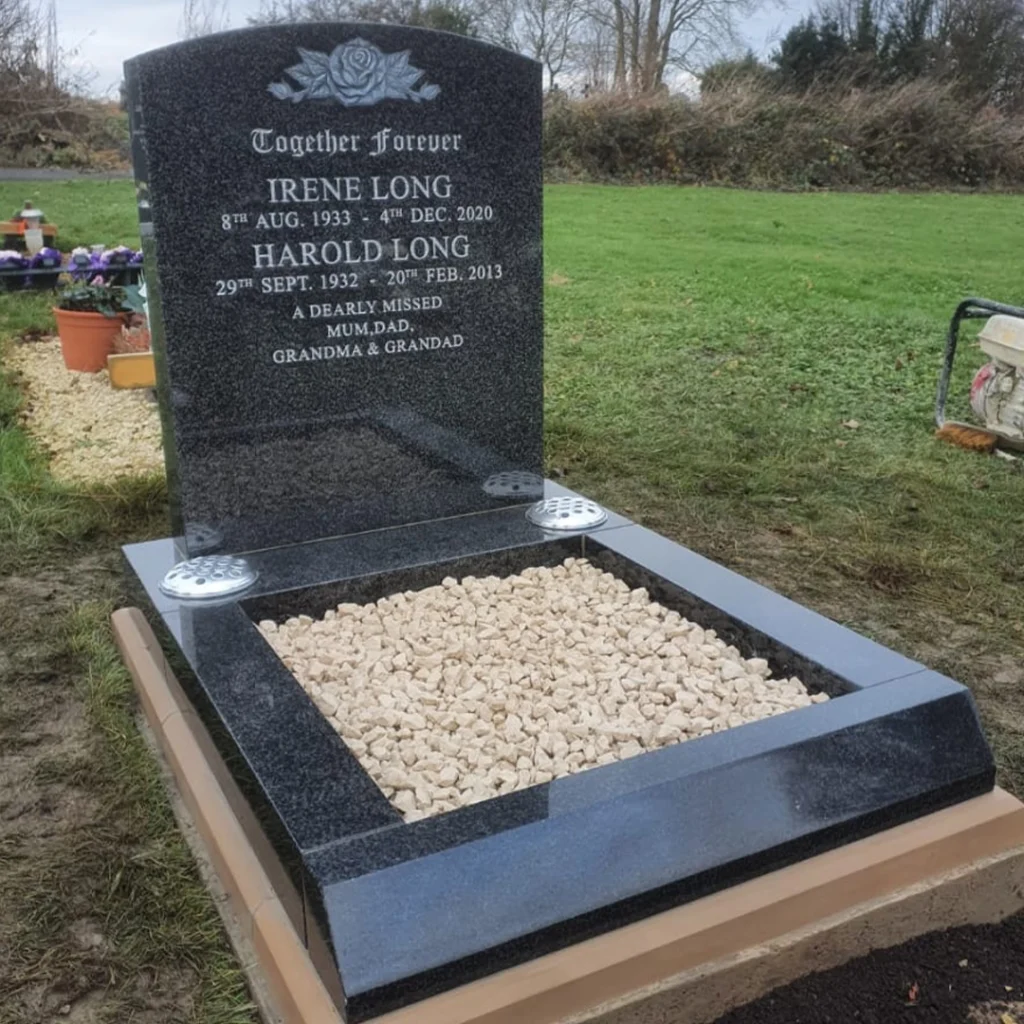
Granite is one of the most widely used materials for modern headstones. It is a dense natural stone available in several colours, including black, grey, blue and red.
Its surface may be highly polished, partly polished, honed or textured. Polished dark granite provides a strong contrast for white, silver or gold lettering and is particularly suitable for laser-etched photographs and detailed designs.
Granite can be used for:
- Traditional upright headstones
- Heart and book memorials
- Angel memorials
- Cremation plaques
- Companion and family stones
- Kerb surrounds and cover slabs
Sandstone Headstones
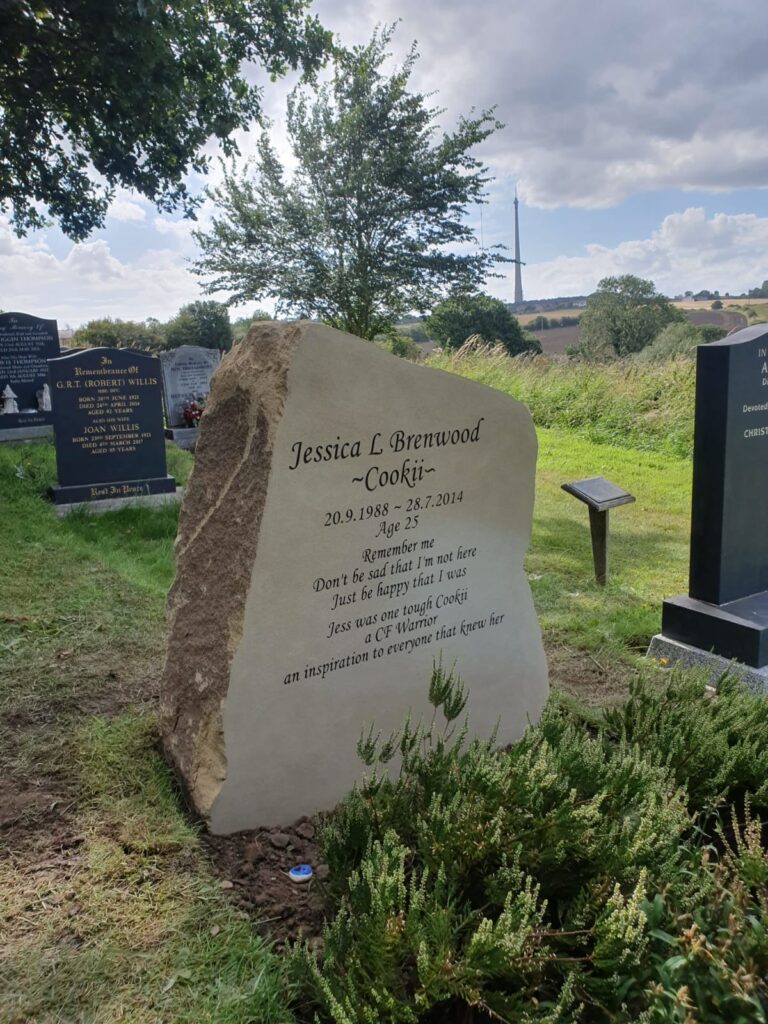
Sandstone has a warmer and more natural appearance. Its colour, grain and markings vary between individual pieces, meaning that each memorial has its own character.
It can be shaped with smooth, rustic or chisel-cut edges and often sits naturally within traditional churchyards and rural cemeteries. Northern Headstones’ range of sandstone memorials includes upright designs, rustic-edged stones and substantial natural boulders.
Sandstone is more porous than polished granite and may gradually develop a weathered appearance. For many families, this natural ageing is part of its appeal.
Marble Headstones
Marble has been widely used for historic memorials and monuments. Its lighter appearance and natural veining can create an elegant finish, but it may gradually lose surface detail when exposed to outdoor weathering and pollution.
Its availability and suitability will depend on the memorial mason, the design and the regulations of the burial ground.
Local and Natural Stone
Historic churchyards often contain memorials made from stone quarried in the surrounding region. In Yorkshire, this may include locally sourced sandstone commonly described as Yorkshire stone.
Natural stone can help a new memorial complement older buildings and existing headstones, although every quarry and stone type has different properties.
What Are the Main Types of Headstones?
Headstones are available in many shapes and arrangements. The most suitable option will depend on the grave, available inscription space and the person being remembered.
Upright Headstones
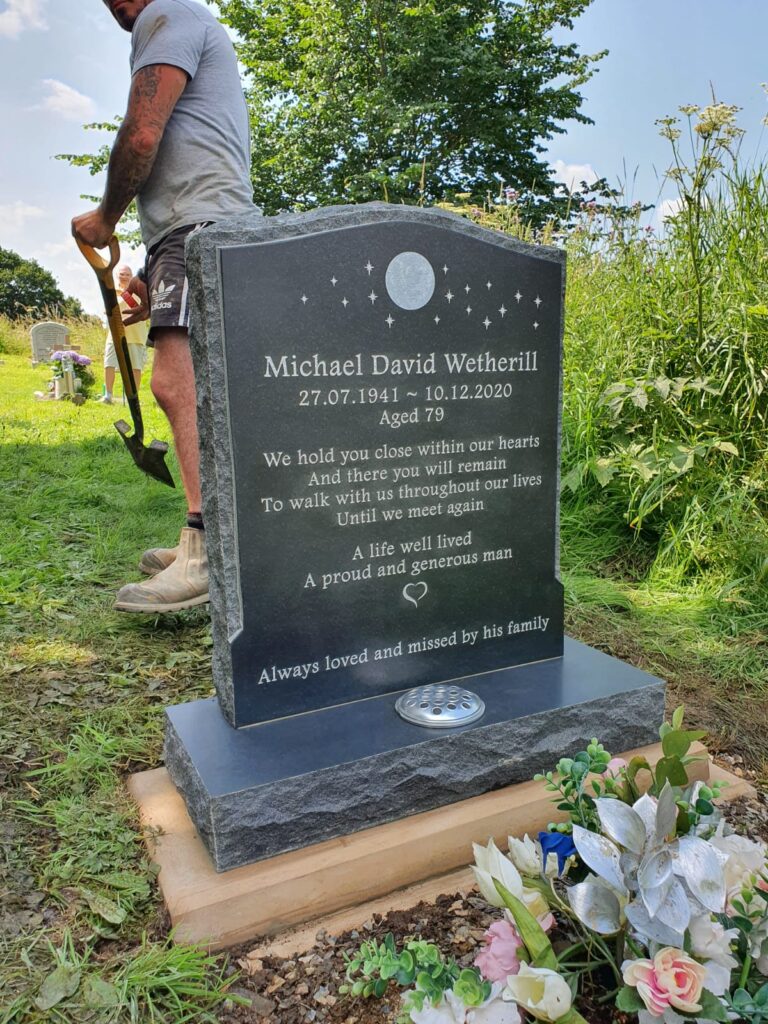
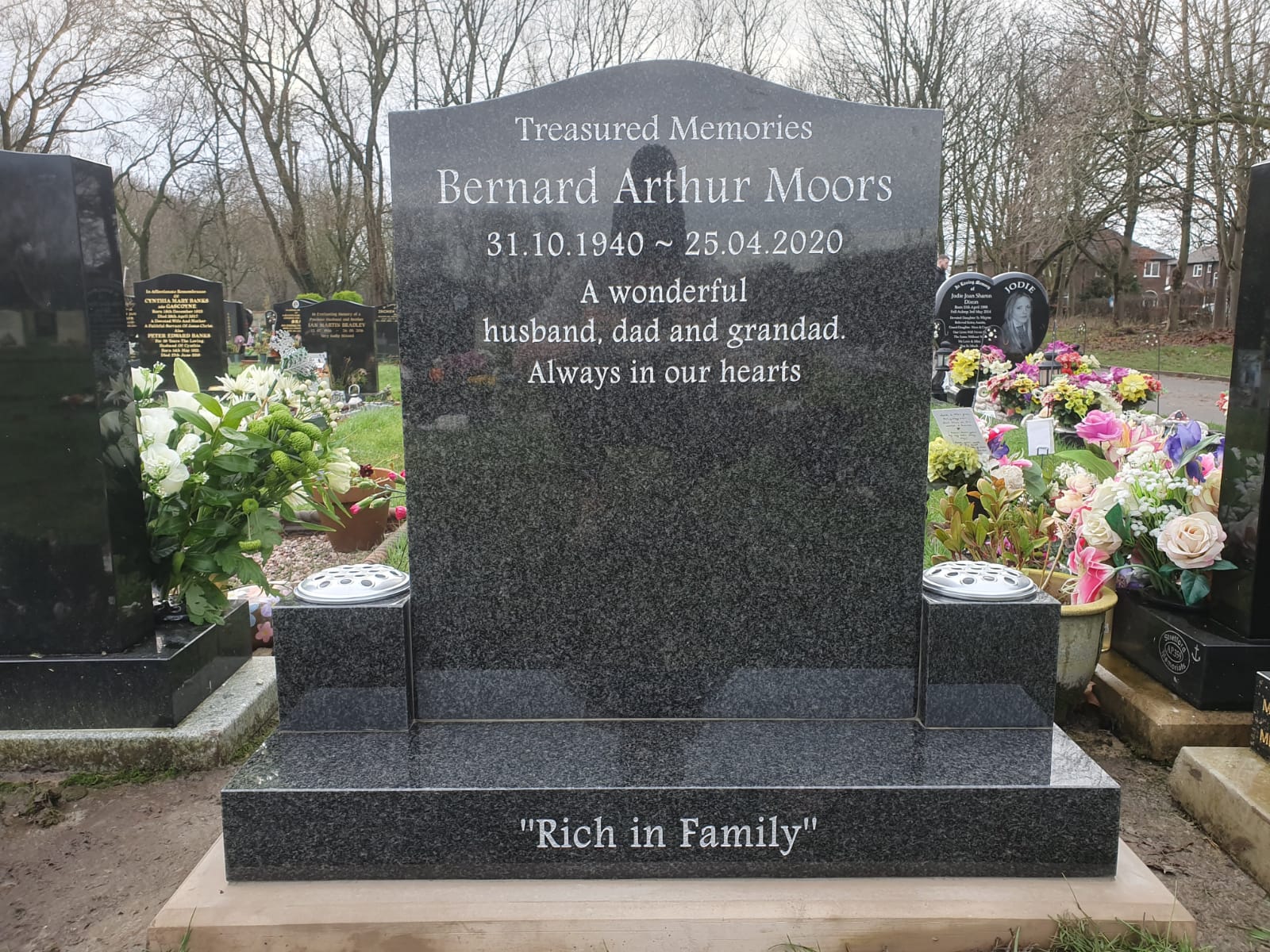
An upright headstone consists of a vertical tablet secured to a base. Common top shapes include:
- Round or camber tops
- Ogee curves
- Pointed and Gothic-style arches
- Square or rectangular tops
- Shouldered designs
- Scroll and serpentine shapes
The clear central surface provides space for inscriptions, carvings and photographs.
Lawn Memorials
A lawn memorial is generally an upright headstone and base without a full stone border around the grave. This format is common in modern cemeteries because it allows the surrounding grass to be maintained more easily.
Flat Markers and Tablets
A flat or low memorial may sit level with the ground or be raised slightly on a sloping base. These designs are often used for cremation plots, memorial gardens and burial grounds with specific size restrictions.
Book Headstones
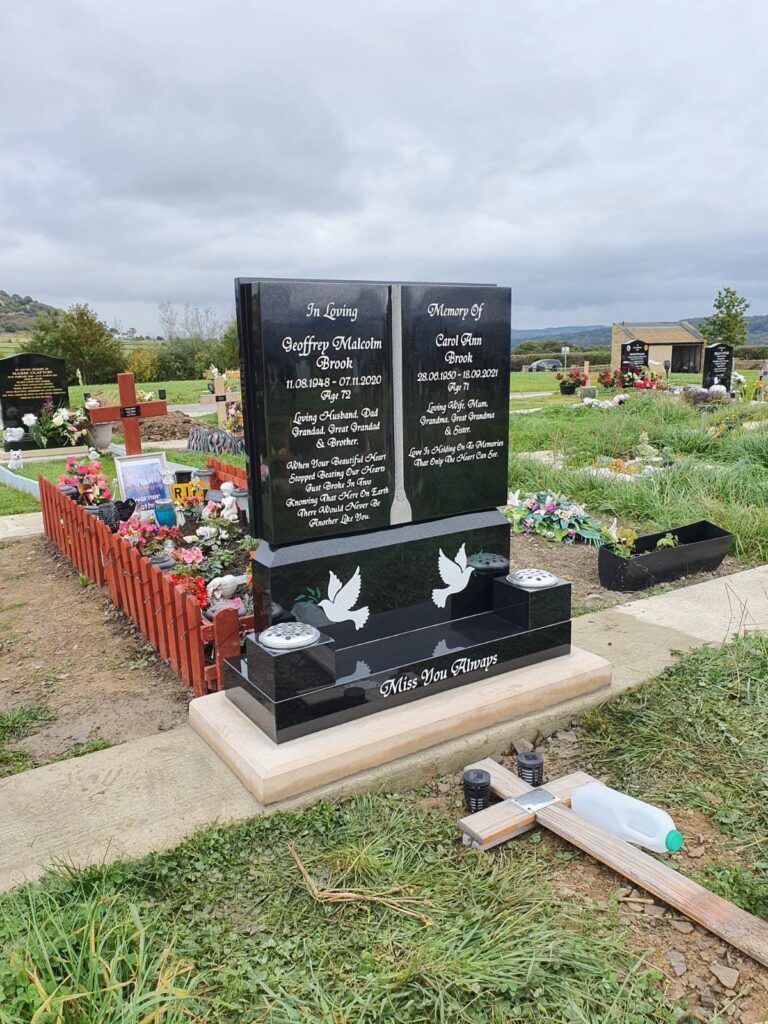
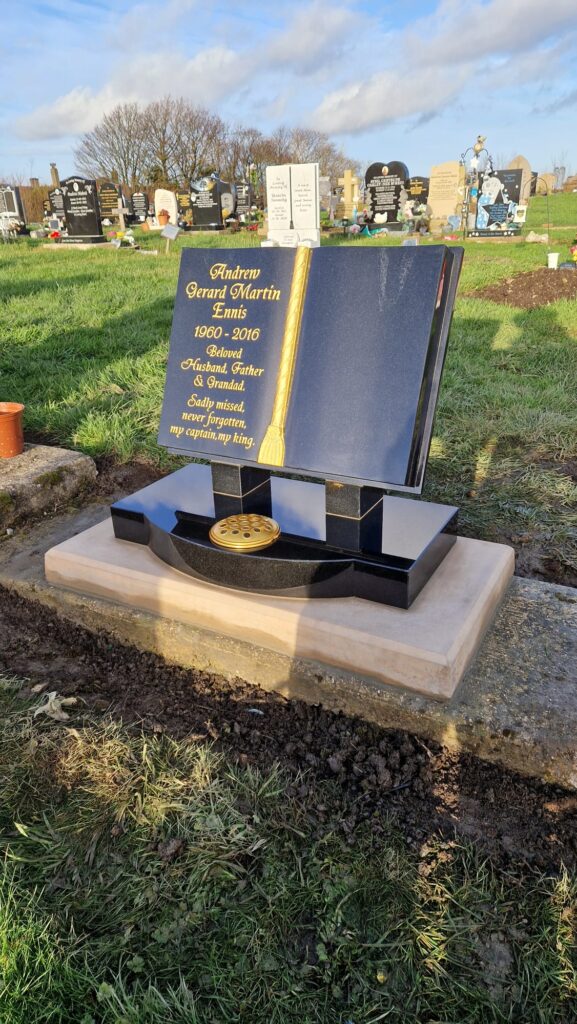
Book memorials resemble an open book and provide two natural areas for names and wording. They may represent the story of a life, religious scripture or two lives shared together.
Heart Headstones
A single or double-heart memorial can express love and emotional connection. These designs are suitable for individuals, couples and family graves.
Angel Memorials
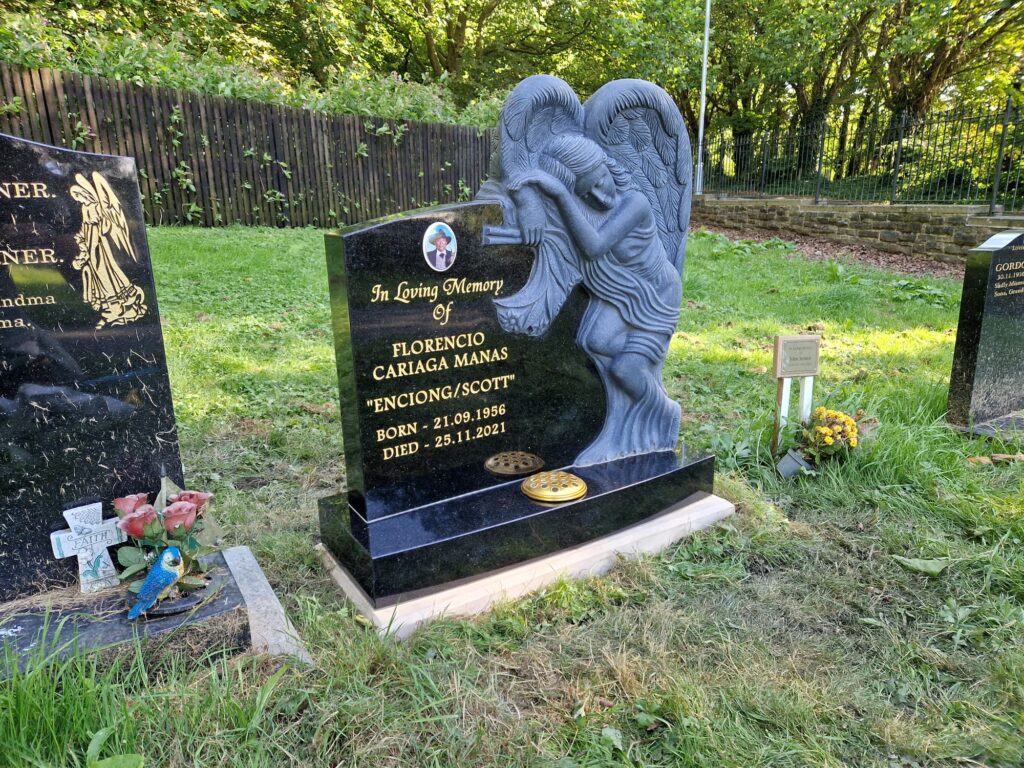
Angels may represent peace, protection, faith or guidance. They can appear as full sculpted figures or smaller carved and etched details within an upright headstone.
Kerb Surround Memorials
Kerbs create a stone border around the grave. The enclosed space may contain decorative chippings, planting, a pathway or stone cover slabs.
Full surrounds are not permitted in every cemetery, so approval must be confirmed before choosing this style.
Boulder Memorials
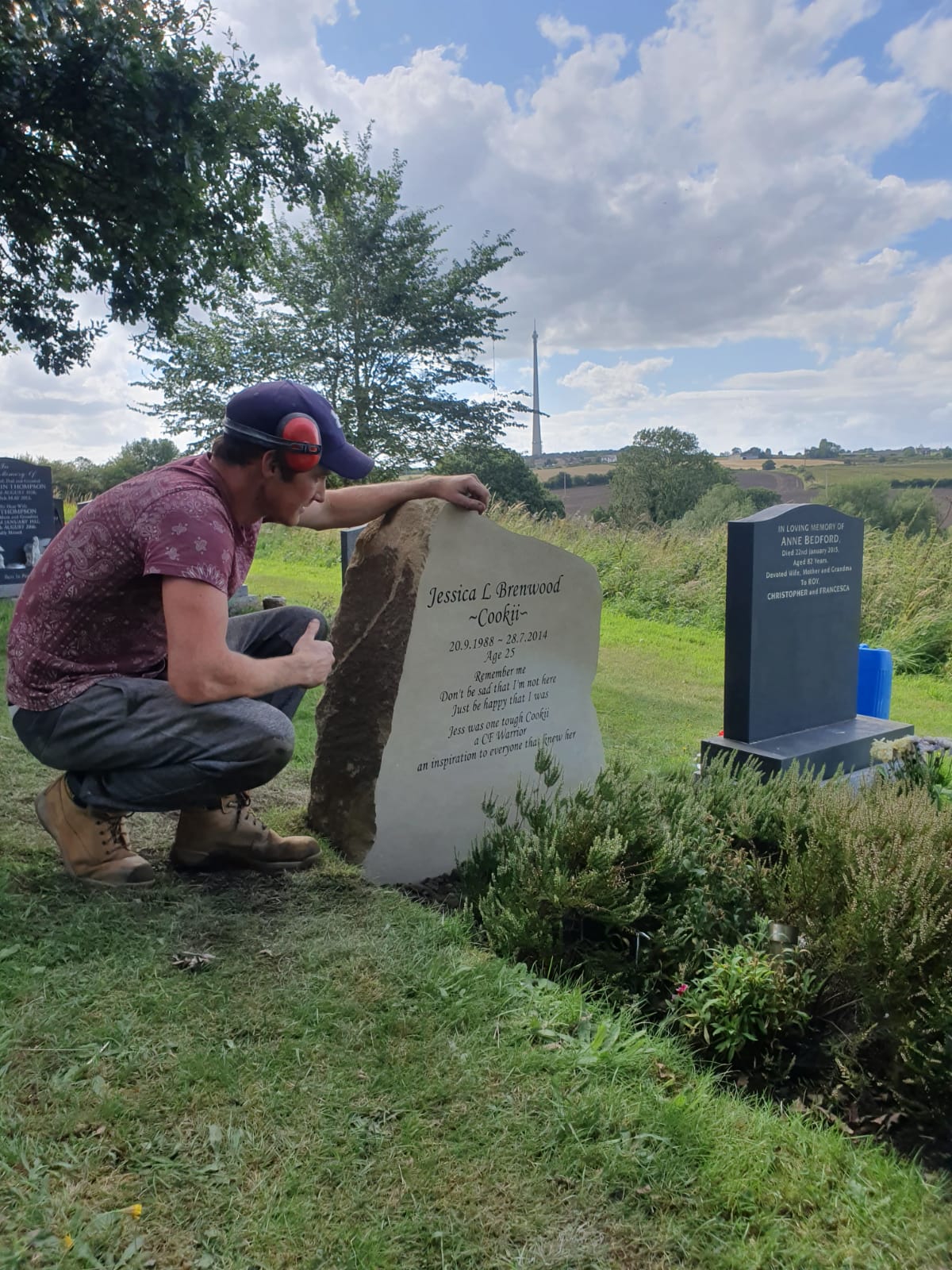
A boulder memorial retains much of the stone’s natural shape and texture. One area is usually prepared for the inscription while the irregular outline remains an important part of the design.
How Are Headstones Made?
The exact process depends on whether the family chooses an existing design or commissions a completely individual memorial.
1. Discussing the Memorial
The process begins with a conversation about the person being remembered, the preferred style, the inscription and the available budget.
Families do not need to arrive with every detail decided. Looking at existing designs can help identify preferred shapes, materials and levels of decoration.
2. Checking the Burial-Ground Regulations
Before the memorial is finalised, the cemetery or churchyard rules must be checked. These may control:
- The permitted dimensions
- The types and colours of stone
- Polished or natural finishes
- Photographs and decorative imagery
- Kerb surrounds and flower containers
- The wording of inscriptions
- The required foundation and fixing system
A design accepted in one cemetery may need to be changed for another.
3. Selecting and Preparing the Stone
The chosen stone is cut to the required dimensions before its edges, face and surface finish are prepared.
Granite may be polished to create a smooth reflective surface, while sandstone can be left natural or given hand-worked and chisel-cut edges.
4. Shaping and Carving the Memorial
The headstone is shaped according to the agreed design. Decorative details such as flowers, angels, crosses, page lines and borders may then be carved into or around the stone.
Where the family wants something more individual, Northern Headstones can create bespoke memorials using explanations, drawings, photographs or other images as inspiration.
5. Planning the Inscription
The names, dates and personal wording are arranged to fit the available surface. The font, letter size, spacing and finish must work with the memorial’s shape and any decorative features.
The family should be shown a proof of the proposed layout before engraving begins.
6. Adding Lettering and Images
Depending on the stone and design, the memorial may include:
- Incised or V-cut lettering
- Painted, silver or gold-leaf finishes
- Carved flowers and symbols
- Laser-etched portraits
- Ceramic photographs
- Hand-painted details
Every name, date and word should be checked carefully before it is permanently added.
7. Applying for Permission
A memorial application may need to be submitted to the cemetery, council or church authority. The application commonly includes the dimensions, material, inscription and fixing details.
Separate permit fees may apply depending on the burial ground.
8. Installing the Headstone
Once permission has been granted and the memorial is complete, it can be installed by experienced fitters using suitable foundations and fixings.
Northern Headstones installs its memorials on foundations over twice the size of industry guidelines, helping to provide lasting strength and stability.
Can a Headstone Be Completely Personalised?
Yes. Personalisation may involve a completely original design, but it can also be achieved through smaller details added to a familiar memorial shape.
Families may personalise a headstone through:
- The stone colour and finish
- A distinctive top or outline
- A personal inscription
- A favourite flower or religious symbol
- A photograph or etched portrait
- An image linked to a hobby or occupation
- Lettering in another language
- A matching base or flower container
The most successful memorials do not necessarily include the greatest number of features. One carefully chosen detail can create a stronger personal connection than several unrelated images.
What Should You Consider When Choosing a Headstone?
The Person Being Remembered
Think about their character, beliefs, interests and the way they would have wanted to be remembered. A simple memorial may suit one person, while a carved or more individual design may feel appropriate for another.
The Resting Place
Consider the surrounding memorials, local stonework and cemetery regulations. A natural sandstone design may sit comfortably in a rural churchyard, while polished granite may be accepted within a modern cemetery.
The Inscription
Decide how much wording is required and whether another inscription may be added in the future. Longer wording needs more space and may affect the choice of memorial.
The Budget
The price can be influenced by the material, size, carving, inscription, installation and cemetery fees. Ask for a complete written quotation explaining exactly what is included.
Long-Term Maintenance
Different materials and finishes require different levels of care. Polished granite is generally straightforward to clean, while textured and porous stone may develop more visible natural weathering.
How Soon After a Burial Can a Headstone Be Installed?
A permanent memorial is not normally installed immediately after burial. The ground may need time to settle, and the burial authority may impose a waiting period before allowing the headstone to be fitted.
The timing depends on:
- The cemetery or churchyard rules
- The ground and weather conditions
- Whether a memorial beam is already in place
- The size and weight of the headstone
- The time required for design, approval and production
The cemetery and memorial mason can advise when installation will be permitted for the particular plot.
Choosing a Memorial With Care
A headstone does more than identify a grave. It preserves a name, records a relationship and gives future generations a lasting connection with the person being remembered.
The right memorial does not need to be the largest or most elaborate. A suitable stone, balanced design and sincere inscription can create a dignified tribute that feels personal to the family.
To discuss a headstone, compare materials or receive guidance on the design process, please contact Northern Headstones. The team will listen to your ideas and help you consider the available options with patience, care and respect.
Written and Edited by Northern Headstones
Having established itself as one of the North’s of Englands most prestigious Headstone and Memorial Masons, Northern Headstones delivers bespoke memorials like no other.