or Call +44 (0)7724 515 072
Kerb Surrounds for Headstones and Memorials: A Guide
Kerb surrounds provide a distinctive and traditional way to define a grave and create a more complete memorial. Formed from lengths of stone fitted around the burial plot, they can complement an upright headstone while providing additional space for chippings, planting, flower containers or a cover slab.
Some families choose a kerb surround because they prefer the appearance of a full grave memorial. Others value the clearly defined space and the opportunity to include more personal details within the design.
There are several practical points to consider before choosing one. Kerb surrounds are not permitted in every cemetery, and their size, material and contents may be controlled by the burial authority. Understanding the available options can help you decide whether this type of memorial is suitable for your family.
What Is a Kerb Surround Memorial?
A kerb surround is a border of stone installed around the edges of a grave. It is usually combined with an upright headstone, although the shape and arrangement can vary according to the memorial design.
The kerbs create a defined area within the burial plot. This area may be:
- Filled with decorative glass or stone chippings
- Covered with one or more stone slabs
- Left open for flowers or suitable planting
- Finished with a pathway-style feature
- Fitted with vases or flower containers
- Personalised with plaques, inscriptions or carved details
Northern Headstones offers a selection of kerb surround memorials, including full covers, half surrounds, heart-shaped kerbs, pathway designs and traditional arrangements.
Why Do Families Choose Kerb Surrounds?
A kerb memorial has a more substantial appearance than an upright headstone and base alone. It marks the complete grave rather than only the area at its head, which can create a stronger sense of permanence and place.
To Define the Grave Space
The stone border clearly outlines the burial plot. This can make the memorial feel complete and distinguish the grave from the surrounding lawn or neighbouring plots.
It may be particularly meaningful within a busy cemetery where families want their loved one’s resting place to have a clear and individual identity.
To Create a Traditional Appearance
Kerb surrounds have long been associated with traditional grave memorials. They can complement classic upright headstones, ogee shapes, book memorials, hearts and other familiar designs.
The finished appearance can range from simple and understated to highly decorative. A plain black granite surround may feel formal and balanced, while contrasting steps, coloured chippings or carved details can produce something more individual.
To Provide More Personalisation Options
A surround creates additional room for elements that may not fit comfortably on the main headstone. Depending on the design and cemetery regulations, these could include:
- Flower containers
- Small inscription plaques
- Carved hearts, flowers or religious symbols
- Contrasting stone steps
- Decorative corner posts
- Personalised cover slabs
- Glass or natural stone chippings
These details should be planned as part of the complete memorial so that the finished grave feels balanced rather than overcrowded.
To Make the Plot Easier to Maintain
A surround filled with chippings or fitted with a cover slab can reduce the amount of grass, soil or planting that needs regular attention.
It will not make the memorial completely maintenance-free. Leaves, dirt, moss and weeds may still gather between stones or around the kerbs, but the defined surface can be easier for some families to manage than an open grave plot.
Different Types of Kerb Surrounds
Kerb memorials are available in several arrangements. The best option will depend on the burial-ground rules, the size of the plot and the appearance your family prefers.
Full Kerb Surrounds
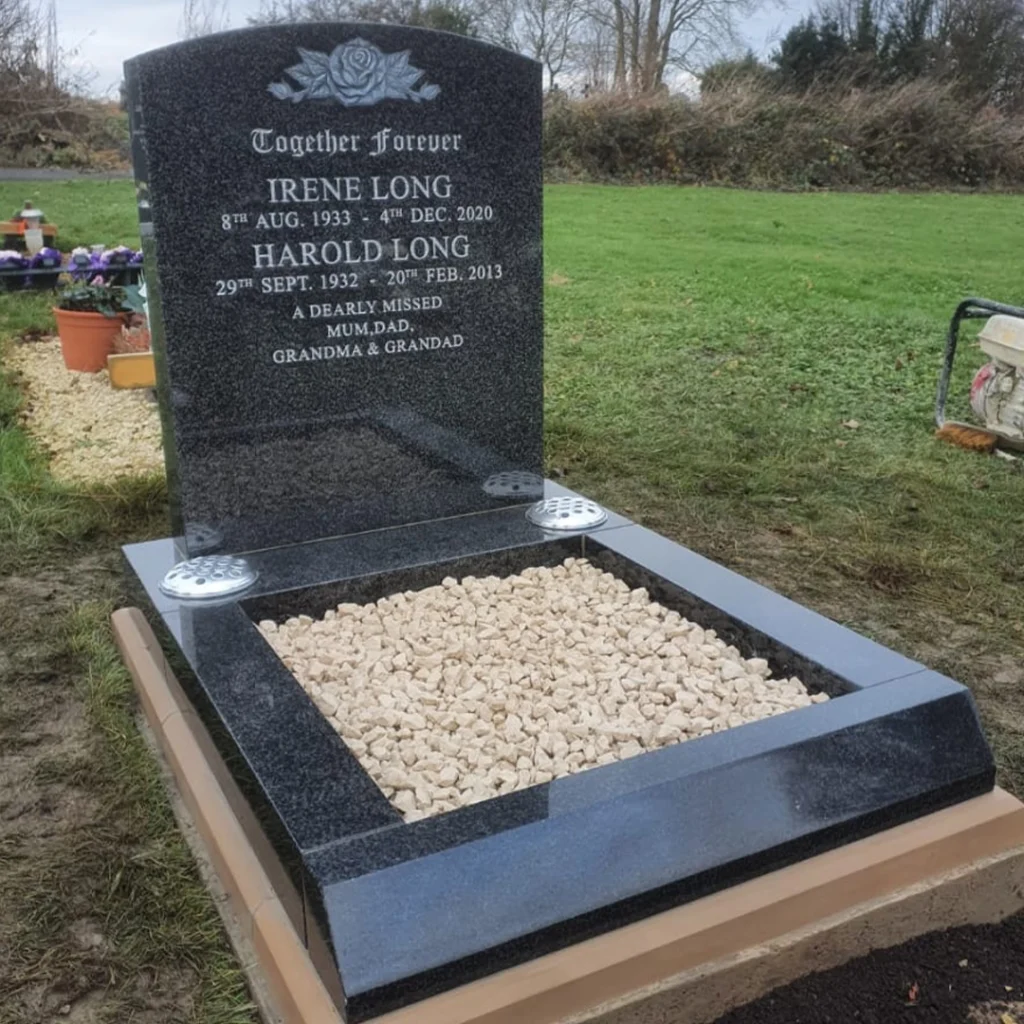
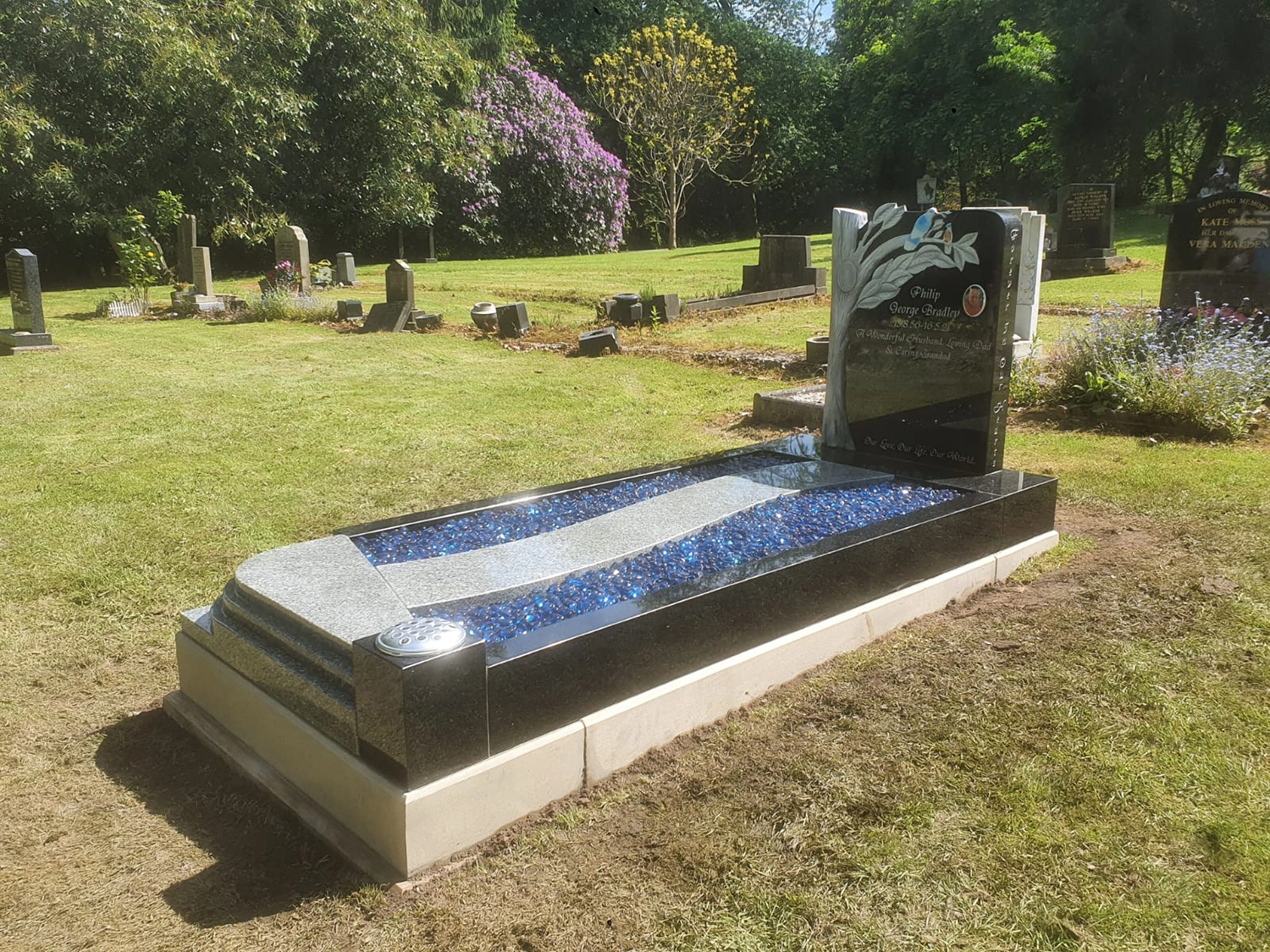
A full surround forms a complete rectangular border around the grave. It is often combined with an upright headstone and may include a raised foot kerb, corner posts, flower containers or steps.
The enclosed area can be filled with chippings, covered with stone or left partly open. This is one of the most substantial kerb memorial options and requires sufficient space within the allocated plot.
Full Cover Memorials
A full cover memorial includes kerbs around the grave with one or more slabs covering the enclosed area.
The slabs may be plain or include raised panels, inscriptions, carved flowers and other details. A full cover can create a formal appearance and limit the amount of open soil within the plot.
Because these memorials use a considerable amount of stone, their weight, foundations and installation need to be carefully considered.
Half Kerb Surrounds
A half surround covers or borders only part of the grave. It can provide some of the definition of a full kerb set while creating a lighter and less substantial appearance.
This style may suit families who want space for chippings or planting near the headstone without enclosing the entire plot.
Pathway Surrounds
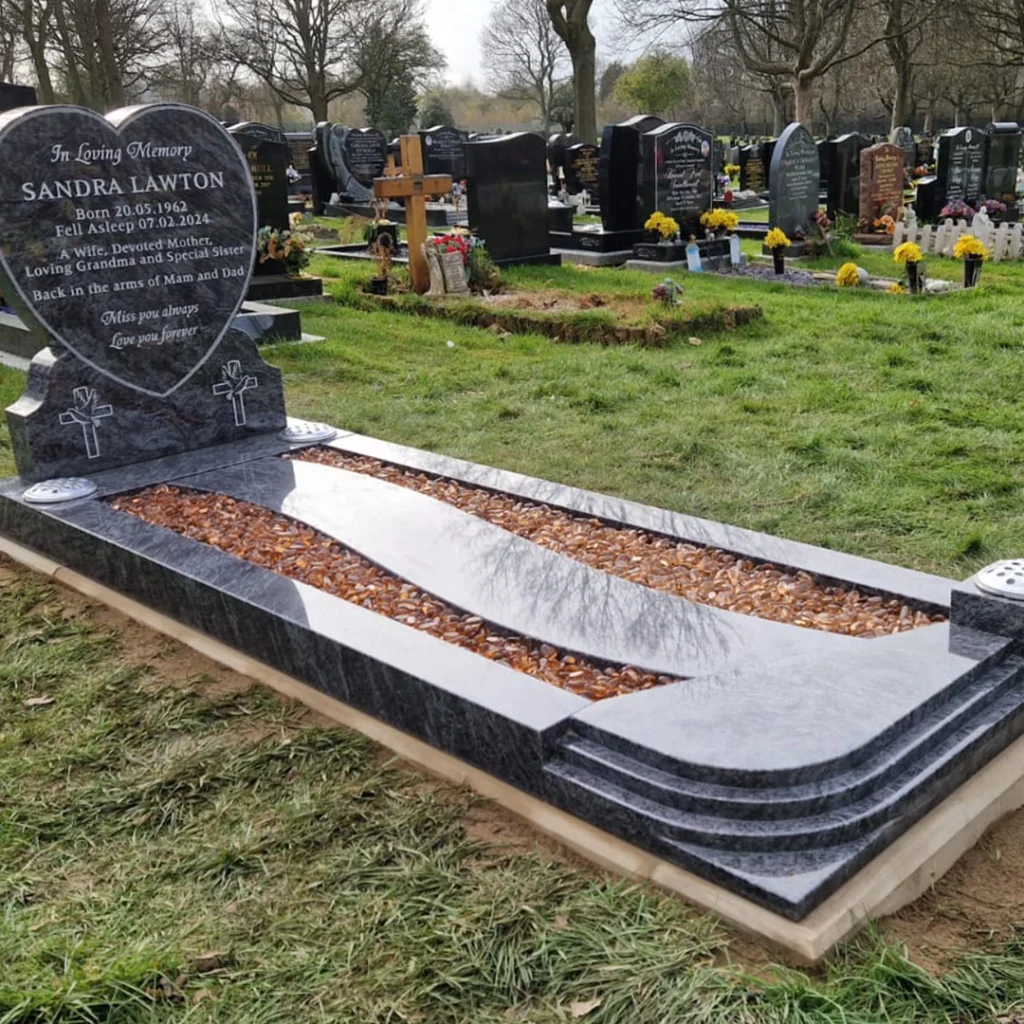
A pathway surround incorporates contrasting stone, slabs or steps to create a path-like feature through the centre of the grave.
The remaining areas may contain chippings or decorative stone. Contrasting colours can help the pathway stand out, although it is usually best to limit the number of materials so that the design remains dignified and cohesive.
Heart Kerb Surrounds
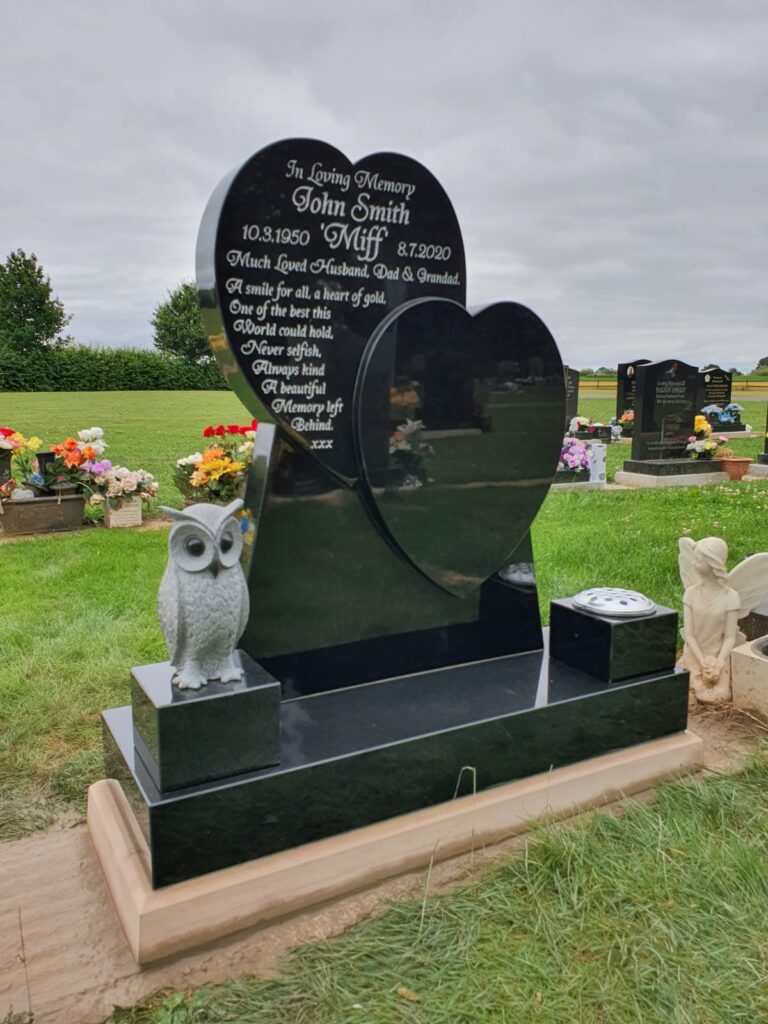
Heart-shaped kerbs introduce the symbolism of love into the surround itself. A heart may appear at the foot of the grave, within the central covering or as part of the border.
This can complement a heart-shaped headstone or add a softer detail to a more traditional upright memorial.
Traditional Kerb Surrounds
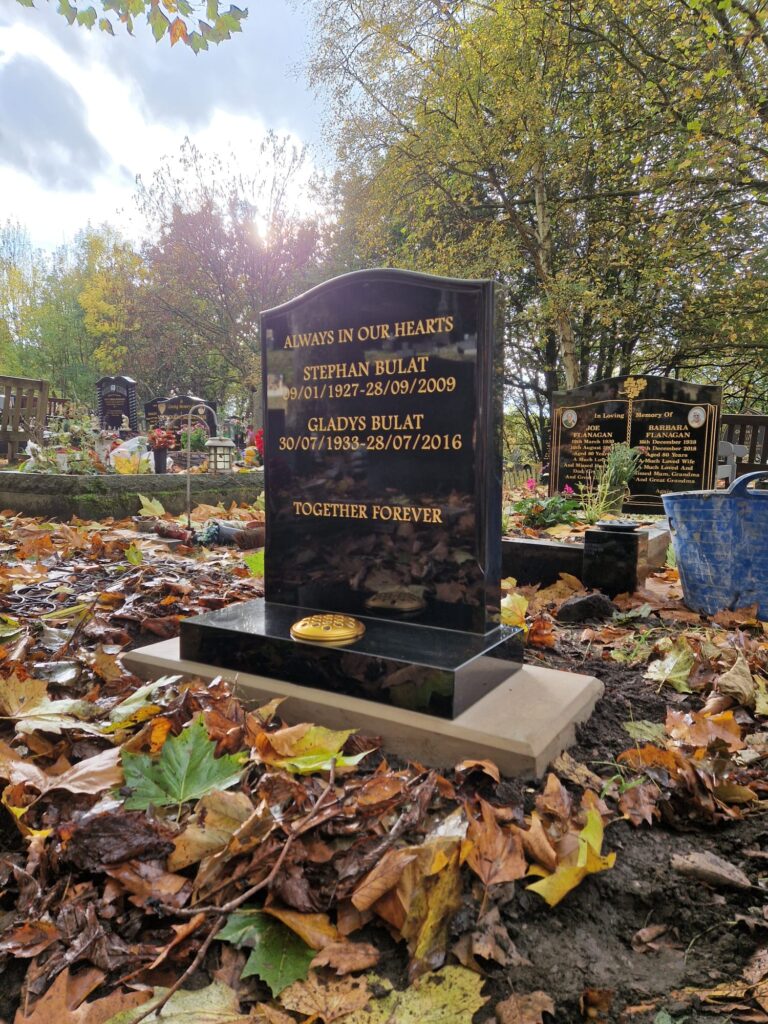
A traditional surround usually features straight granite kerbs, an upright headstone and a relatively simple arrangement of chippings, slabs or flower containers.
Its clean proportions allow the inscription and stone to remain the main focus. It can also be adapted with small personal details without losing its familiar appearance.
Can a Kerb Surround Be Added to Any Headstone?
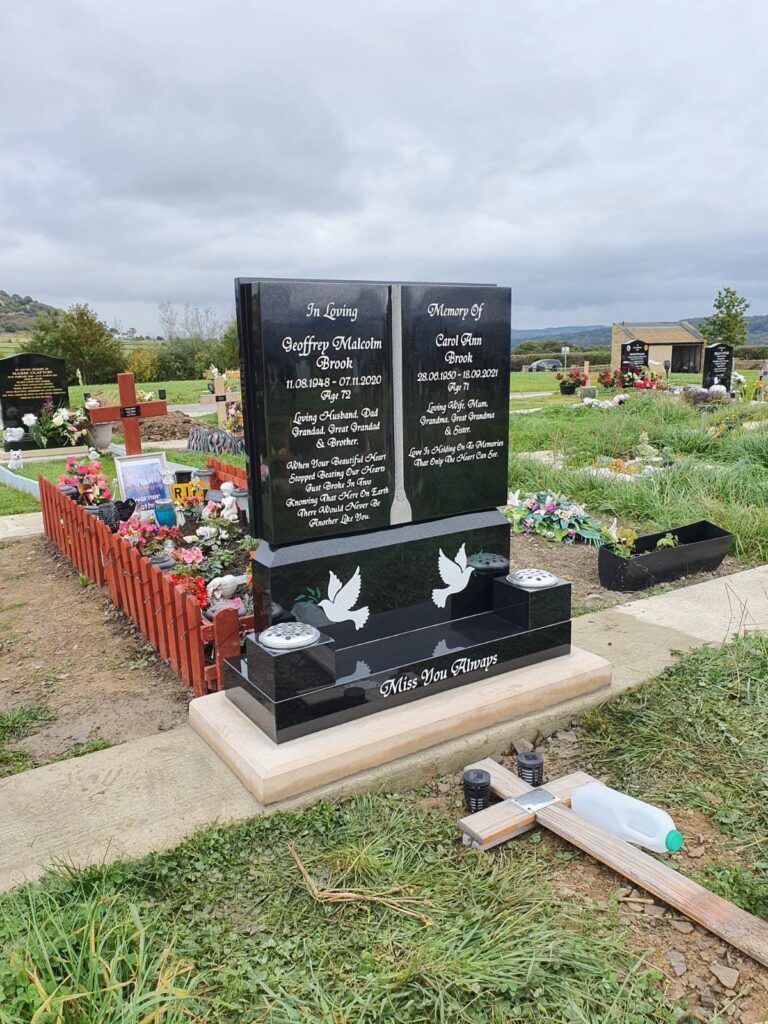
Many upright headstone styles can be combined with a surround, including traditional arches, hearts, books and wider companion memorials.
The shape, dimensions and colour of the kerbs should complement the headstone. A wide or particularly heavy memorial may require a different base and foundation arrangement from a smaller upright stone.
Northern Headstones states that its memorials can have an optional kerb surround, subject to the design and the regulations of the burial ground. When browsing its wider range of headstones and memorials, it is therefore worth considering the complete grave layout from the beginning.
Which Materials Are Used for Kerb Surrounds?
Granite is commonly used for kerb memorials because it is available in several colours, can be cut into consistent sections and provides a suitable surface for inscriptions and decorative finishes.
Black Granite
Polished black granite creates a formal appearance and can be matched with many upright headstone shapes. White, silver and gold lettering usually provides a clear contrast against its darker surface.
Black granite may also be paired with lighter steps, chippings or small decorative details to create contrast within the grave.
Grey and Coloured Granite
Grey, blue, red and other granite colours can produce a softer or more individual appearance. The exact colour and pattern will vary according to the natural stone.
Using two granite colours can help define a pathway, steps or raised sections, although the combination should be chosen carefully so that it complements the headstone.
Other Memorial Stones
Other materials may be available depending on the design, the individual stonemason and the burial-ground requirements. The selected material must be suitable for outdoor use and capable of being installed securely.
The most appropriate choice should be based on the complete specification rather than price or colour alone.
What Can Be Placed Inside a Kerb Surround?
The area inside the kerbs can be finished in different ways. Before choosing the contents, check what the cemetery permits and consider how much ongoing care will be practical.
Decorative Chippings
Glass, granite or natural stone chippings are a popular choice. They are available in different colours and can create an even, decorative surface within the kerbs.
Chippings may occasionally need to be cleaned, redistributed or topped up. Leaves and weeds can also gather between them, particularly beneath trees.
Stone Cover Slabs
A full or partial cover slab creates a solid stone surface. The slab may be polished, textured or designed with raised and recessed areas.
It can also carry an additional inscription, carved image or small plaque where the design and cemetery rules allow.
Flowers and Planting
Some families prefer to leave part of the grave open for seasonal flowers or small plants. This creates a softer and more natural appearance but requires more regular maintenance.
Check that the chosen plants are permitted and will remain within the kerbs without spreading onto neighbouring plots.
Flower Containers
Vases can be incorporated into the headstone base, foot kerb or corners of the surround. They provide a clear place for cut flowers without taking up the main inscription area.
The number and position of the containers should be considered alongside the symmetry of the complete memorial.
Can Kerb Surrounds Be Personalised?
Kerb memorials offer considerable flexibility, but the most successful designs usually focus on a few meaningful details rather than adding decoration to every available surface.
Personalisation options may include:
- A chosen granite colour and finish
- Contrasting kerbs, steps or chippings
- Gold, silver, white or black lettering
- Carved flowers, hearts or religious imagery
- Photographs or etched portraits
- Additional inscriptions on slabs or plaques
- Flower containers and decorative corner pieces
- A headstone shape linked to the person’s character or beliefs
Where an existing design does not provide the right layout, Northern Headstones can create bespoke memorials from an explanation, drawing, photograph or other image.
Do All Cemeteries Allow Kerb Surrounds?
No. Kerb surrounds are not permitted in every cemetery or churchyard.
Many lawn cemeteries are designed for upright headstones without full grave borders so that the grass can be maintained mechanically. Some burial grounds allow kerbs only within certain sections, while others specify their exact size, material and height.
Regulations may cover:
- Whether full or partial surrounds are allowed
- The permitted length, width and height
- The type and colour of stone
- Cover slabs, chippings and planting
- Flower containers and decorative items
- The wording and positioning of inscriptions
- The required foundation and fixing method
Approval should be checked before the surround is ordered. Assuming permission based on another memorial within the cemetery can lead to delays or the need to alter the proposed design.
How Much Does a Kerb Surround Cost?
The cost depends on the amount of stone, the style of surround and the features included. A simple half surround will normally involve less material and work than a full granite cover with tall kerbs, steps and several flower containers.
Factors that can influence the quotation include:
- The dimensions of the grave and memorial
- The type and colour of stone
- Full, half or pathway-style kerbs
- Cover slabs and raised sections
- Decorative chippings
- Flower vases and corner posts
- Additional inscriptions and carvings
- Foundations, transport and installation
- Separate cemetery or churchyard fees
When comparing quotations, check whether the headstone, lettering, surround, contents, foundations and installation are all included. A lower headline price may leave several of these items to be charged separately.
How Are Kerb Memorials Installed?
Kerb surrounds contain several separate pieces of heavy stone that must be aligned and securely supported. Correct preparation is essential to help the memorial remain stable and prevent individual sections from moving out of position.
Northern Headstones installs and fits its memorials on foundations over twice the size of industry guidelines, helping to provide lasting strength and stability.
The exact foundation and fixing arrangement will depend on the weight of the memorial, ground conditions and the requirements of the cemetery.
How Do You Maintain a Kerb Surround?
The amount of care required will depend on the material, location and contents of the surround.
Regular light maintenance may include:
- Removing leaves and loose debris
- Taking out weeds between chippings
- Washing suitable polished surfaces gently
- Redistributing or topping up decorative stones
- Clearing drainage points around cover slabs
- Checking for movement or damage
Avoid pressure washers, wire brushes and strong household chemicals. These can damage stone, lettering, paint and joints.
If a memorial has become unstable, heavily stained or damaged, ask an experienced mason to assess it rather than attempting a structural repair yourself.
Is a Kerb Surround Right for Your Family?
A kerb memorial may be suitable when you would like:
- A clearly defined grave space
- A substantial and traditional memorial
- Room for chippings, planting or a cover slab
- Additional space for personal details
- A design that can incorporate several stone elements
- Less open soil or grass to maintain
It may be less appropriate if the cemetery does not permit surrounds, the family prefers a simple lawn memorial or regular access to maintain a detailed grave design would be difficult.
The right choice should balance appearance, personal meaning, cemetery requirements, budget and the practical care the memorial will need over time.
Discuss Your Kerb Surround Options
A kerb surround can transform an upright headstone into a complete grave memorial, providing definition and additional opportunities for thoughtful personalisation.
You do not need to decide every element before speaking to a stonemason. Beginning with the headstone style, preferred material and approximate budget can help narrow down the most suitable options.
To discuss a kerb surround or receive guidance on a complete memorial design, please contact Northern Headstones. The team will listen to your ideas, explain the available choices and help you create a fitting tribute with care and respect.
Written and Edited by Northern Headstones
Having established itself as one of the North’s of Englands most prestigious Headstone and Memorial Masons, Northern Headstones delivers bespoke memorials like no other.