or Call +44 (0)7724 515 072
Granite vs. Sandstone Headstones: What’s the Difference?
Choosing a material is one of the most important decisions involved in selecting a headstone. The stone influences not only the appearance of the memorial, but also the type of lettering and carving that can be used, how it changes over time and the level of care it may require.
Granite and sandstone are both established memorial materials, but they offer noticeably different finishes. Granite is often chosen for its polished appearance, durability and wide choice of colours. Sandstone has a warmer, more natural character that can sit particularly well in traditional churchyards and rural surroundings.
Neither material is automatically the right choice for every family. This guide explains the main differences between granite and sandstone headstones so that you can make a more informed decision.
Granite and Sandstone at a Glance
The main differences can be summarised as follows:
- Granite usually offers a smooth, polished appearance with crisp lettering and a broad choice of colours.
- Sandstone generally has a warmer, more textured finish with natural variations in colour and character.
- Granite is commonly selected for detailed engraving and contemporary memorial styles.
- Sandstone is often chosen for traditional, rustic or churchyard memorials.
- Both materials can provide a lasting tribute when the correct stone, design and installation method are used.
When comparing headstones and memorials, it is helpful to look at complete designs rather than considering the stone in isolation. The shape, inscription and surroundings will all affect how the finished memorial feels.
What Is a Granite Headstone?
Granite is a natural igneous rock formed when molten material cools beneath the Earth’s surface. It contains a mixture of minerals that gives each type of granite its own colour and pattern.
For memorials, granite is usually cut and finished to create a consistent surface. It can be highly polished, partly polished or given a softer, less reflective finish, depending on the design and the regulations of the burial ground.
Granite is used for everything from simple upright headstones and cremation plaques to heart memorials, book designs and full kerb surrounds.
Common Benefits of Granite Headstones
- A wide choice of colours and finishes
- A smooth surface for clear inscriptions
- Suitable for detailed carvings and etched imagery
- Can complement traditional and contemporary designs
- Generally resistant to weathering when appropriately selected
- Usually straightforward to clean and maintain
What Is a Sandstone Headstone?
Sandstone is a sedimentary rock formed from grains of sand that have been compacted and cemented together over time. Its exact appearance and properties vary according to the minerals, grain size, porosity and natural cement within the stone.
This variation gives sandstone much of its appeal. Colours may include warm buff, cream, beige, grey and subtle reddish tones, sometimes with natural markings running through the surface.
Northern Headstones’ collection of sandstone memorials includes designs with natural, chisel-cut and rustic edges, as well as more refined and polished finishes.
Common Benefits of Sandstone Headstones
- A warm and natural appearance
- Individual variations in colour and texture
- Well suited to traditional and rural settings
- Can be shaped with rustic or hand-worked edges
- Suitable for traditional carved lettering and decoration
- Often accepted in settings where highly polished stones are restricted
Appearance and Memorial Style
The clearest difference between granite and sandstone is usually their appearance.
How Granite Looks
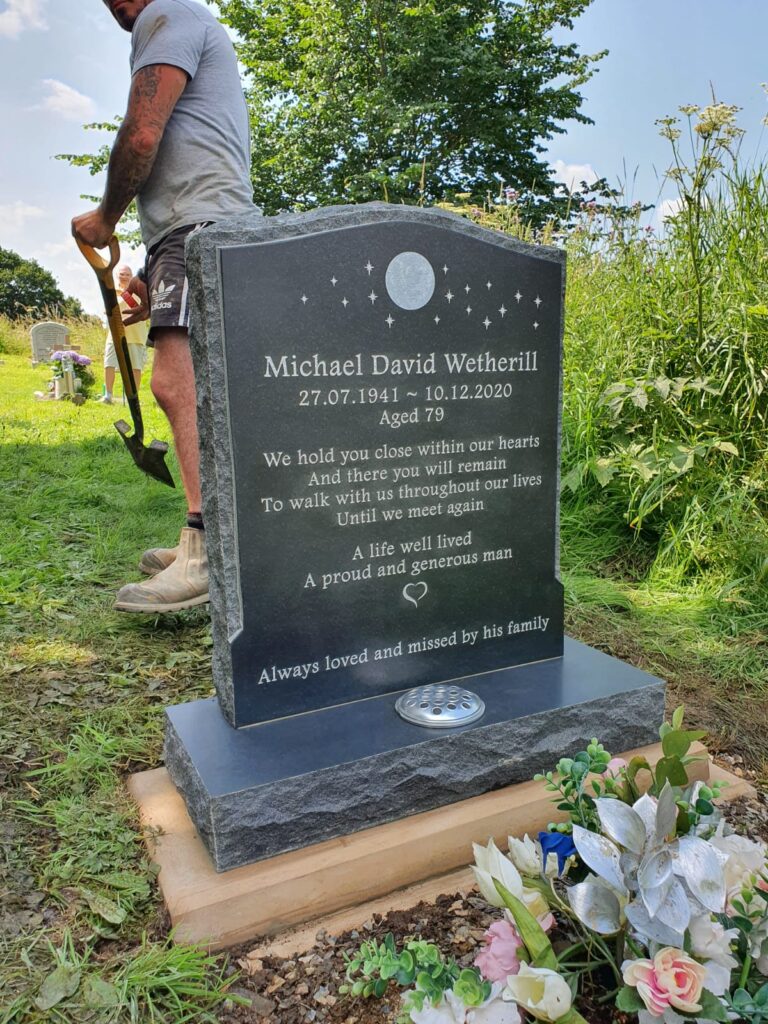
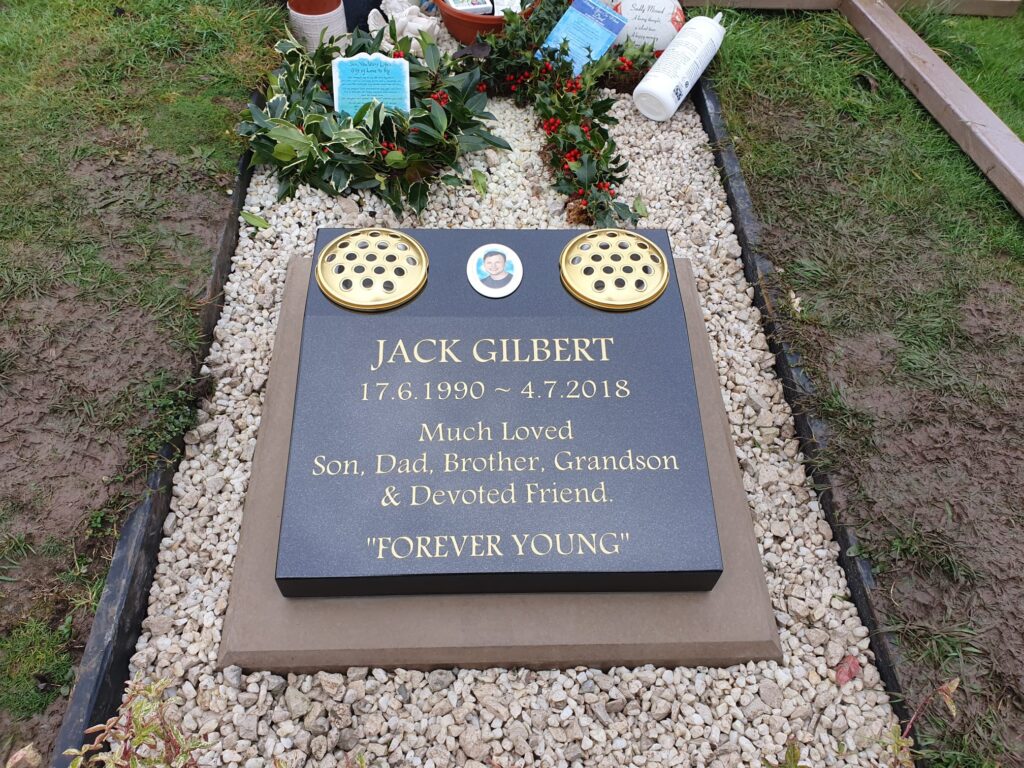
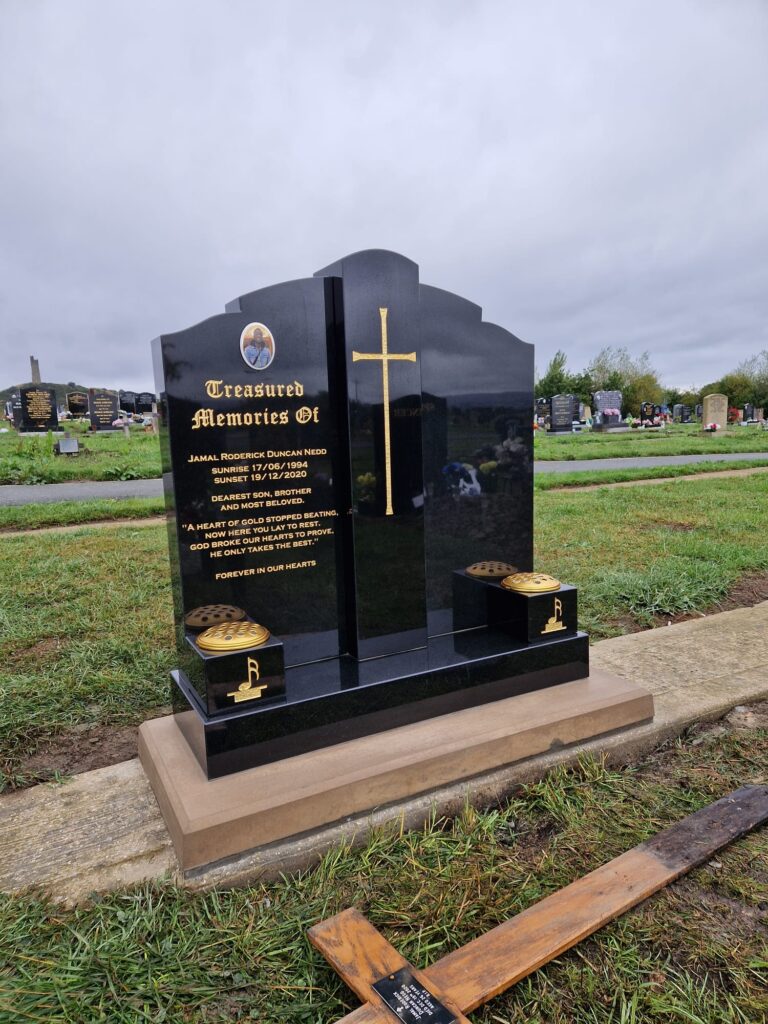
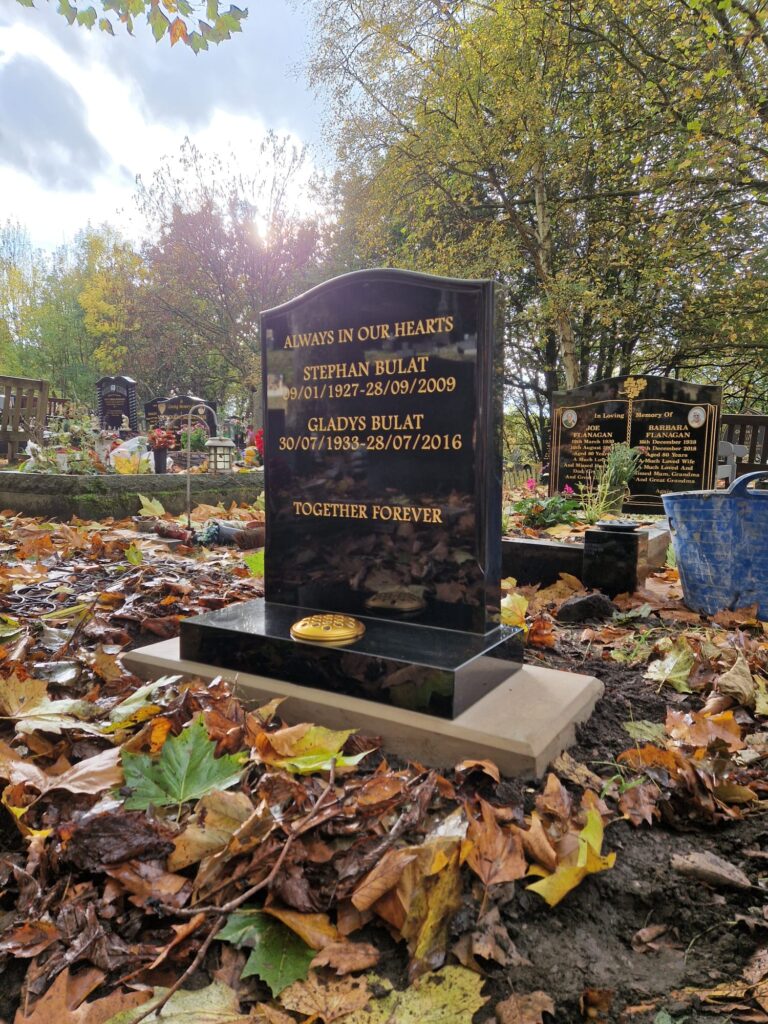
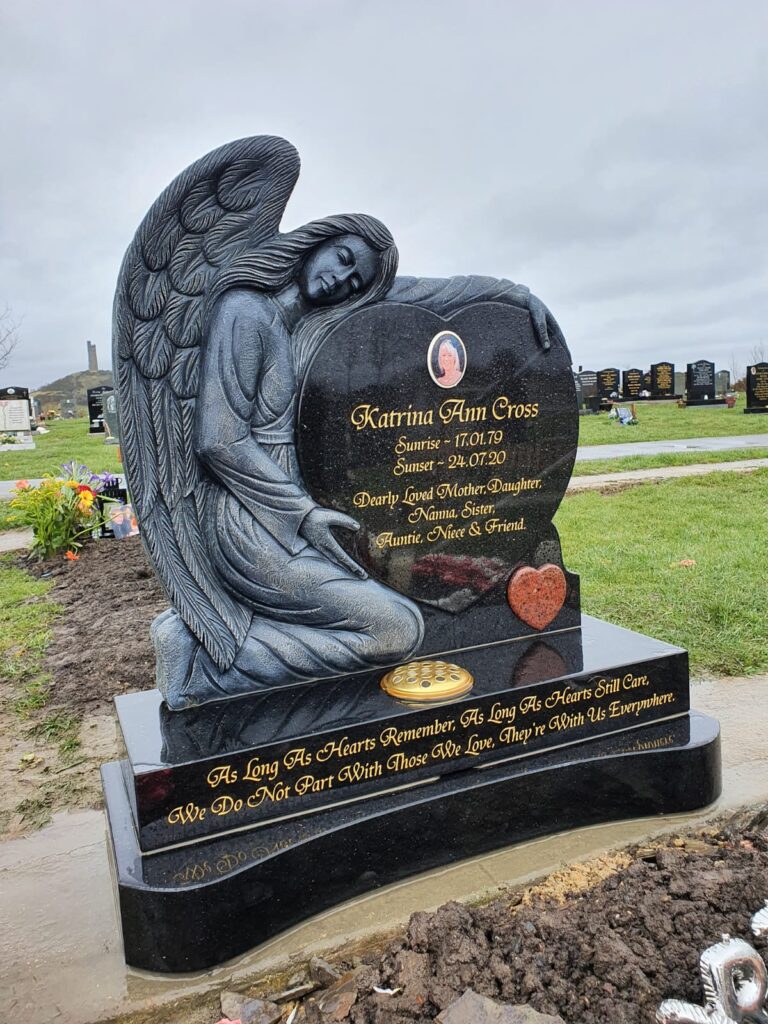
Granite can create a clean, formal and highly finished memorial. Black granite is particularly striking and provides strong contrast for white, silver or gold lettering. Grey, blue, red and lighter varieties can offer a softer appearance while retaining the same smooth finish.
A fully polished granite headstone reflects light and can make the colour of the stone appear deeper. Part-polished designs combine smooth and textured areas, helping carved details or borders stand out.
Granite works well for:
- Traditional upright headstones
- Heart and book memorials
- Detailed etched images
- Photographic designs
- Contemporary shapes
- Kerb surrounds and cover slabs
How Sandstone Looks
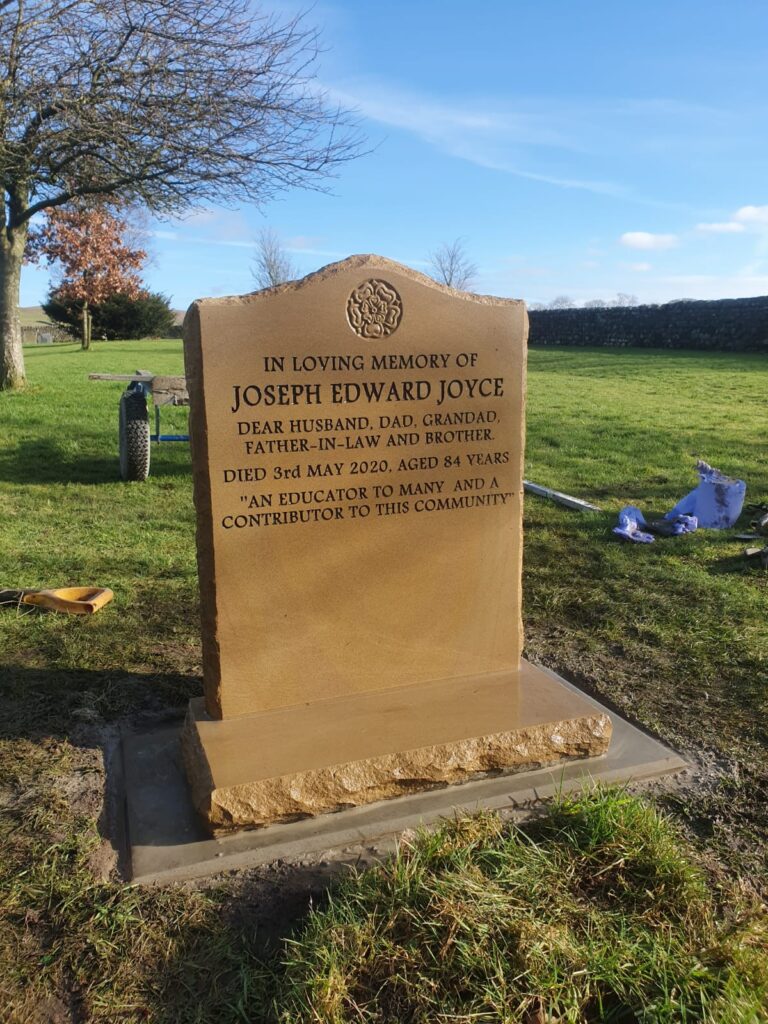
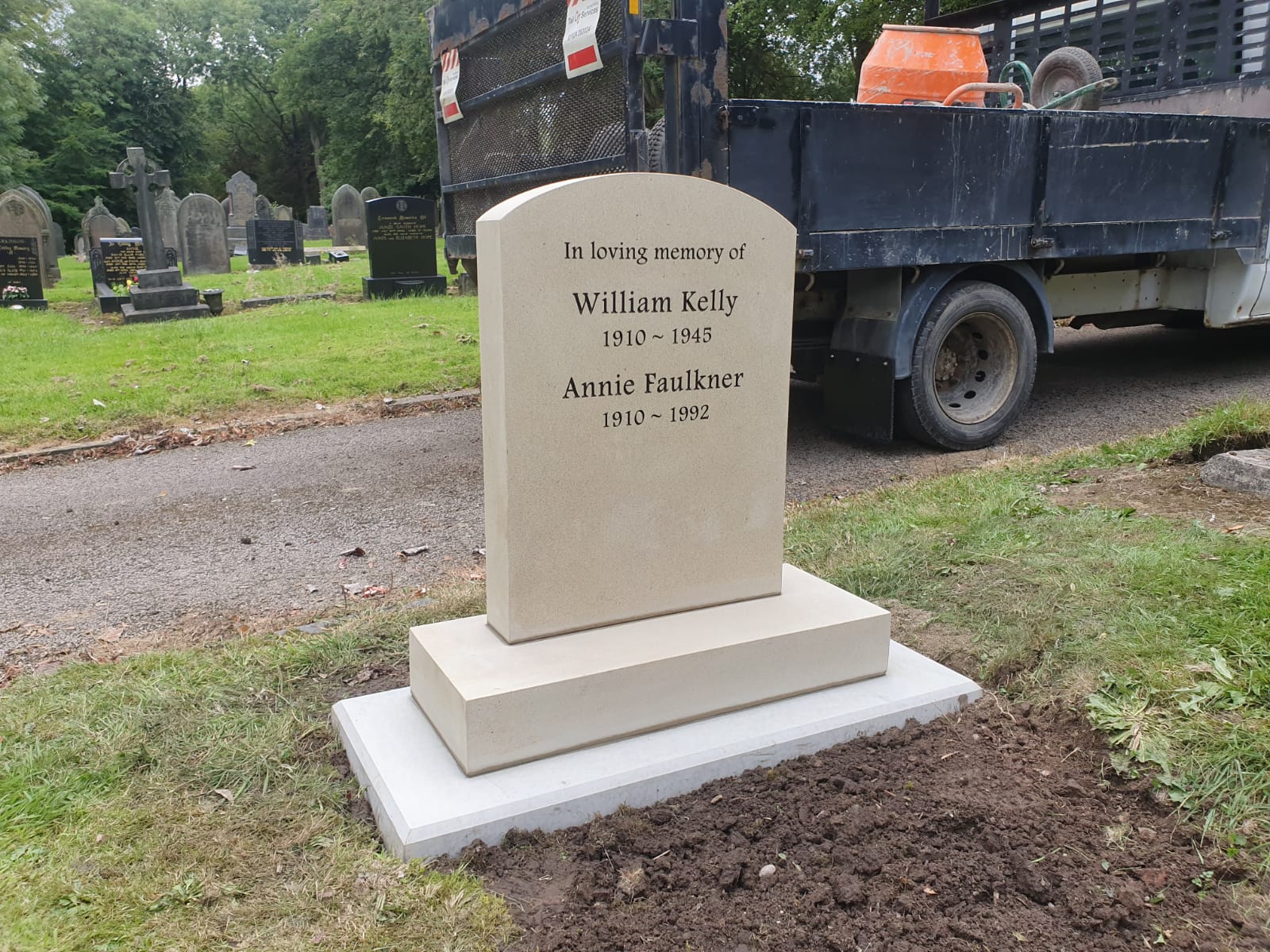
Sandstone tends to have a softer and less formal appearance. Its visible grain, warm colours and natural markings can help a memorial blend into an older churchyard, a rural cemetery or a landscape containing traditional stonework.
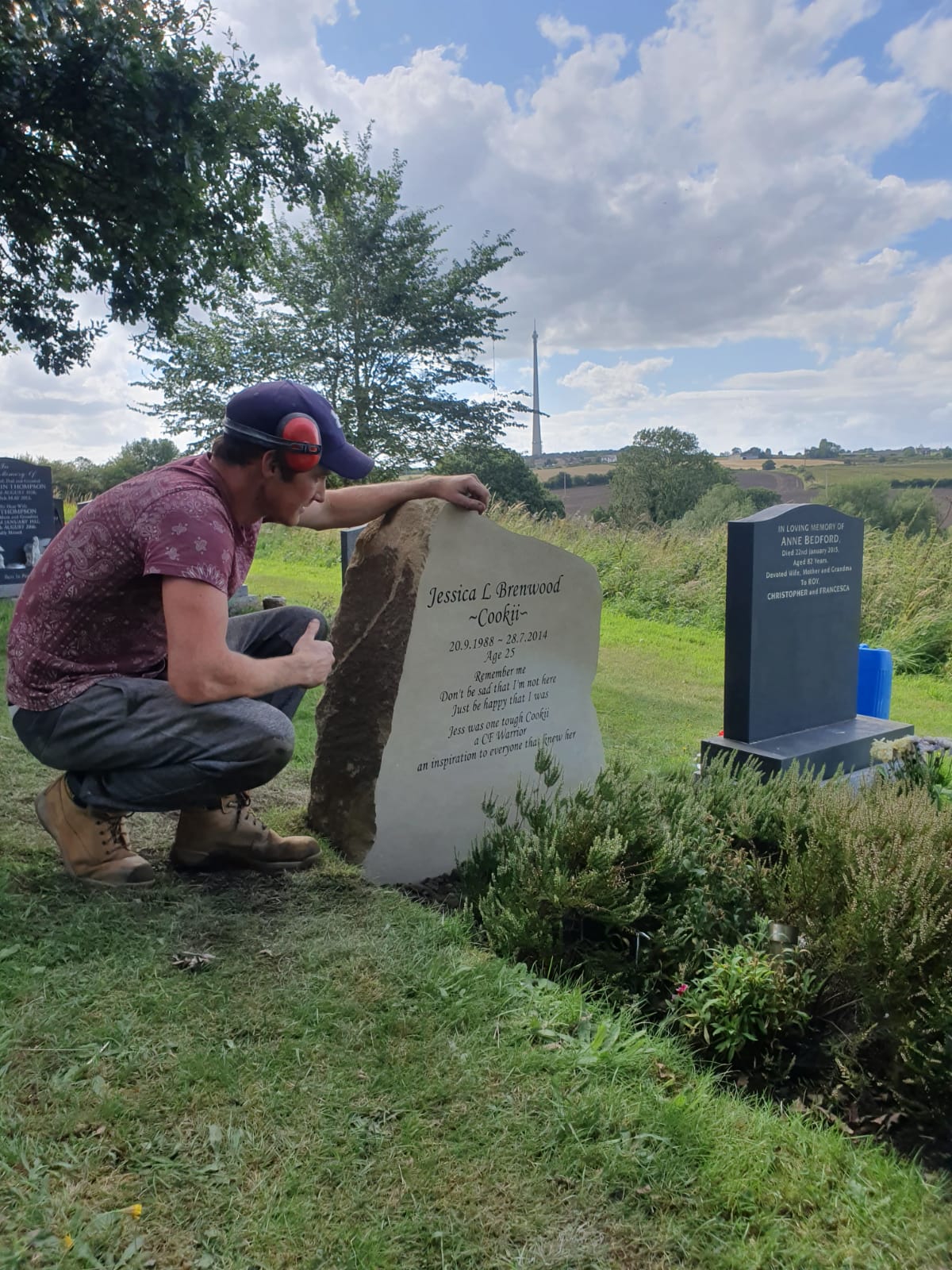
The edges may be cut neatly or left with a more rustic, hand-worked finish. Some sandstone memorials are substantial and simple, allowing the natural character of the stone to become the main feature.
Sandstone works particularly well for:
- Traditional churchyard memorials
- Rustic-edged headstones
- Natural boulder memorials
- Deeply carved inscriptions
- Simple floral or religious decoration
- Designs intended to complement local stonework
Which Material Is More Durable?
Granite is generally dense and hard, which makes it a dependable material for outdoor memorials. A suitable memorial-grade granite can retain a polished surface, clear lettering and detailed decoration for many years.
Sandstone can also be durable, but it is important not to treat all sandstone as though it has identical properties. Different sandstones vary in their porosity, strength, grain structure and response to weathering.
A well-selected sandstone can perform successfully as a memorial stone. However, its surface may gradually develop a more weathered appearance, particularly in damp, shaded or exposed locations. Some families appreciate this natural ageing, while others prefer the more consistent finish associated with polished granite.
No natural stone is completely unaffected by its surroundings. Exposure to rain, frost, pollution, trees, algae and repeated wetting and drying can influence how any memorial changes over time.
Lettering and Inscription Options
The chosen material affects the appearance of the inscription as well as the amount of detail that can be included.
Lettering on Granite
The smooth surface of granite is well suited to precise lettering and detailed imagery. Names, dates and longer inscriptions can be arranged clearly, while etched photographs and intricate decorative designs can be reproduced with a high level of detail.
Depending on the stone and memorial, lettering may be finished using:
- Gold leaf
- White or silver finishes
- Black lettering on lighter granite
- Painted or enamel-style finishes
- Natural engraved lettering
Darker granite usually creates the strongest contrast, which can make the inscription particularly easy to read.
Lettering on Sandstone
Sandstone often suits deeper, more traditional carving. The lettering can have a softer, hand-cut appearance that complements the natural surface of the stone.
Very fine engraved details may not appear in exactly the same way as they would on polished granite. The inscription therefore needs to be designed around the grain, colour and texture of the particular sandstone being used.
A clear typeface, suitable letter depth and careful spacing can help the inscription remain balanced and readable.
Carvings, Images and Personal Details
Both granite and sandstone can be personalised, but each material lends itself to different types of decoration.
Granite is often selected for:
- Detailed etched portraits
- Photographic images
- Fine floral and religious designs
- Contrasting painted details
- Highly polished carved shapes
Sandstone can be particularly effective for:
- Traditional hand-carved flowers
- Crosses and religious symbols
- Deeply cut lettering
- Rustic borders and natural edges
- Simple designs that celebrate the stone itself
The level of detail should be considered alongside the inscription. A complicated carving may reduce the room available for names and wording, whatever material is chosen.
Maintenance and Cleaning
Granite generally requires relatively modest maintenance. Its smoother surface can make dirt and organic growth easier to remove, although polished stones may show water marks, dust or fingerprints more clearly.
Sandstone is usually more textured and porous, meaning dirt, moisture and biological growth can settle within the surface more readily. Cleaning should be gentle, as harsh chemicals, pressure washers and abrasive tools can damage the stone.
The amount of maintenance required will also depend on the memorial’s location. A headstone beneath trees or in a shaded, damp area may need attention more frequently than one standing in an open and well-drained position.
Before cleaning any memorial, it is sensible to ask a professional mason which methods and products are appropriate for the material.
Does Granite or Sandstone Cost More?
It is not accurate to say that one material will always be cheaper than the other. The price of a memorial depends on the complete specification, not simply whether it is made from granite or sandstone.
Factors affecting the cost include:
- The source and type of stone
- The size and thickness of the memorial
- The shape and complexity of the design
- The chosen surface finish
- The amount and style of lettering
- Carved, painted or etched details
- Flower containers, bases or kerb surrounds
- Delivery, permits and installation requirements
A simple granite memorial may cost less than a substantial sandstone design, while a highly detailed granite headstone may cost considerably more than a straightforward sandstone one.
The most useful approach is to compare complete designs and quotations based on the features that matter to your family.
Cemetery and Churchyard Regulations
Before choosing either material, check the regulations of the cemetery, churchyard or burial ground.
Rules may cover:
- Permitted stone types and colours
- Polished, honed or natural finishes
- Maximum dimensions and thicknesses
- Carved, etched or photographic imagery
- Kerb surrounds and grave coverings
- The wording and style of inscriptions
Some traditional churchyards may favour natural, locally appropriate or less reflective stone. Other cemeteries permit a much wider range of granite colours and polished finishes.
These requirements vary between locations, so approval should be considered before the memorial is ordered rather than after the design has been completed.
How Are the Memorials Installed?
The long-term stability of a headstone depends on its foundation and fixing as well as the material itself.
Northern Headstones installs memorials on foundations over twice the size of industry guidelines, helping to provide lasting strength and stability. You can read more about the company’s approach and workmanship on the Northern Headstones About page.
The correct installation method will depend on the size and style of the memorial, the burial ground and the conditions of the plot.
Which Headstone Material Should You Choose?
Granite may be the better fit when you want:
- A polished or contemporary appearance
- A broad choice of colours
- Fine engraving or detailed etched imagery
- Strong contrast between the stone and lettering
- A surface that is generally easier to maintain
Sandstone may be more suitable when you prefer:
- A warm and natural appearance
- A traditional or rustic memorial
- Natural variation in colour and texture
- Hand-worked edges and carved lettering
- A design that complements a rural churchyard or older setting
The decision does not need to be based on practicality alone. The material should also feel right for the person being remembered and the surroundings in which the memorial will stand.
Ask for Guidance Before Making Your Decision
Granite and sandstone can both create dignified and lasting memorials. The right choice will depend on the appearance you prefer, the inscription and detailing required, the burial-ground regulations and the available budget.
Viewing examples in person or comparing completed designs can help you appreciate the differences in texture, colour and finish more clearly than photographs alone.
To discuss granite and sandstone headstones or receive guidance on a particular memorial, please contact Northern Headstones. The team will listen to your preferences and help you choose a suitable stone and design with care.
Written and Edited by Northern Headstones
Having established itself as one of the North’s of Englands most prestigious Headstone and Memorial Masons, Northern Headstones delivers bespoke memorials like no other.