or Call +44 (0)7724 515 072
Best Materials for Durable Gravestones in British Weather
A gravestone in the United Kingdom must withstand rain, frost, changing temperatures, pollution and long periods of damp weather. The material you choose will therefore influence how well the memorial retains its surface, inscription and overall appearance.
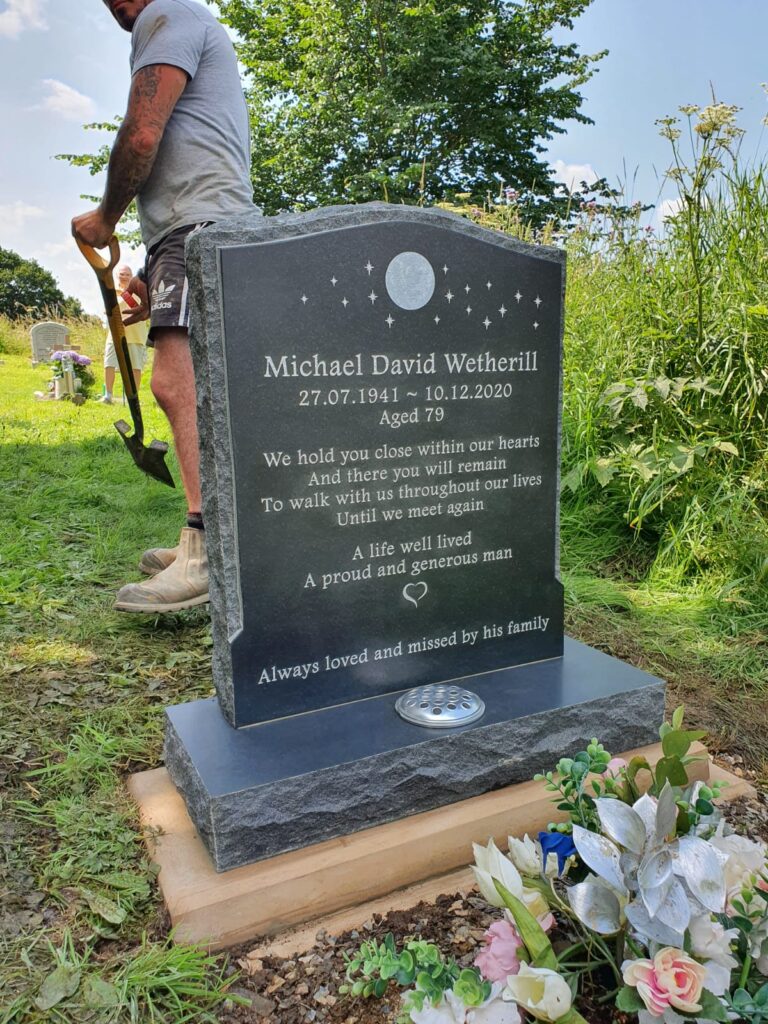
Granite is generally the most durable and practical choice for British outdoor conditions. It is dense, hard and relatively resistant to water absorption, making it suitable for headstones that need to remain clear and stable with straightforward routine care.
However, granite is not the only option. Selected sandstones can provide a durable and attractive memorial, particularly in traditional churchyards. Slate can also perform well when the stone is carefully selected and correctly installed. Marble and limestone remain beautiful historic materials, but they usually show weathering more quickly.
No natural stone is completely maintenance-free. The individual stone, memorial design, foundations, installation and surrounding environment all affect how it performs over time.
What Does British Weather Do to a Gravestone?
British weather exposes memorial stone to repeated cycles of wetting, drying, cooling and freezing. These conditions do not affect every material in the same way.
Common causes of deterioration include:
- Rain entering pores, joints and small cracks
- Water freezing and expanding within weakened areas
- Repeated wetting and drying moving salts through the stone
- Pollution reacting with vulnerable minerals
- Algae, moss and lichen retaining surface moisture
- Leaves, soil and tree deposits staining the memorial
- Poor drainage around the base
- Movement caused by unsuitable foundations or ground conditions
A memorial beneath trees in a shaded cemetery may experience different problems from one standing in an exposed coastal location. The best material therefore depends partly on where the grave is situated.
Which Gravestone Material Is Most Durable?
For most modern outdoor gravestones in Britain, granite offers the strongest combination of durability, inscription clarity and manageable maintenance.
A general comparison would be:
- Granite: The best all-round choice for weather resistance and long-term inscription clarity.
- Dense, well-selected sandstone: A durable natural option, although performance varies considerably between different sandstones.
- Slate: Dense and low in porosity, but vulnerable to separation along its natural layers.
- Marble: Suitable for fine carving, but more sensitive to pollution and gradual surface deterioration.
- Limestone: Traditional and attractive, but generally more porous and vulnerable to weathering.
This should not be treated as a guarantee that every piece of granite will outperform every piece of sandstone. Natural stone varies, and correct selection and installation remain essential.
Granite: The Best All-Round Material
Granite is widely used for modern headstones and memorials because it combines strength with considerable design flexibility.
It is formed from interlocking mineral crystals and generally has low porosity. This means sound memorial granite absorbs relatively little water compared with softer and more porous stones.
Why Granite Performs Well Outdoors
Granite offers several practical advantages in British weather:
- Good resistance to rain and repeated wetting
- Low water absorption
- Strong resistance to surface wear
- Good performance during freezing conditions
- Clear, long-lasting engraved lettering
- Resistance to many forms of atmospheric pollution
- A wide range of colours and finishes
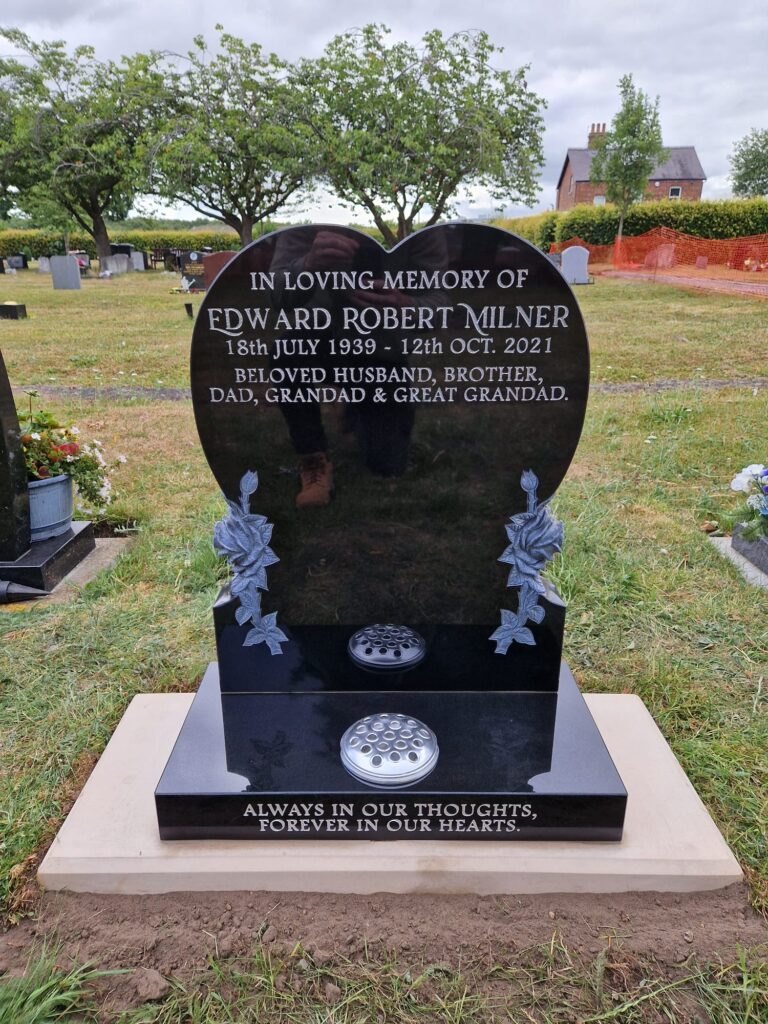
It can be used for traditional upright headstones, hearts, books, companion memorials, cremation plaques and complete kerb surrounds.
Granite Colours and Finishes
Granite is available in black, grey, blue, red and other natural shades. The colour does not determine durability on its own. The individual stone’s mineral structure, consistency and suitability for memorial use are more important.
Common finishes include:
- Highly polished
- Partly polished
- Honed
- Textured or pitched edges
- Combinations of polished and natural surfaces
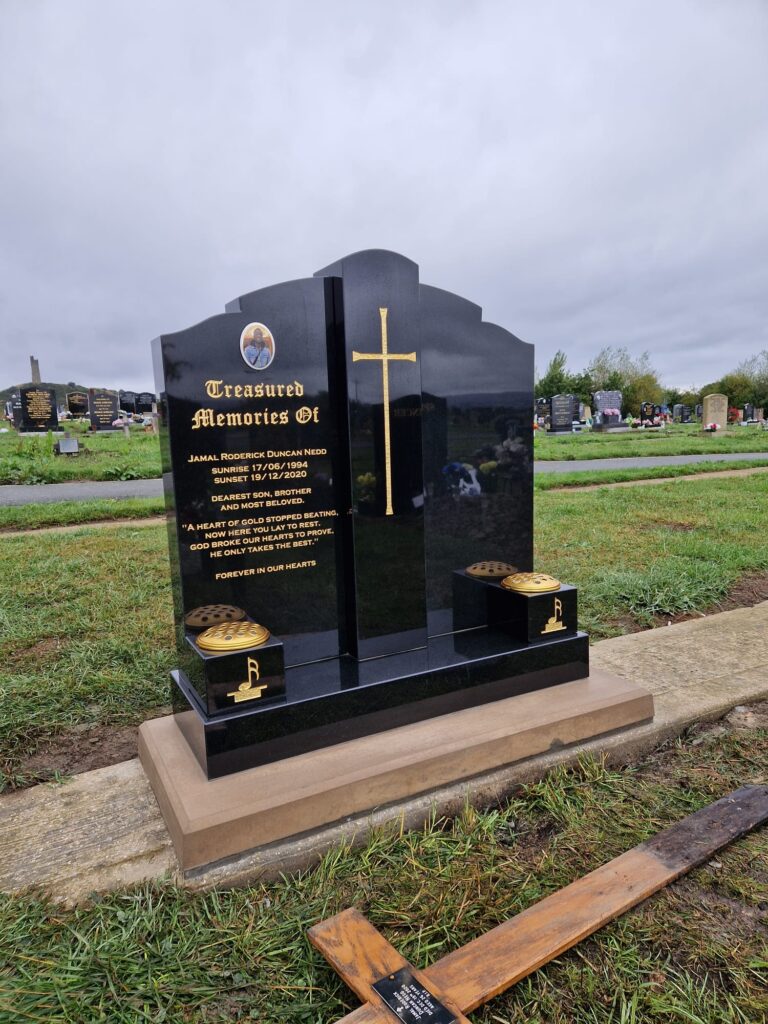
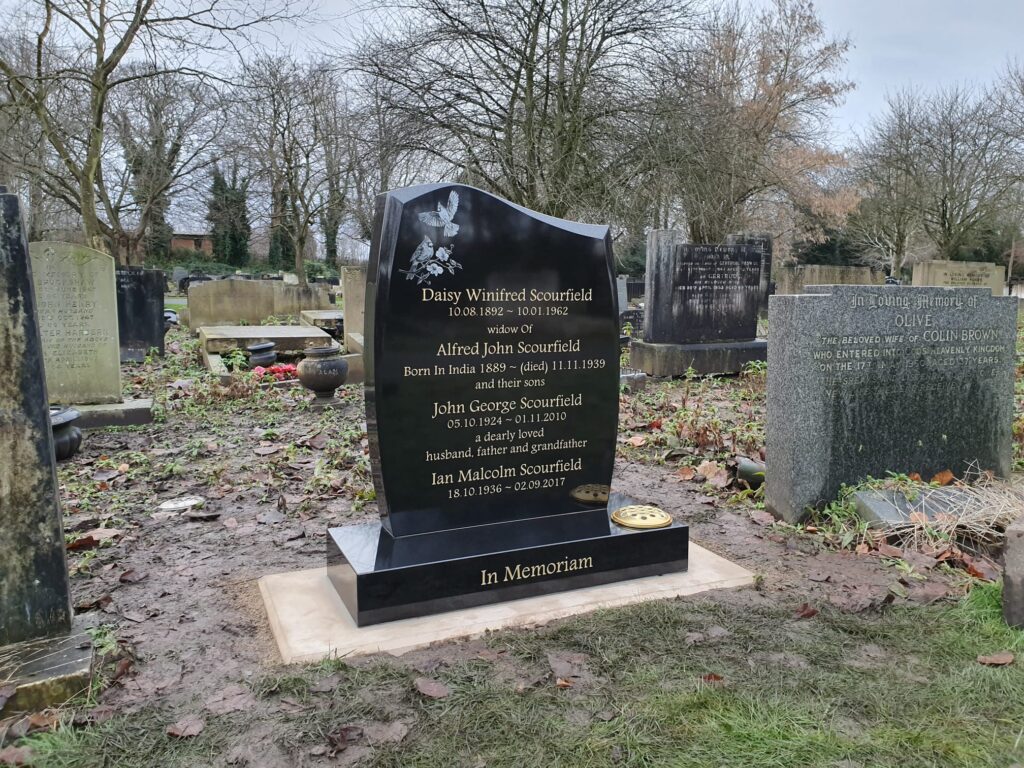
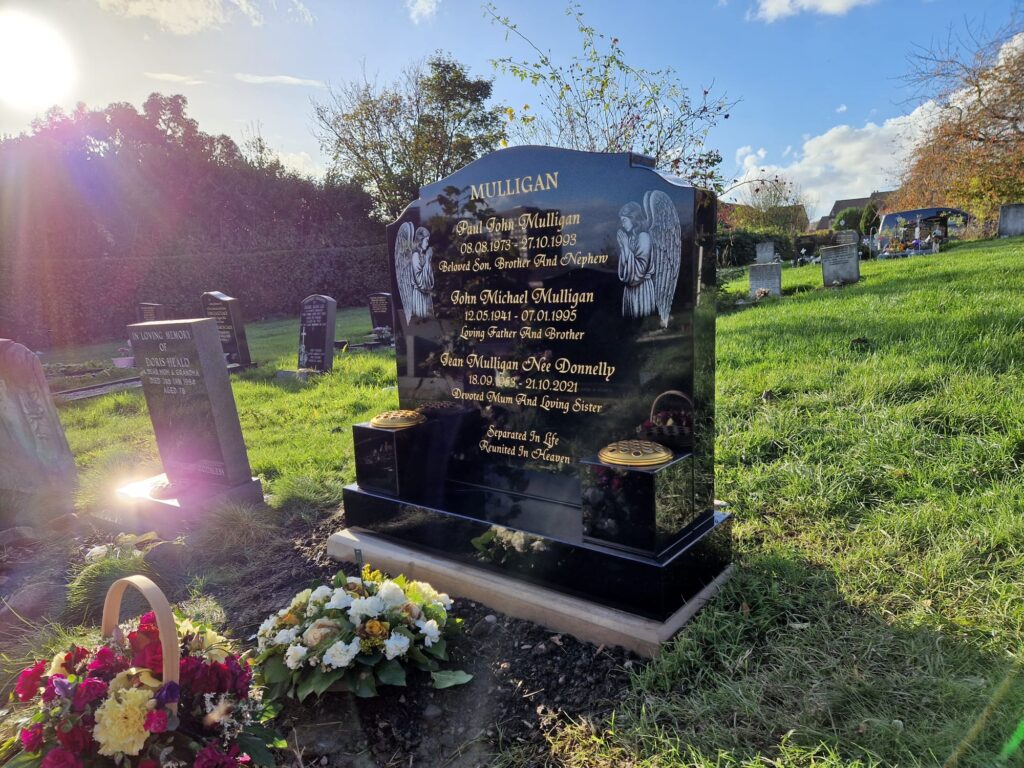
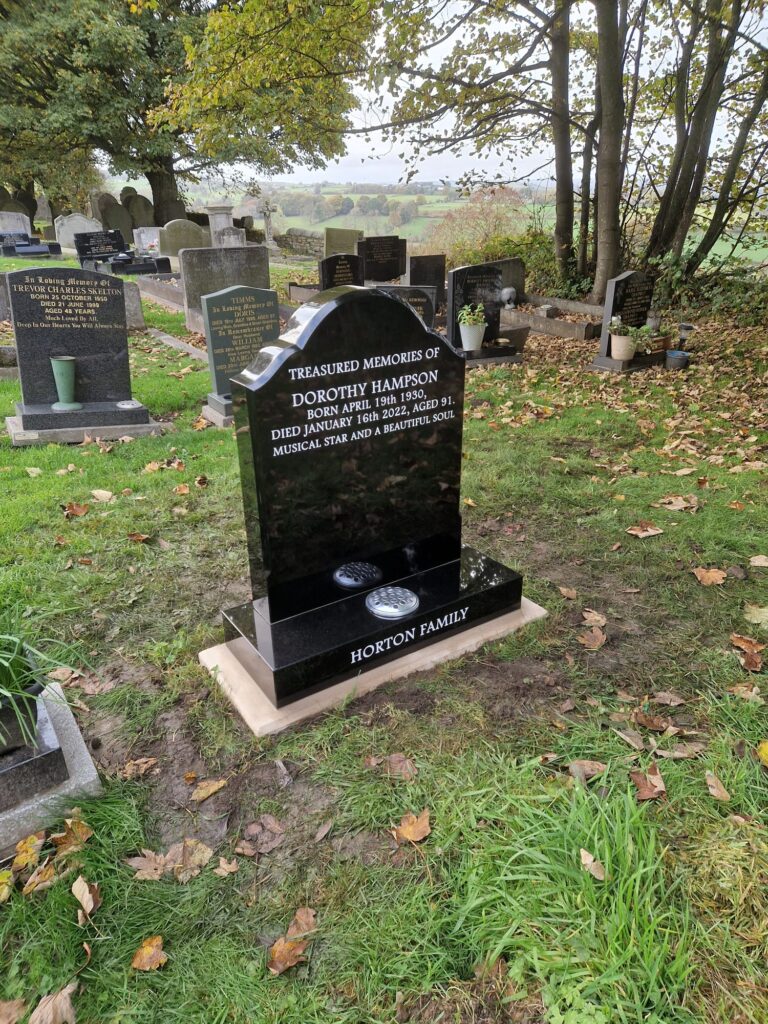
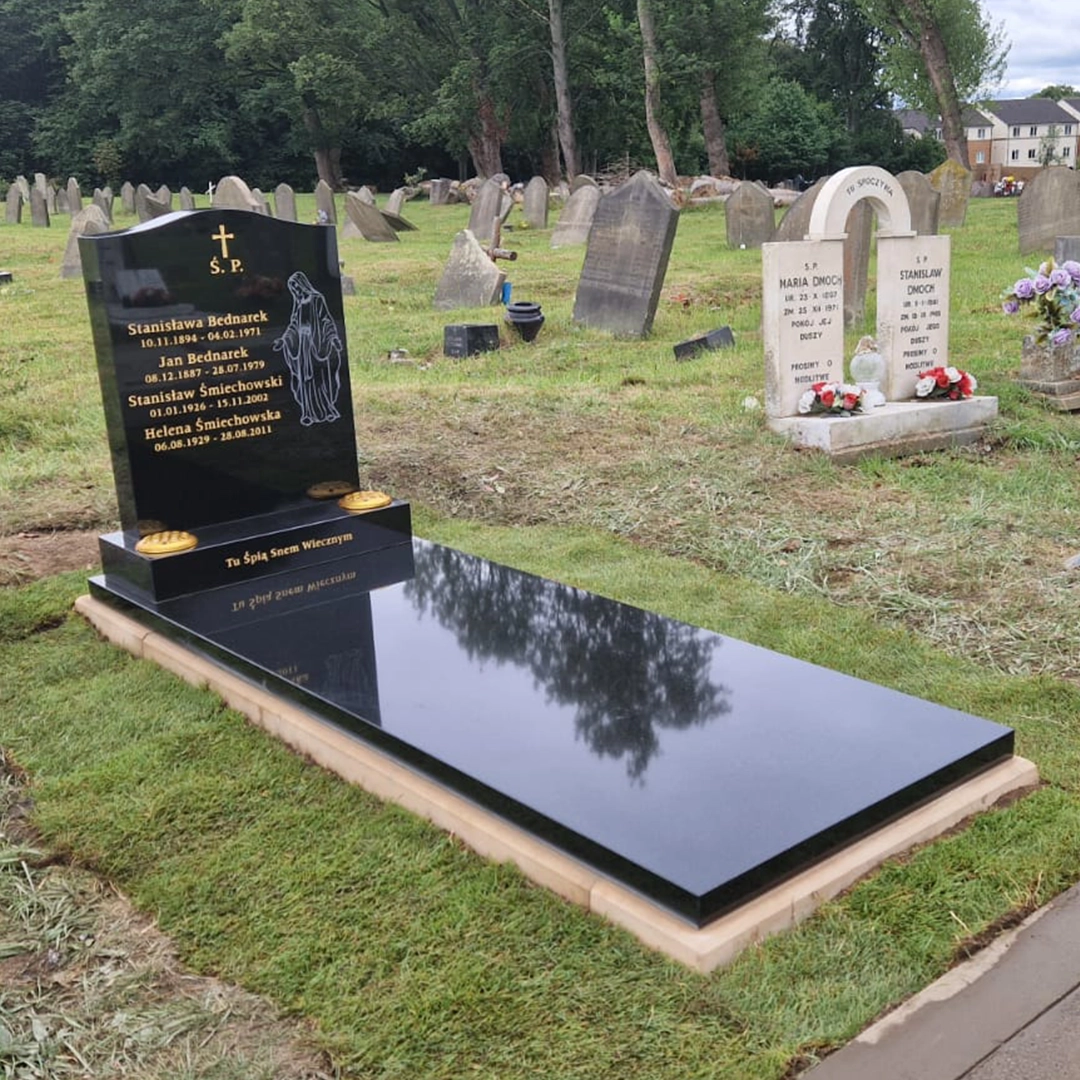
Polished black granite provides particularly strong contrast for white, silver and gold lettering. It is also well suited to laser-etched photographs and detailed monochrome imagery.
Does Granite Have Any Disadvantages?
Granite is durable but not indestructible. It can still be affected by:
- Poor foundations or installation
- Accidental impact
- Corroding metal components
- Water entering an existing crack
- Movement between the headstone and base
- Biological growth in persistently damp locations
Polished black granite can also show fingerprints, dried rain marks and dust more readily than pale or textured stone. These are mainly appearance issues rather than signs of structural failure.
Sandstone: A Durable Traditional Choice
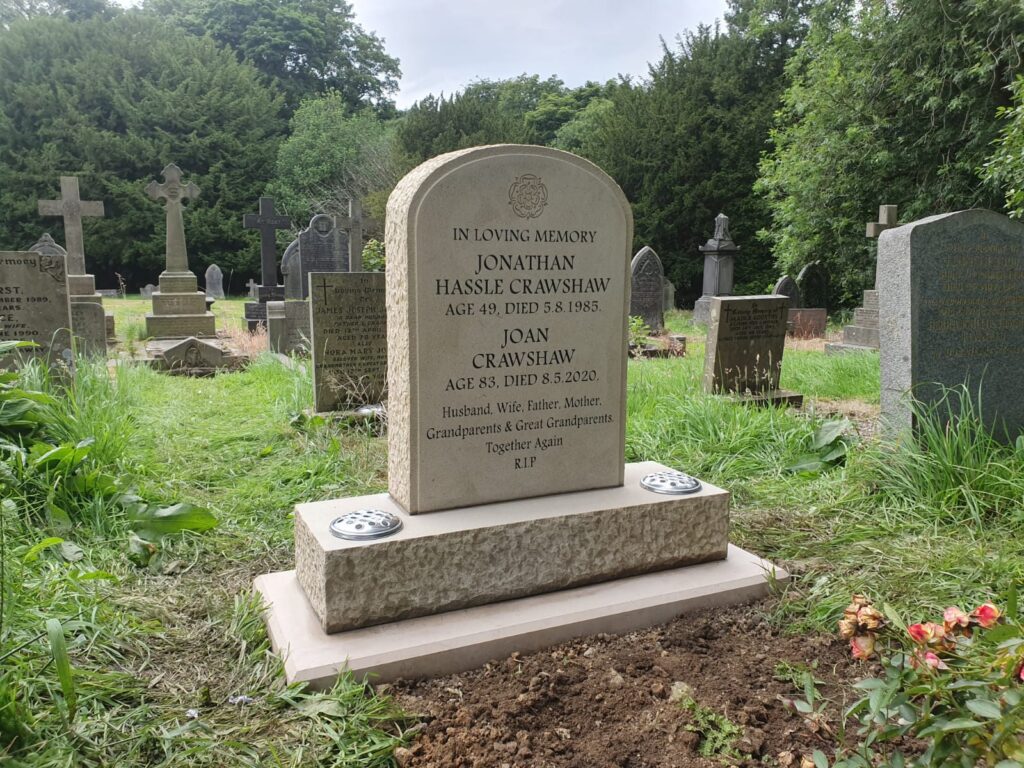
Sandstone is widely associated with British buildings, churchyards and historic memorials. Its warmer colours and natural texture can help a new headstone blend comfortably with traditional surroundings.
However, sandstone is not one uniform material. Different sandstones vary greatly in grain size, porosity, mineral content and the material binding their grains together.
When Does Sandstone Perform Well?
A dense, well-cemented sandstone selected for external memorial use can provide a strong and lasting headstone. It may be particularly suitable where:
- The churchyard requires natural local stone
- A polished granite finish is not permitted
- The family prefers a rustic or traditional appearance
- The memorial will use bold carved lettering
- Natural weathering is considered part of the stone’s character
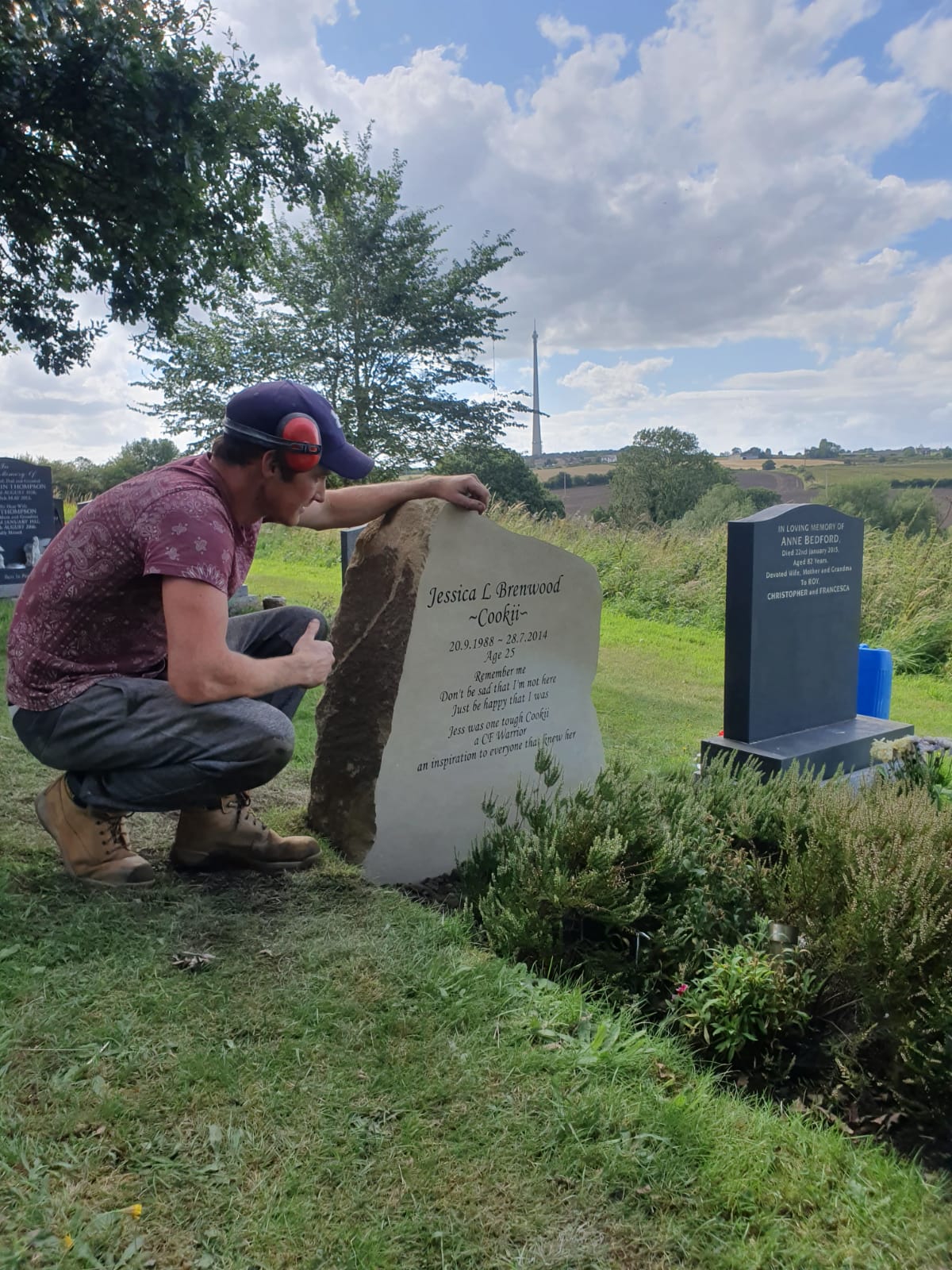
Northern Headstones offers a range of sandstone memorials, including upright stones, rustic-edged designs and natural boulder headstones.
How Does Sandstone Weather?
Depending on the particular stone and its environment, sandstone may gradually develop:
- A darker or more varied surface colour
- Algae, moss and lichen
- Rounded edges around lettering
- Flaking or separation from the surface
- Loss of individual grains
- Orange or brown mineral staining
Some weathering is natural and does not necessarily mean that the memorial is failing. Problems are more likely where an unsuitable sandstone has been selected, the stone has been laid against its natural bedding or water is being trapped within the memorial.
Is Sandstone as Durable as Granite?
Granite is generally the more predictable choice for maximum durability and lower maintenance. Sandstone can still perform very well, but its long-term behaviour depends more heavily on the precise type and quality of the stone.
Families choosing sandstone should ask where the stone comes from, whether it is suitable for exposed memorial use and how its surface is expected to change.
Slate: Dense but Vulnerable Along Its Layers
Slate has been used for historic grave markers, particularly in areas where it was locally available. It is dense, fine-grained and usually absorbs relatively little water.
This can allow lettering to remain sharp and clear for long periods. Historic slate memorials sometimes contain highly detailed carved inscriptions that are still readable generations later.
Advantages of Slate
- Low porosity
- A fine surface suitable for detailed lettering
- A distinctive dark grey or blue-grey appearance
- Good resistance to many forms of surface weathering
- A natural finish suited to historic settings
The Risk of Delamination
Slate is formed in layers. If water enters weaknesses between those layers, sections can begin to separate or peel away. This process is known as delamination.
The risk is influenced by:
- The quality of the slate
- How the stone has been cut
- The direction of its natural layers
- Existing cracks and edge damage
- Exposure to moisture and freezing conditions
Slate is less commonly offered for modern headstones than granite or sandstone. Where it is considered, the memorial should be produced by a mason familiar with the properties of the individual stone.
Marble: Beautiful but More Vulnerable Outdoors
Marble has a long history in memorial sculpture and cemetery monuments. Its fine texture allows skilled carvers to create detailed angels, flowers, lettering and classical figures.
It is particularly valued for:
- Its pale and elegant appearance
- Natural veins and markings
- Fine carved detail
- Traditional statues and religious memorials
- A classical appearance that develops with age
How Does Marble React to British Weather?
Marble consists mainly of calcium carbonate, which makes it more sensitive to acidic rainfall and atmospheric pollution than granite.
Over time, outdoor marble may:
- Lose its original polish
- Develop grey or black staining
- Become rough or granular
- Lose detail from shallow inscriptions
- Develop softened carved edges
- Support algae and biological growth
Older marble can develop a condition commonly described as sugaring, where individual crystals loosen and the surface becomes grainy or powdery.
Can Marble Still Last a Long Time?
Yes. Many marble memorials have survived outdoors for well over a century. However, survival does not mean that they have retained their original finish or inscription clarity.
Marble may be appropriate where its traditional appearance and carving qualities matter more to the family than retaining a crisp, polished surface with minimal maintenance.
Limestone: Traditional but More Porous
Limestone has been used extensively in British architecture, churches and historic memorials. Its pale, natural appearance can sit comfortably within a traditional churchyard.
Like marble, limestone is largely composed of calcium carbonate. It is therefore vulnerable to acidic pollutants and may gradually lose surface definition.
Potential Benefits of Limestone
- A natural and traditional appearance
- Good carving characteristics
- Compatibility with many historic churchyards
- A range of pale, buff and grey tones
- The ability to develop an attractive aged character
Potential Weathering Problems
Depending on the particular limestone, outdoor deterioration may include:
- Surface erosion
- Loss of carved detail
- Dark pollution crusts
- Biological growth
- Granular or powdery areas
- Damage from salts and repeated wetting
Limestone should not be dismissed as unsuitable, but it is not normally the first recommendation where maximum durability and minimum maintenance are the main priorities.
Does Stone Thickness Affect Durability?
Yes. The strength of a memorial depends on more than its material.
A thin, poorly supported piece of durable granite may be more vulnerable to impact or movement than a substantial sandstone memorial designed and installed correctly.
The mason should consider:
- The height and width of the headstone
- The stone’s thickness
- The size and weight of the base
- The position of carved sections
- The foundation and ground conditions
- The fixing system
- Whether the memorial contains separate structural pieces
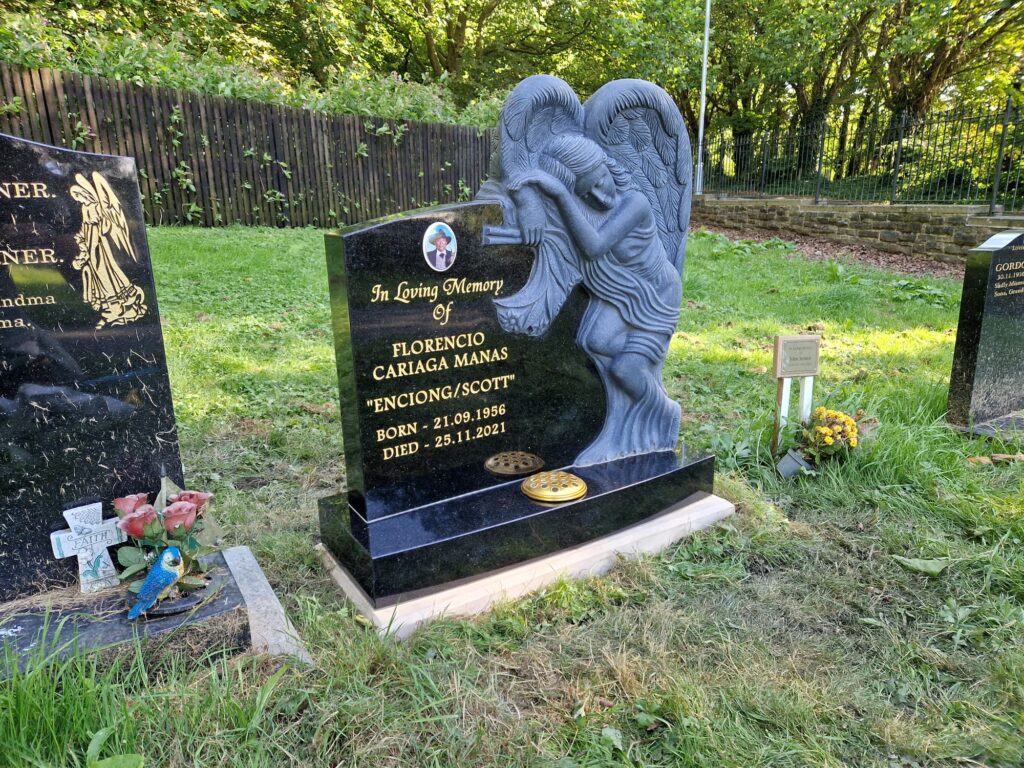
Large hearts, books, angels and companion stones may require different proportions from a straightforward upright headstone.
Why Installation Matters as Much as Material
Even the strongest stone can become unsafe if it is fitted on unsuitable foundations or secured incorrectly.
Long-term stability depends on:
- A properly prepared foundation
- Approved ground anchors and fixings
- Correct alignment between the headstone and base
- Suitable drainage around the memorial
- Allowing the grave sufficient time to settle
- Following the cemetery’s installation requirements
Movement around the base is not always evidence that the stone itself has failed. It may indicate ground settlement, foundation problems or deterioration within the fixing system.
Which Material Keeps Lettering Clear the Longest?
Granite will generally retain cut and engraved lettering more effectively than softer, more porous stones in exposed outdoor conditions.
Polished dark granite can use:
- White painted lettering
- Silver finishes
- Gold leaf
- Deep-cut inscriptions
- Laser-etched images
The stone may remain sound long after the colour or gold within the lettering needs renewal.
Slate can also retain sharp carved lettering, provided its layers remain stable. Sandstone, marble and limestone inscriptions may gradually soften as the surrounding surface weathers.
Letter depth, size and spacing are important on every material. Very shallow or delicate lettering is more likely to become difficult to read than a well-proportioned inscription.
Which Material Requires the Least Maintenance?
Granite usually requires the least routine attention. Surface dirt can often be treated with clean water and gentle equipment when the memorial is structurally sound.
Sandstone, marble and limestone require more caution because their surfaces may be porous, weakened or already weathered. Aggressive cleaning can remove part of the original stone.
Regardless of material, never use:
- Bleach or strong household chemicals
- Pressure washers
- Wire brushes or metal scrapers
- Vinegar or acidic cleaners
- Sandpaper or grinding tools
- Household polish, oil or varnish
Where a memorial is unstable, heavily stained or losing surface material, professional assessment is safer than repeated cleaning.
Does the Cemetery Decide Which Material You Can Use?
The cemetery, council or church authority may restrict the types of stone and finish permitted within the burial ground.
Rules can cover:
- Stone type and colour
- Polished or reflective finishes
- Memorial height and width
- Natural, honed or rustic surfaces
- Photographs and decorative images
- Kerb surrounds and cover slabs
- The style and wording of inscriptions
- Foundation and fixing requirements
A highly polished black granite memorial may be accepted in a municipal cemetery but refused in a traditional churchyard that requires natural local stone.
The burial-ground regulations should therefore be checked before the family settles on a particular material or design.
Which Material Offers the Best Value?
Value should be judged across the expected life and complete specification of the memorial rather than by the initial stone price alone.
Granite may offer good long-term value because it retains its surface and inscription well while requiring relatively straightforward maintenance.
Sandstone may provide better value where:
- A natural stone is required by the churchyard
- The family prefers its warmer appearance
- A locally appropriate memorial is important
- A substantial but simple design is being considered
Marble carving can involve specialist craftsmanship, while slate may be less readily available from modern memorial suppliers.
The complete quotation should explain:
- The type and size of stone
- The inscription allowance
- Carving and decorative work
- The base and flower containers
- Foundations and installation
- Delivery to the cemetery
- Any separate burial-ground fees
Best Materials for Different Priorities
Best for Maximum Durability
Granite is generally the most reliable option for resisting British outdoor conditions while retaining clear lettering and a consistent surface.
Best for a Traditional Churchyard
A suitable natural sandstone may be the best choice where the memorial needs to complement local buildings and older headstones.
Best for Fine Historic-Style Carving
Marble allows fine sculptural detail, although its surface will normally weather more visibly than granite.
Best for Sharp Traditional Lettering
Slate can hold detailed inscriptions well, but the quality and orientation of the stone must be carefully considered because of the risk of delamination.
Best for Low Maintenance
Granite normally requires the least specialist routine care, although inscription finishes and structural fixings may still need attention over time.
How to Choose the Right Gravestone Material
Before making a decision, consider:
- The cemetery or churchyard regulations
- How exposed or shaded the grave will be
- The appearance the family prefers
- Whether natural weathering is acceptable
- The amount and style of lettering
- Whether photographs or detailed imagery will be included
- The available budget
- How much future maintenance will be practical
Ask to see examples of the actual material and finish where possible. Natural stone can vary significantly, and a small printed image may not show its true colour, pattern or texture.
Our guide comparing granite and sandstone headstones provides more detail about two of the most suitable materials for modern British memorials.
The Best Overall Choice for British Weather
For most families prioritising outdoor durability, inscription clarity and manageable maintenance, granite will be the strongest overall choice.
A suitable sandstone can also create a lasting memorial, particularly where a traditional or natural appearance is important. Slate offers good surface durability but requires careful selection, while marble and limestone should be chosen with an understanding that they will usually weather more visibly.
The quality of the individual stone and the standard of installation are just as important as the material name. A well-selected gravestone fitted on appropriate foundations will perform more reliably than one chosen only by colour or headline price.
To compare suitable materials or discuss the conditions at a particular cemetery, please contact Northern Headstones. The team can explain the available granite and sandstone options and help you choose a memorial that balances durability, appearance and burial-ground requirements.
Written and Edited by Northern Headstones
Having established itself as one of the North’s of Englands most prestigious Headstone and Memorial Masons, Northern Headstones delivers bespoke memorials like no other.