or Call +44 (0)7724 515 072
Which Headstone Styles Are Best for Granite Memorials?
Granite is one of the most versatile materials available for headstones and memorials. It can be cut into traditional shapes, formed into hearts and books, carved with detailed imagery or used to create substantial kerb surrounds and companion memorials.
This versatility means there is no single headstone style that is always best for granite. The right choice will depend on the person being remembered, the amount of inscription space required, the finish you prefer and the regulations of the cemetery or churchyard.
Some designs make particularly effective use of granite’s smooth surfaces, range of colours and ability to hold clear lettering. Understanding these options can help you choose a memorial that feels personal while remaining balanced and practical.
Why Does Granite Suit So Many Headstone Styles?
Granite is a dense natural stone that can be prepared in several different ways. It may be highly polished for a smooth and reflective appearance, honed for a softer finish or combined with hand-worked and textured edges.
It is also available in a range of colours, including black, grey, blue and red tones. Each colour creates a different background for lettering, carvings and etched images.
Granite is particularly well suited to memorials that require:
- Clearly defined shapes and edges
- A smooth surface for inscriptions
- Contrasting gold, silver, white or black lettering
- Detailed laser-etched photographs
- Carved flowers, hearts and other imagery
- Matching bases, vases and kerb sections
- A combination of polished and textured finishes
You can see these qualities across Northern Headstones’ wider range of headstones and memorials.
Traditional Upright Granite Headstones
A traditional upright headstone is one of the most practical and enduring styles for granite. It consists of a vertical stone secured to a separate base, providing a clear central surface for names, dates and personal wording.
Popular upright shapes include:
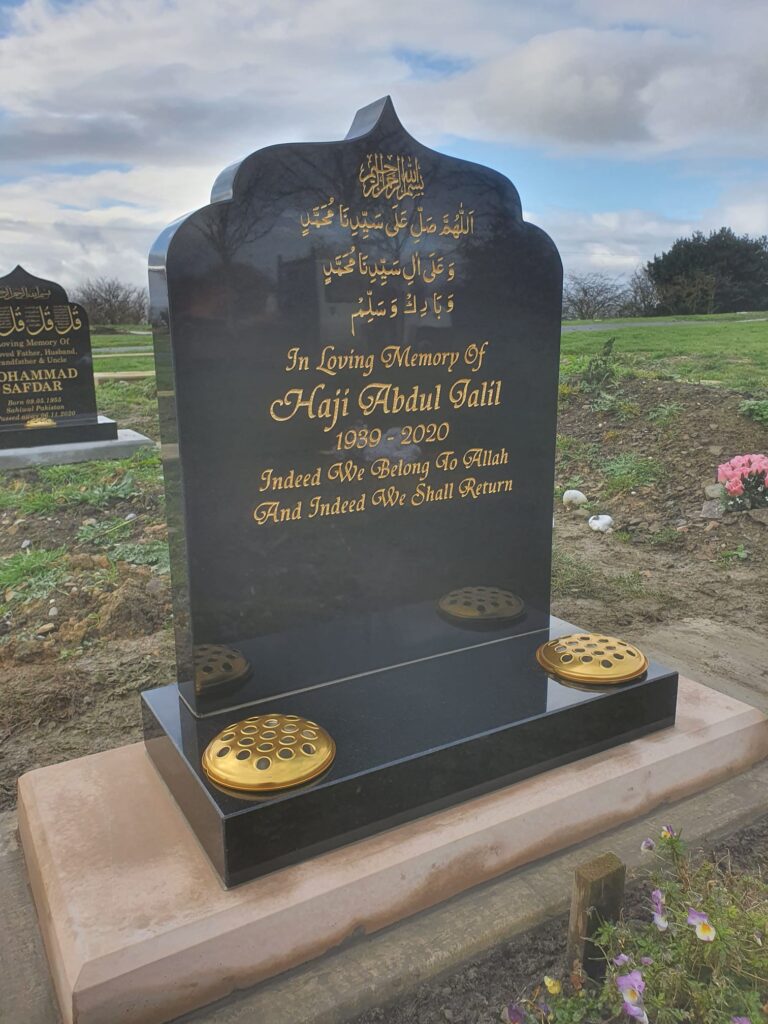
- Arch tops
- Camber tops
- Ogee curves
- Square and rectangular tops
- Shouldered designs
- Serpentine tops
- Gothic-style arches
Why Traditional Shapes Work Well in Granite
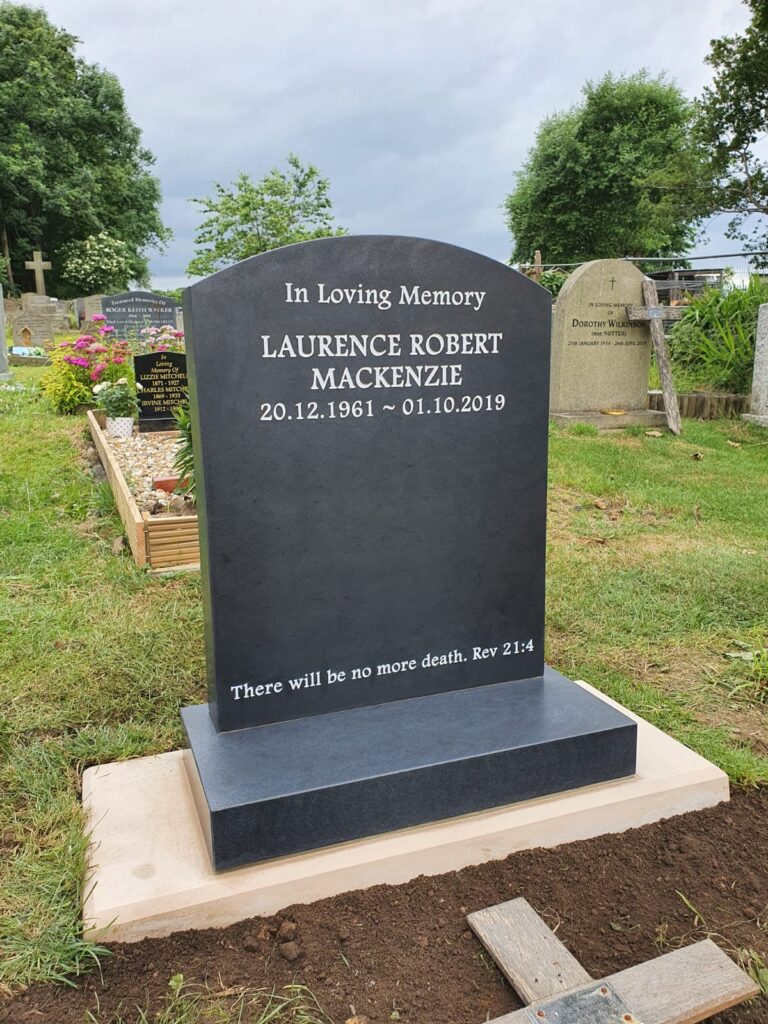
The clean lines of an upright headstone allow the natural colour and finish of the granite to remain visible. A polished black granite arch, for example, can create a formal appearance with a strong contrast between the stone and the inscription.
Traditional designs also provide flexibility. They can be kept simple and understated or personalised with:
- A carved flower or religious symbol
- A laser-etched portrait
- A ceramic photograph
- A shaped inscription panel
- One or two flower containers
- Partly polished or pitched edges
This makes an upright granite headstone suitable for families who want something recognisable and timeless without limiting their personalisation choices.
Who Is This Style Best Suited To?
A traditional upright style may be appropriate where:
- The family prefers a classic memorial
- A clear and spacious inscription is important
- Another name may be added in the future
- The cemetery has relatively straightforward lawn memorial regulations
- The design needs to accommodate a photograph or carved image
Heart-Shaped Granite Headstones
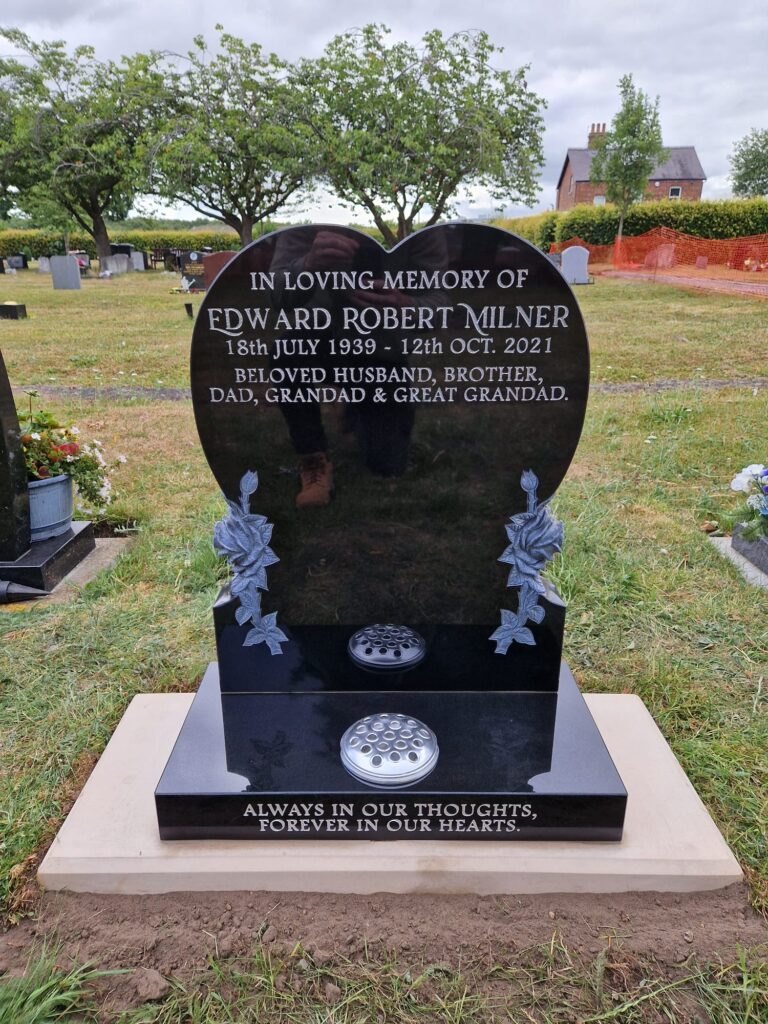
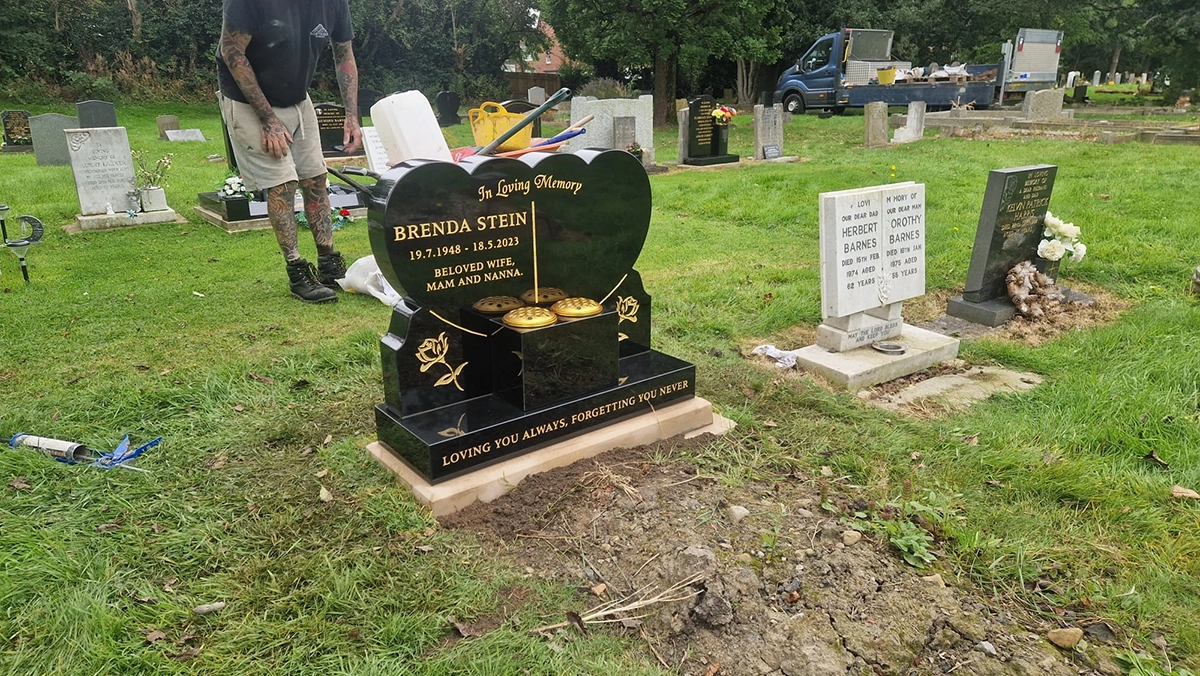
Heart memorials are a natural choice where the design is intended to represent love, affection and continuing connection. Granite allows the curves of the heart to be clearly defined and provides a smooth surface for lettering and decorative details.
Heart designs may include:
- A single upright heart
- A heart incorporated into a traditional headstone
- Two joined or overlapping hearts
- Three-heart family memorials
- A heart combined with an angel or carved roses
- A heart mounted on a wider base
Single-Heart Memorials
A single heart can create a simple but emotionally expressive memorial. The central area may hold the main inscription, while roses, leaves or another small carving can be placed around the edge.
The available wording space is usually more restricted than on a rectangular or wide upright headstone. Short inscriptions tend to work best, particularly where a photograph or carved design is also included.
Double-Heart Memorials
Two joined hearts are often chosen for husbands, wives and partners. Each heart may carry one person’s name and dates, with a shared message placed beneath them.
They can also be used for parents, siblings or other close family members. Granite helps the two sides remain visually consistent while allowing separate inscriptions to be clearly divided.
Northern Headstones’ range of heart memorials includes single, double and more detailed granite designs.
When Does a Heart Design Work Best?
A heart-shaped granite headstone may be a good choice where:
- Love and close relationships are central to the tribute
- The inscription can be kept relatively concise
- The memorial is intended for a couple
- The family wants a softer shape than a traditional arch
- Flowers, angels or personal imagery will be included
Book-Shaped Granite Headstones
An open-book headstone can represent the story of a life, the pages of memory or religious scripture. Granite is particularly suitable for this style because the page outlines, central fold and carved details can be carefully defined.
The two-page arrangement also provides a practical way to organise an inscription.
A book memorial may be used for:
- A single person, with the inscription spread across both pages
- A husband and wife, with one person on each page
- Two relatives remembered together
- A religious inscription and personal message
- A name and dates on one page with a poem on the other
Why Books Suit Shared Memorials
The natural division between the pages helps separate two names without making the memorial feel disconnected. A shared epitaph can be positioned beneath the book or allowed to flow across both pages.
Book memorials can also include carved page edges, tassels, roses, crosses and other decorative features. The details should be planned carefully so they do not compete with the inscription.
Things to Consider
Although a book appears to provide two large surfaces, the shaped page edges and central fold can reduce the usable inscription area. Longer wording may require a larger memorial or smaller lettering.
Ask to see the complete inscription layout before approving the stone, particularly if future wording may need to be added.
Companion and Couple Granite Headstones
A companion memorial is designed to commemorate two people, usually a husband and wife or long-term partners. It is typically wider than a standard single headstone and may include separate inscription panels.
Suitable granite companion styles include:
- Wide arch and camber tops
- Double-heart headstones
- Open-book memorials
- Two inscription panels divided by a central carving
- Wide headstones with matching flower containers
- Joined headstones on a shared base
Benefits of a Wider Granite Memorial
A wider surface provides room for both sets of names and dates without forcing the wording into narrow sections. It also allows space for a shared verse, photograph or family design.
Where only one partner has died, the first inscription must be positioned with the future wording in mind. The lettering style, size, spacing and finish should be recorded so that the later inscription can be matched as closely as possible.
Angel Granite Headstones
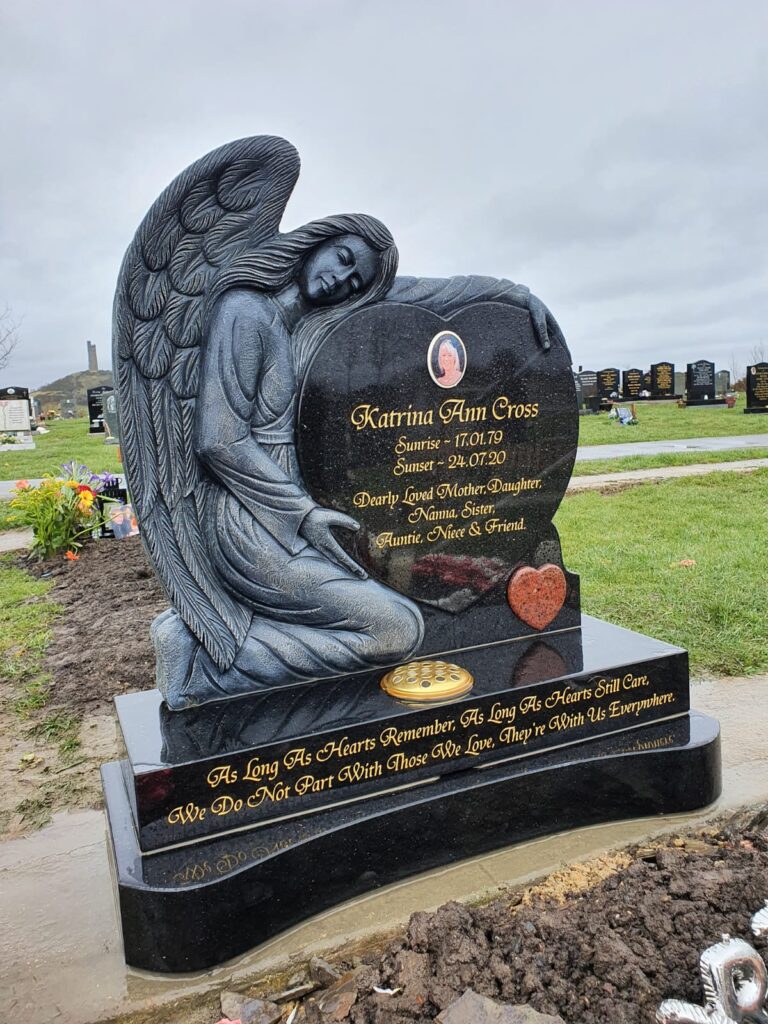
Angel memorials may symbolise peace, protection, guidance, faith or hope. They range from small engraved images to substantial hand-carved figures incorporated into the shape of the headstone.
Granite angel memorials may feature:
- An angel beside a heart-shaped stone
- A figure leaning against the headstone
- Wings surrounding an inscription
- A praying or reflective angel
- An angel holding flowers, a cross or a heart
- A laser-etched angel image on polished granite
Carved or Etched Angels
A carved angel becomes a three-dimensional part of the memorial and may require a thicker or larger piece of stone. This can create a striking focal point but may reduce the area available for the inscription.
An etched angel creates a flatter and more understated design. It can work particularly well on polished black granite, where the lighter etched image contrasts with the dark surface.
Planning the Layout
Angel memorials can easily become visually crowded if they also include a long inscription, several flowers and a photograph. Decide which feature should be the main focus and allow enough open space around it.
A shorter inscription often works best where the angel itself carries much of the memorial’s meaning.
Granite Kerb Surround Memorials
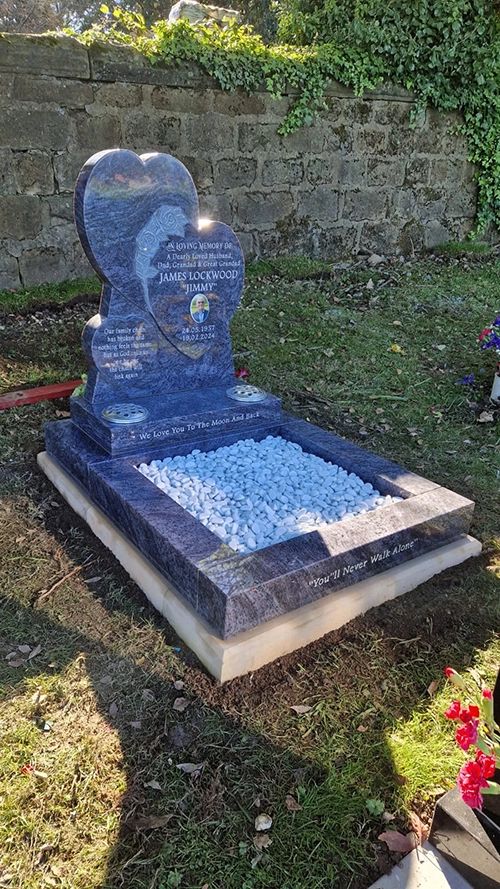
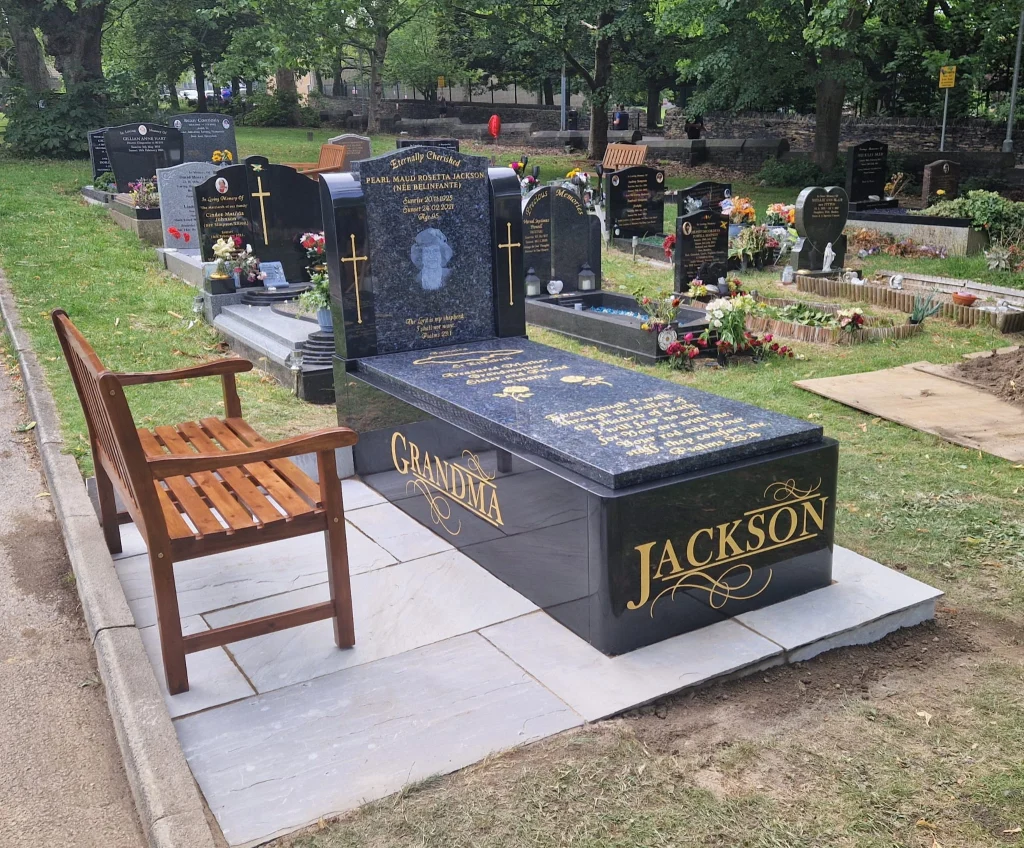
A kerb surround forms a border around the full grave and is often combined with an upright granite headstone. It creates a substantial and clearly defined memorial space.
The enclosed area may contain:
- Decorative glass or granite chippings
- A full or partial stone cover
- A central pathway
- Flower containers
- Raised steps
- Additional inscription plaques
- Contrasting granite colours
Why Granite Suits Full Surrounds
Granite can be used consistently across the headstone, base, kerbs, vases and cover slabs. This creates a coordinated appearance even where the memorial contains several separate sections.
Different finishes may also be combined. The inscription face can be polished while selected edges or panels are left honed or textured.
Traditional and Contemporary Options
A black granite surround with straight kerbs and chippings can feel formal and traditional. Curved pathways, contrasting granite and heart-shaped sections can produce a more contemporary result.
Full surrounds require considerably more material and installation work than an upright headstone alone. They are also not permitted in every cemetery, so the local regulations must be checked before the design is developed.
Granite Cremation Plaques and Tablets
Granite is also well suited to smaller cremation memorials, tablets and low markers. These designs can provide a permanent inscription where a full upright headstone is not required or permitted.
A granite plaque may be:
- Flat or gently sloping
- Mounted on a small base
- Combined with a flower container
- Shaped as a heart or book
- Used within a memorial garden
- Installed on a family grave or existing surround
Because the inscription area is smaller, the wording should be concise. A name, dates, family relationship and one short epitaph will often create the clearest result.
Polished black granite can also accommodate a small laser-etched portrait, although the image needs to remain large enough for facial details to be visible.
Bespoke Granite Memorials
Granite can be shaped into highly individual memorials where a standard design does not reflect the person or provide the required inscription layout.
A bespoke memorial might be inspired by:
- A person’s occupation or hobby
- A building, landscape or meaningful place
- A musical instrument
- A vehicle or piece of machinery
- A flower, animal or natural feature
- A family drawing or photograph
- A cultural or religious shape
A completely unusual outline is not always necessary. Personalisation can also involve adapting an existing arch, heart or book design with a different proportion, image or arrangement of wording.
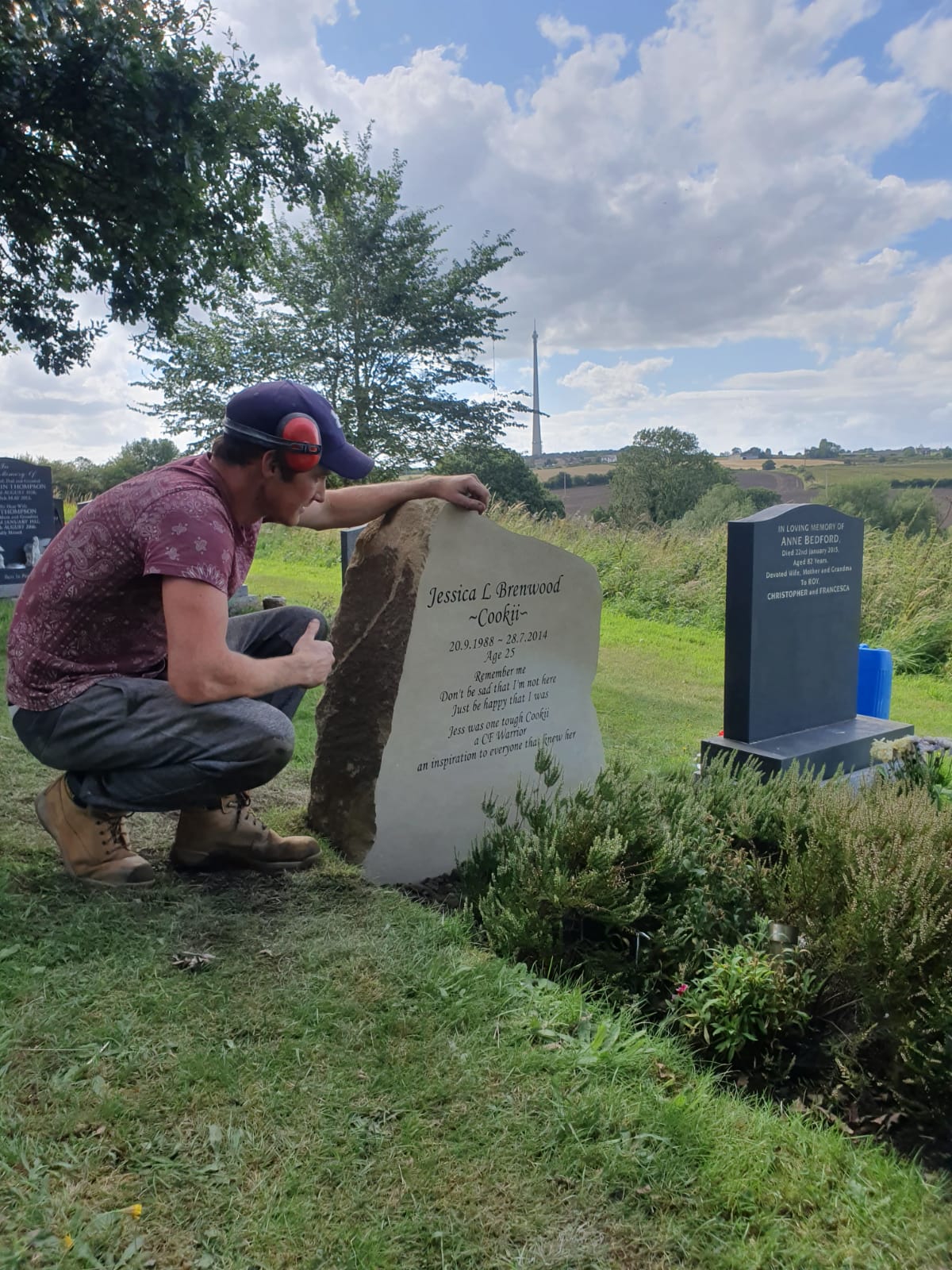
Northern Headstones can create bespoke memorials
Which Granite Colour Best Suits Each Style?
The colour of the stone can change the character of the same headstone shape. It also influences which lettering and image techniques will remain clear.
Black Granite
Polished black granite creates a formal and highly defined appearance. It is particularly effective for:
- Traditional upright headstones
- Heart and book memorials
- Gold, silver and white lettering
- Laser-etched photographs
- Detailed monochrome imagery
- Memorials using contrasting polished and textured sections
Fingerprints, dust and water marks can be more visible on a dark polished surface, although gentle routine care will usually keep the memorial presentable.
Grey Granite
Grey granite generally creates a softer and less reflective appearance. It can suit traditional arches, companion stones and churchyard-style memorials where a bright polished black stone may feel too visually prominent.
Lettering must be chosen carefully to provide sufficient contrast with the particular shade and natural pattern of the stone.
Blue and Coloured Granite
Blue, red and other coloured granites can give a familiar shape a more individual appearance. They may work well for hearts, companion memorials and complete surrounds.
Natural mineral patterns vary between pieces, so families should view a representative stone sample where possible. A heavily patterned area may not be the best position for small lettering or a detailed image.
Which Finish Should You Choose?
The finish should complement both the headstone style and its surroundings.
Fully Polished Granite
A fully polished headstone has a smooth, reflective finish across the main surfaces. It suits formal memorials, detailed lettering and laser-etched imagery.
Some churchyards restrict highly polished stone, so approval should be checked before choosing this finish.
Partly Polished Granite
A partly polished memorial may have a polished inscription face with honed, natural or pitched edges. This creates contrast and allows the inscription to remain clear without making the entire memorial reflective.
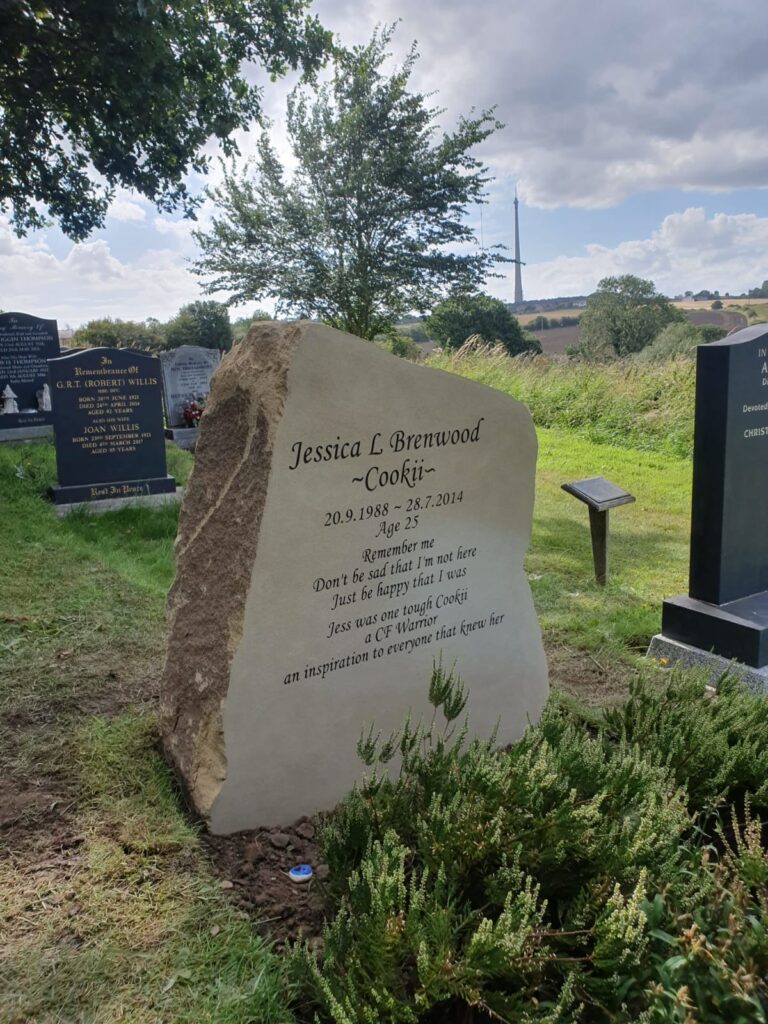
It works particularly well with traditional arches, rustic-edged uprights and granite memorials intended to sit naturally among older stones.
Honed Granite
A honed finish is smooth but less reflective. It can give granite a softer, more understated appearance while retaining its clean lines.
Honed finishes may be suitable for simple upright designs, religious memorials and burial grounds where a highly polished surface would not be accepted.
Match the Style to the Inscription
The best headstone style is not simply the shape you find most attractive. It must also provide enough space for the wording and imagery you want to include.
Consider:
- How many names will appear on the memorial
- Whether complete dates or years will be used
- The length of the epitaph
- Whether a second inscription may be added later
- The size of any photograph or carving
- Whether two languages will be included
- The required lettering size and line spacing
A single heart may suit a short personal inscription, while a wide arch, book or companion stone may be better for two names and a longer shared message.
Ask to see a complete design proof before approving the memorial. This should show the wording, line breaks, lettering, images and unused space in their intended positions.
Check the Burial-Ground Regulations
The cemetery or churchyard must approve the memorial before installation. Even when granite is accepted, there may be restrictions on its colour, finish, dimensions and design.
Regulations may cover:
- The height and width of the headstone
- Whether polished granite is permitted
- Heart, book and sculpted shapes
- Photographs and etched portraits
- Kerb surrounds and cover slabs
- Flower containers
- Religious and decorative imagery
- The foundation and fixing system
Churchyards may prefer natural or honed stone, while modern cemeteries may allow a wider selection of polished granite designs. Restrictions can also differ between sections of the same cemetery.
Always confirm approval before the stone is ordered or cut.
How Does the Style Affect the Price?
The cost of a granite memorial depends on the complete design rather than the material alone.
Factors that can affect the price include:
- The size and thickness of the stone
- The granite colour and availability
- The complexity of the headstone shape
- Hand-carved or sculpted details
- The length and finish of the inscription
- Laser-etched photographs and other imagery
- Additional vases, bases and plaques
- Kerb surrounds and cover slabs
- Foundations, transport and installation
- Separate cemetery or churchyard fees
A simple arch or camber-top memorial will generally involve less stone and specialist work than a carved angel, triple-heart design or complete granite surround.
Ask for a written quotation explaining exactly what is included so that different designs can be compared fairly.
Which Granite Headstone Style Is Best?
The best style is the one that balances personal meaning, available space, cemetery regulations and budget.
As a general guide:
- Traditional arches and cambers are versatile and provide clear inscription space.
- Heart memorials suit tributes centred on love and close relationships.
- Book headstones work well for couples, religious wording and divided inscriptions.
- Companion memorials provide room for two people and future lettering.
- Angel designs create a symbolic focal point linked to peace, faith or protection.
- Kerb surrounds create a substantial memorial covering the complete grave.
- Cremation plaques provide a compact option for smaller plots and memorial gardens.
- Bespoke designs offer greater freedom where standard shapes do not feel personal enough.
You do not need to choose the most elaborate option for the memorial to feel individual. A simple granite headstone with a carefully arranged inscription and one meaningful image can create a dignified and lasting tribute.
Discuss Your Granite Memorial
Granite can be used for almost every major memorial style, from understated lawn headstones to detailed hearts, books, angels and complete surrounds. The most suitable design will depend on what you would like the memorial to express and how it will be used in the years ahead.
To compare granite styles, discuss inscription space or explore a bespoke design, please contact Northern Headstones. The team will help you consider the available shapes, colours and finishes while ensuring the proposed memorial is suitable for the burial ground.
Written and Edited by Northern Headstones
Having established itself as one of the North’s of Englands most prestigious Headstone and Memorial Masons, Northern Headstones delivers bespoke memorials like no other.